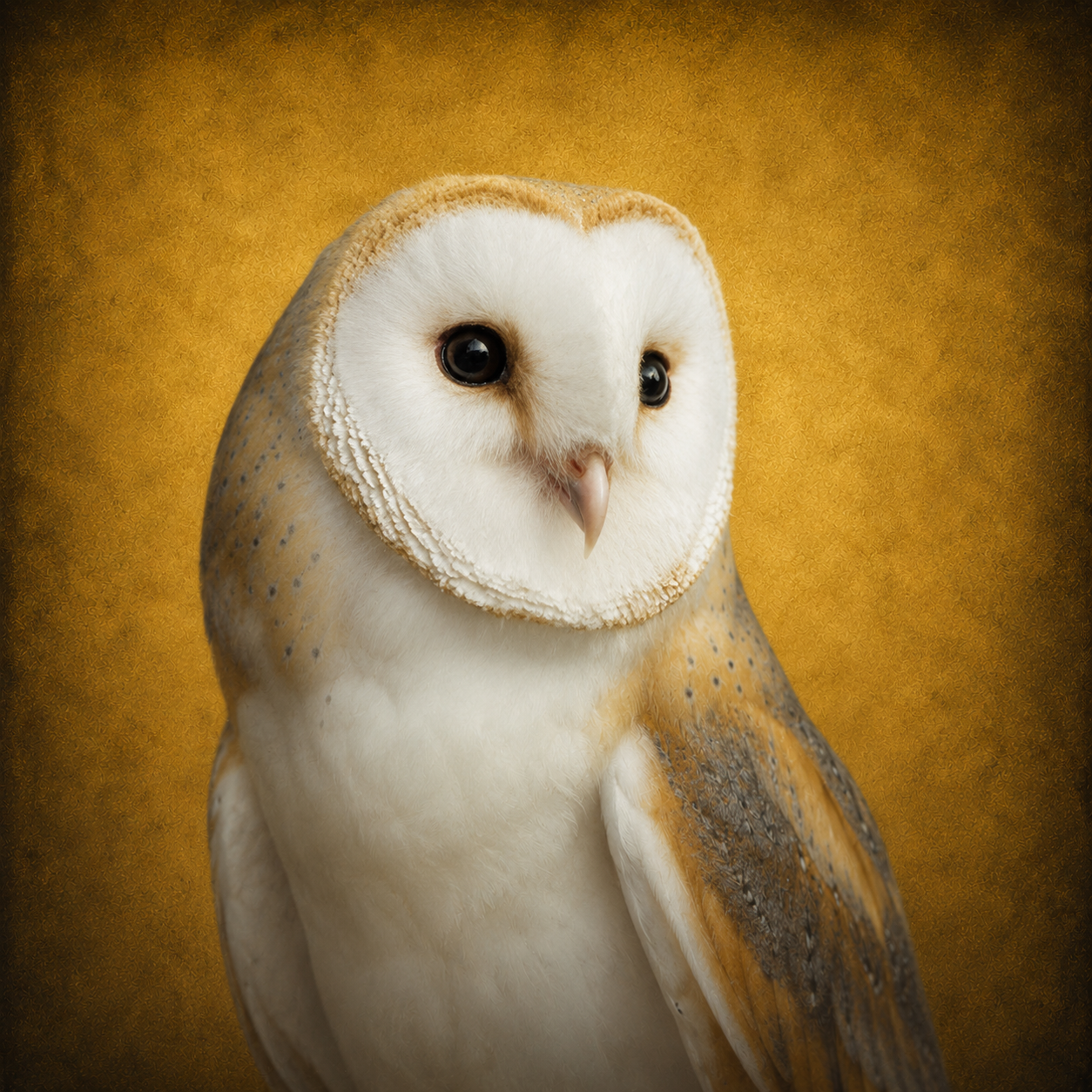


Observation
IPA Pronunciation: /ˌɒb.zəˈveɪ.ʃən/ (UK), /ˌɑːb.zɚˈveɪ.ʃən/ (US)
Part of Speech: Noun
Origin
Observation belongs to the vocabularies of attention, perception, evidence, and inquiry. It refers to the act of watching, noticing, or examining something carefully, as well as to a remark or conclusion produced from what has been noticed.
Seeing happens constantly.
Observation is more selective.
It asks the eye, ear, or mind to remain with something long enough for detail to emerge: the slight change in tone, the repeated pattern, the bird returning to the same branch, the sentence whose meaning shifts because of one unexpected word.
Observation turns presence into information.
Observation begins when the eye stays after recognition has finished.
Etymology
From Middle English: observacioun
From Old French: observation
From Latin: observatio — watching, attention, investigation, observance
From observare — to watch, notice, heed, or attend to
The Latin verb combines ob- with servare, meaning to watch, keep, or guard.
Earlier English uses also included the observance of rules, customs, or religious practices. The now-familiar sense of careful attention to something seen or experienced developed later.
The history preserves an important idea:
Observation requires more than looking.
It requires attending.
Core Definitions
The Act of Watching Carefully
Deliberate attention to a person, object, event, or phenomenon.
“The birds remained under observation throughout the morning.”
Something Noticed
A fact or detail recognised through attention.
“Her observations revealed a pattern everyone else had missed.”
A Considered Remark
A comment based upon something seen, heard, or examined.
“He made an interesting observation about the final chapter.”
Systematic Examination
In science, the careful watching, measuring, and recording of phenomena.
“Repeated observation supported the hypothesis.”
Explanation & Nuance
Observation implies:
- Attention
- Detail
- Patience
- Evidence gathered before judgment
It may be:
- Scientific — recording phenomena systematically
- Literary — noticing language, behaviour, or atmosphere
- Social — reading gesture, tone, and interaction
- Artistic — studying shape, colour, movement, or proportion
- Everyday — noticing what habit usually ignores
Unlike seeing, observation is deliberate.
Unlike attention, it usually has an object.
Unlike discernment, it notices before it judges.
Unlike interpretation, it tries first to establish what is actually there.
Observation provides the material.
Meaning comes afterward.
Observation & Attention
The great enemy of observation is often not blindness but familiarity.
We stop noticing the street we walk every day.
We recognise a tree without seeing its changing leaves.
We hear a familiar voice without registering the hesitation inside it.
Observation interrupts this automatic recognition.
It asks:
What exactly changed?
What repeats?
What does not belong?
What am I assuming rather than actually seeing?
The observer does not necessarily possess sharper senses.
They have learned to stay.
Observation & Evidence
Science depends upon observation because explanations must eventually answer to what the world actually does.
A useful observation must therefore become more than an impression.
It may need to be:
- Recorded
- Measured
- Repeated
- Compared
- Checked by others
Charles Darwin built arguments by accumulating observations across specimens, variation, geography, breeding, and natural history. His strength lay not merely in noticing facts, but in patiently arranging them until patterns became difficult to dismiss.
Observation disciplines curiosity.
It prevents the answer we hoped for from replacing the evidence that actually appeared.
Poetic & Literary Use
Writers also depend upon observation.
A character need not be described as nervous if the writer notices the untouched cup, the repeatedly folded napkin, or the glance toward the door.
Specific detail can carry what explanation would flatten.
Henry David Thoreau made this principle central to his prose. His close attention to ponds, woods, seasons, weather, animals, and ordinary routines repeatedly opens into reflection on society and human life.
Observation gives literature texture.
The imagined world becomes convincing because someone has learned how the real one behaves.
Experiential Dimension
Observation can evoke:
- Curiosity — noticing something worth following
- Stillness — delaying reaction
- Surprise — discovering what familiarity concealed
- Patience — allowing patterns time to emerge
- Clarity — separating what happened from what was assumed
- Wonder — seeing complexity inside the ordinary
It often feels like discovering that something familiar had been speaking quietly for years.
Symbolic Dimensions
- Magnifying Glass — detail enlarged
- Field Notebook — attention preserved
- Window — looking without immediately interfering
- Still Water — patience before interpretation
- Footprint — evidence of something absent
- Single Feather — small detail carrying a larger story
Observation symbolizes attention, evidence, patience, and the discipline of allowing reality to become specific before deciding what it means.
Synonyms & Near-Relations
- Attention — concentrated awareness
- Notice — recognition of something present
- Scrutiny — especially close examination
- Inspection — deliberate examination for a purpose
- Perception — awareness through the senses
- Surveillance — sustained watching, often of people or places
- Remark — statement based upon something noticed
(Only observation fully combines deliberate attention, the details discovered through it, and the conclusions or remarks those details may produce.)
Conceptual Relations
- Curiosity — gives observation a reason to linger
- Discernment — decides which observed difference actually matters
- Wonder — can restore attention to what familiarity has hidden
- Memory — preserves observation imperfectly after the moment has passed
- Evidence — what careful observation can provide
- Attention — the discipline on which observation depends
Takeaway
Observation names the decision to remain with what others merely see—
the hesitation heard,
the footprint noticed,
the pattern emerging
because someone
looked twice.
It reminds us that the world
does not always hide its evidence,
that familiarity can make
visible things disappear,
and that understanding often begins
before interpretation,
with the quieter discipline
of noticing
what is actually there.
In literature, observation is the detail that makes the imagined real—
the mud on the boot,
the untouched glass,
the bird returning,
and the reader understanding
far more
than the writer
ever needed
to explain.
Observation begins when the eye stays after recognition has finished.
Related Individuals
Explore the people in History Nook whose lives and work echo this word:
Henry David Thoreau — Shaping American English Prose and Nature Writing
Thoreau showed how sustained attention to a pond, woodland, season, or ordinary day could turn close observation into literature, philosophy, and inquiry.
Charles Darwin — The Writer Who Taught Science How to Argue
Darwin accumulated small observations patiently enough for variation, adaptation, and natural patterns to become the foundations of a revolutionary argument.
Meriwether Lewis — Writing the Unknown into English
Lewis was explicitly charged with observing and recording unfamiliar landscapes, plants, animals, routes, climates, and encounters, turning field attention into an enduring documentary record.


Leave a Reply