

IPA: /ˈrɛl.ɪ.kwər.i/
Definition:
A reliquary is a container, often ornate, designed to hold and protect sacred relics, which may include the physical remains of saints, martyrs, or other holy figures, or objects associated with them, such as pieces of clothing or artifacts.
Detailed Explanation:
Reliquaries are significant in many religious traditions, particularly in Christianity, where they are used to house the remains of saints or objects considered holy. They are often intricately crafted from precious materials like gold, silver, and gemstones, symbolizing the reverence for the sacred items they protect.
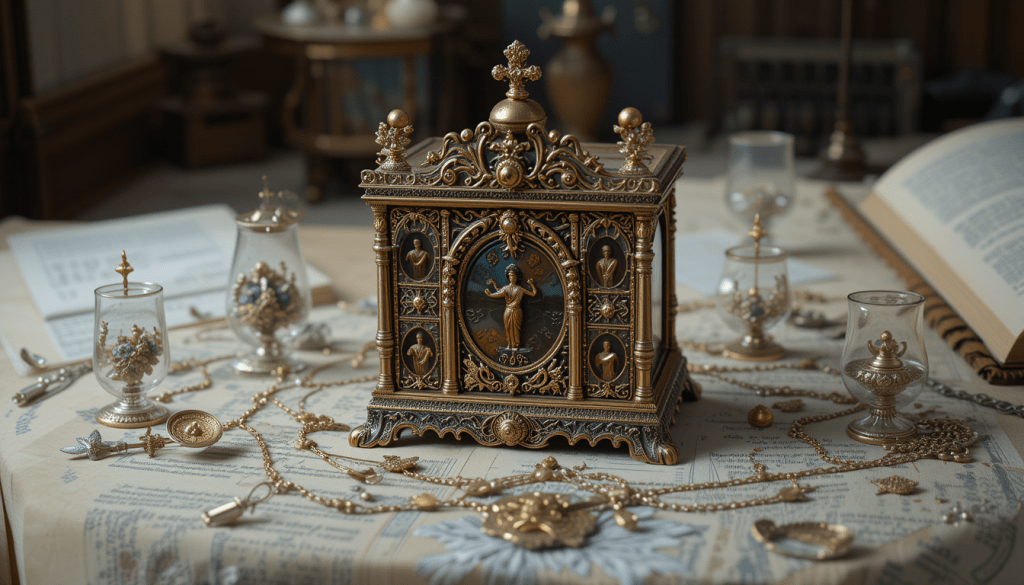
Reliquaries come in a variety of shapes and sizes. Some are simple boxes or chests, while others take the form of crosses, shrines, statues, or even body parts (e.g., reliquaries shaped like arms or heads). They are commonly displayed in churches, cathedrals, or monasteries, either for veneration by the faithful or as objects of pilgrimage.
Etymology:
The word “reliquary” originates from the Old French reliquaire, which derives from the Latin reliquiae meaning “remains” or “relics.” The term is rooted in relinquere, meaning “to leave behind,” signifying the remains or mementos left behind by holy figures.
Examples in Sentences:
- “The medieval cathedral displayed a reliquary containing the bones of a revered saint.”
- “Pilgrims traveled for miles to see the gilded reliquary that housed a fragment of the True Cross.”
- “The museum’s collection included a reliquary adorned with gemstones, believed to hold a relic from the 12th century.”
- “Each reliquary is treated with great reverence, as it holds objects sacred to the faithful.”
- “The ornate reliquary was the centerpiece of the monastery’s treasury, drawing visitors from around the world.”
Synonyms:
- Shrine
- Repository
- Ark
- Tabernacle
- Casket (in the context of relics)
Historical and Cultural Significance:
Christian Tradition:
Reliquaries became prominent in the early Christian Church and reached their height during the medieval period. They were considered tangible connections to the divine, allowing the faithful to experience spiritual proximity to saints and holy figures. Pilgrimage routes often centered around famous reliquaries, such as those at Santiago de Compostela or the Shrine of Saint Thomas Becket in Canterbury.
Craftsmanship:
Many reliquaries are masterpieces of art, showcasing the finest craftsmanship of their era. They were often commissioned by kings, bishops, or wealthy patrons and served not only as religious objects but also as symbols of power and prestige.
Modern Context:
While reliquaries are less central to modern religious practices, they remain objects of fascination for historians, archaeologists, and art enthusiasts. They offer insights into the religious, artistic, and cultural values of past societies.
Physical Forms of Reliquaries:
- Chest or Box: Simple rectangular containers, often used for larger relics or multiple items.
- Shrine: Small, house-shaped reliquaries often associated with medieval European churches.
- Body-Part Shaped: Designed to resemble the part of the body they contain (e.g., arm, head, foot).
- Monstrance: A type of reliquary with a glass window, allowing the relic to be viewed while still protected.
- Pendant or Locket: Small reliquaries worn on the body, popular in the Byzantine era.
Relics Often Contained in Reliquaries:
- Bones, teeth, or hair of saints.
- Pieces of cloth, such as robes or veils.
- Objects associated with Christ, such as fragments of the True Cross or the Crown of Thorns.
- Holy objects from other religions, such as Buddhist stupas or Hindu relic boxes, also serve similar purposes.
Symbolism:
Reliquaries symbolize the bridge between the earthly and the divine. They remind the faithful of the saints’ lives and sacrifices and inspire a connection to spiritual ideals. By preserving relics, reliquaries act as vessels of memory and devotion, encapsulating the sacredness of the past.
Examples in Art and Literature:
Reliquaries have been mentioned in various works of literature and depicted in art to emphasize religious devotion or cultural heritage. For instance, in Umberto Eco’s The Name of the Rose, relics and their reliquaries are central to the depiction of medieval religious practices.
Takeaway:
Reliquaries are much more than containers; they are cultural and spiritual artifacts that embody faith, artistry, and history. From their role in medieval pilgrimage to their enduring significance as museum pieces, reliquaries continue to captivate and inspire reverence across centuries. They remind us of humanity’s enduring quest to preserve and honor what is considered sacred and divine.
Originally published on January 1, 2025, on The-English-Nook.com.
Reliquaries: Timeless treasures that guard the sacred and inspire the divine in art, faith, and humanity.
Let your like rest here, a cherished relic within the shrine of this creation. 🌟📜

 Word Nook
Leave a comment