
IPA: /ɪˈskɑːrpmənt/
Detailed Definition
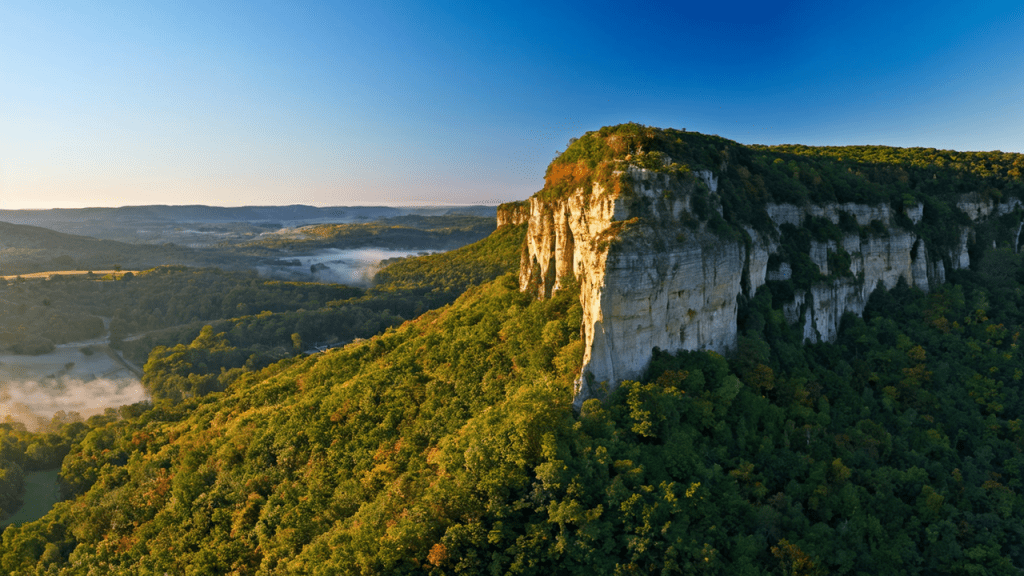
An escarpment is a steep slope or cliff that forms as a result of erosion or geological faulting, creating a distinct topographic feature that separates two levels of elevation in the landscape. These landforms are common in mountainous or plateau regions and are often the result of natural processes like tectonic movements or differential weathering, where softer rock erodes away to leave harder rock exposed. Escarpments play a key role in the study of geology, as they reveal insights into the Earth’s history and the processes that have shaped the terrain.
Etymology
The word escarpment comes from the French word escarpement, derived from escarper, meaning “to cut or slope.” This, in turn, traces back to the Italian scarpa, meaning “slope” or “rock face,” which further stems from medieval Latin. Historically, the term was also used in military contexts to describe steep banks or defensive earthworks meant to fortify an area, echoing its steep and often formidable natural features.
Synonyms
- Cliff
- Bluff
- Precipice
- Ridge
- Steep
Antonyms
- Valley
- Plain
- Basin
- Lowland
Usage in Different Contexts
- Geology:
- “The escarpment exposed layers of ancient rock, offering geologists a window into past geological eras.”
- Geography:
- “We hiked along the base of the escarpment, marveling at the dramatic drop that marked the edge of the plateau.”
- Military (Historical):
- “The natural escarpment acted as a defensive barrier, making the fortress nearly impregnable.”
- Environmental Science:
- “The region’s escarpments create unique microclimates, fostering rare plant and animal species.”
Examples in Literature and Culture
Escarpments appear in nature writing and regional literature as powerful symbols of nature’s grandeur and resilience. For instance, in landscape descriptions of Africa’s Great Rift Valley or the Niagara Escarpment in Canada, authors highlight their imposing presence and the way these formations mark natural boundaries. Historically, escarpments have been seen as both obstacles and vantage points, lending them a dual role as symbols of isolation and perspective.
Related Concepts
- Fault Line: A crack in the Earth’s crust where two tectonic plates meet, often leading to the formation of an escarpment through tectonic activity.
- Plateau: A flat, elevated landform that may have escarpments at its edges where it meets lower elevations.
- Butte: An isolated hill or small plateau with steep sides, often found in deserts, resembling smaller-scale escarpments.
- Bluff: A steep cliff, often overlooking a river or plain, with similarities to an escarpment but typically lower in height.
Understanding the Nuance of “Escarpment”
An escarpment represents more than a dramatic geological formation; it signifies a meeting point of different environments. Ecologically, escarpments often house diverse flora and fauna adapted to both highland and lowland conditions, reflecting unique ecosystems that can shift with elevation. For geologists, escarpments serve as records of Earth’s movements and as indicators of forces like erosion, volcanic activity, and tectonic shifts. In literature and human imagination, escarpments symbolize boundary and contrast, both separating and connecting the landscapes they shape.
Originally published on November 11, 2024, on The-English-Nook.com.
A like would be a foothold upon this steep rise, grounding these words in strength. 🧗⛰️
 Word of the Day - The English Nook
Leave a comment