
Obit
IPA Pronunciation: /ˈəʊ.bɪt/ (British) | /ˈoʊ.bɪt/ (American)
Part of Speech: Noun
Etymology
From Latin obitus — “departure, death,” from obire (“to go toward, to meet, to pass away”), composed of ob- (“toward”) + ire (“to go”).
- In Medieval Latin, obit came to specifically mean the “death of a person” and also the office of prayers or mass held for the dead.
- It entered Middle English via Old French obit, referring to both a death notice and a solemn anniversary service for the deceased.
Core Definitions
1. Obituary (Modern Usage)
A published notice of a person’s death, often with a brief biography of their life.
“The paper ran an obit for the beloved actor.”
2. Death; Passing (Archaic / Formal)
An older usage where “obit” simply meant the event of dying itself.
“At the time of his obit, the estate passed to his eldest son.”
3. Memorial Service (Historical / Ecclesiastical)
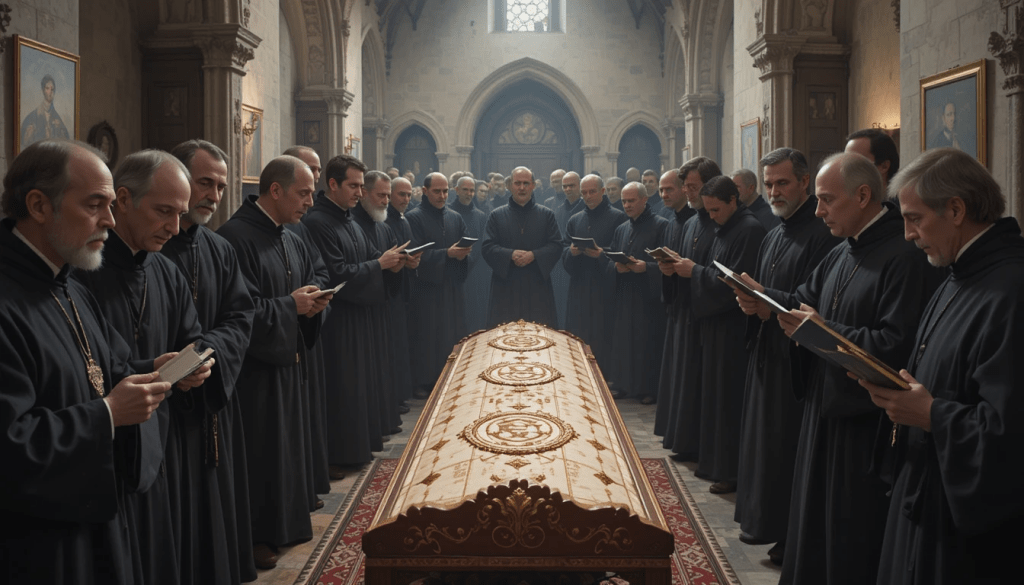
In medieval and ecclesiastical contexts, an obit was an annual service or mass celebrated to commemorate the anniversary of someone’s death.
“The monks gathered for the obit of the departed abbot.”
Explanation & Nuance
- Modern: The word obit is most commonly shorthand for “obituary” in journalism or everyday speech. It carries a tone of brevity and matter-of-fact reporting.
- Historical/Religious: In older usage, especially in Catholic tradition, an obit was a sacred remembrance of the dead — tied to ritual, charity, and prayer.
- Tone: Depending on context, obit can feel either very modern and casual (newspapers) or solemn and archaic (liturgical).
Examples in Context
- Journalistic: “The obit section was filled with tributes after the tragedy.”
- Casual Speech: “Did you read her obit? Quite a remarkable life.”
- Historical: “The monastery received land grants to fund the perpetual obit of the benefactor.”
- Legal/Archaic: “At his obit, the charter stipulated freedom for all his household servants.”
Synonyms & Related Terms
- Obituary – formal written notice of a death.
- Death notice – brief public announcement of passing.
- Eulogy – speech or writing praising someone, often at a funeral.
- Memorial – commemoration of the deceased.
- Passing – gentle euphemism for death.
Cultural & Literary Resonance
- Medieval Christianity: Obits were spiritual and financial institutions — wealthy patrons often endowed monasteries with land or money to ensure annual obits were performed in perpetuity, keeping their memory alive.
- Modern Journalism: Today, obits are a literary subgenre of their own. The New York Times and The Guardian, for example, are renowned for obituaries that become portraits of human lives, blending fact, narrative, and legacy.
- Language Evolution: The contraction from obituary to obit reflects the modern tendency toward brevity while still carrying a solemn edge.
Takeaway
Obit is a word that spans centuries of human memory and mourning. Once a liturgical act of remembrance in cloisters and cathedrals, it now lives in the pages of newspapers, where lives are summed up and honored in print. Whether sacred or secular, obit marks the threshold where memory begins and mortal life ends.
Obit
A brief door into eternity — the notice of a life ended, and the echo it leaves behind in ritual, memory, and words.
Curious about what happened today in history? Want to learn a new word every day?
You’ll find it all—first and in one place—at The-English-Nook.com!
If you love languages, this is your space.
Enjoy bilingual short stories, fun readings, useful vocabulary, and so much more in both English and Spanish.
Come explore!
 Word of the Day - The English Nook
Leave a comment