
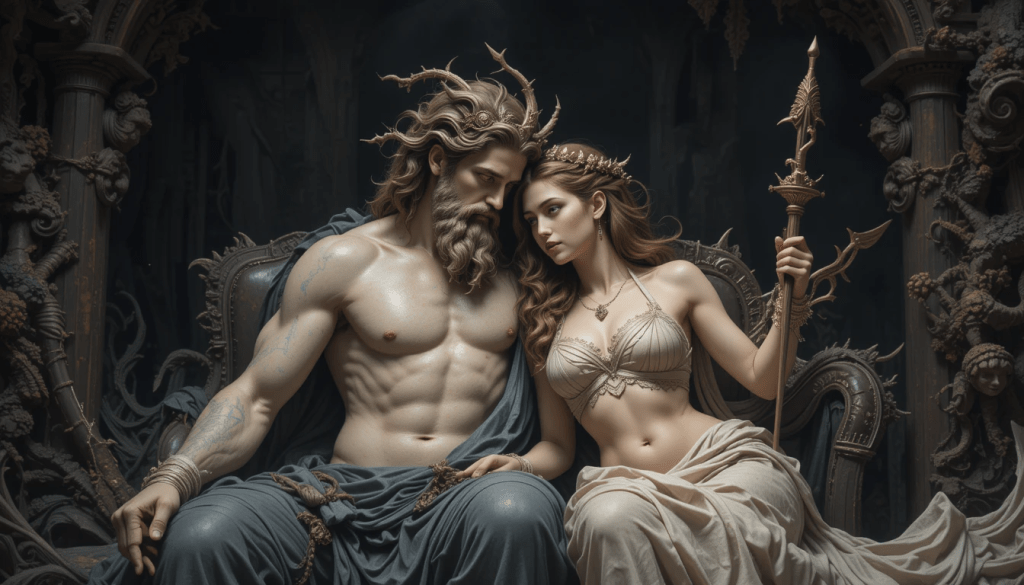
Chthonic
IPA Pronunciation: /ˈθɒn.ɪk/ or /ˈkθɒn.ɪk/
Part of Speech: Adjective
Etymology
From Ancient Greek χθόνιος (khthónios), meaning “of the earth, in the ground, beneath the earth”.
Derived from χθών (khthṓn) = “earth, soil, ground”.
Adopted into Latin as chthonius, then into English (17th century) with its strong mythological and occult connotations.
Core Definitions
1. Of or Relating to the Underworld
Connected with the deities, spirits, and powers dwelling beneath the earth.
“Hades and Persephone were chthonic rulers of the underworld.”
2. Pertaining to the Subterranean Earth
Linked to what lies underground — roots, soil, hidden forces, or the unseen depths.
“The chthonic energies of the earth stirred beneath the volcano.”
3. Figurative: Dark, Hidden, or Primordial Forces
Invoking the sense of deep, primal, shadowy powers lurking beneath ordinary existence.
“His art was guided by chthonic inspirations, raw and unsettling.”
Explanation & Nuance
- Chthonic vs. Olympian:
In Greek mythology, the Olympian gods ruled the sky, light, and order, while the chthonic gods governed the underworld, death, fertility, and the mysteries of rebirth.- Zeus = Olympian, sky, thunder.
- Hades, Persephone, Hecate = Chthonic, death, darkness, subterranean mysteries.
- Ritual Use:
Ancient Greeks and Romans made chthonic sacrifices by pouring libations into the ground or sacrificing black animals at night, in contrast to bright, skyward offerings to Olympian deities. - Modern Connotation:
The word is still used in philosophy, depth psychology, literature, and occult traditions to suggest buried power, unconscious drives, death, fertility, or the hidden roots of existence.
Examples in Context
- Mythological:
“Hecate, the chthonic goddess, stood at the threshold between night and death.” - Psychological (Jungian):
“The chthonic archetypes represent forces of the unconscious, both destructive and creative.” - Literary:
“The city seemed alive with chthonic whispers, as though the stones themselves remembered the dead.” - Occult:
“The ritual invoked chthonic spirits, calling upon the power of the deep earth.”
Synonyms & Related Terms
- Infernal – pertaining to hell, though with more Christian overtones.
- Subterranean – literally underground, without mythic nuance.
- Nether – belonging to the lower or underworldly regions.
- Chthonian – alternative form, less common but equivalent.
- Telluric – of the earth, especially in energy and natural phenomena.
Cultural & Literary Resonance
- Greek Mythology: Central to the distinction between heavenly (Olympian) and earthly (chthonic) powers.
- Philosophy & Depth Psychology: In Jungian analysis, “chthonic” represents the deep unconscious, primal instincts, or shadow aspects of psyche.
- Literature & Horror: Writers like Lovecraft, Poe, and modern fantasy authors use chthonic to summon a sense of eldritch, subterranean dread.
- Occult & Mysticism: Still active in rituals, describing forces linked to fertility, death, and earth energies.
Takeaway
Chthonic is more than “underworldly” — it is a word of depth and resonance, evoking the primal, shadowed, and hidden powers of the earth and the unconscious. It marks the threshold between life and death, surface and abyss, order and chaos.
Chthonic
That which dwells beneath — the dark, fertile, and eternal forces of the underworld, whispering from the soil and shadow.
Curious about what happened today in history? Want to learn a new word every day?
You’ll find it all—first and in one place—at The-English-Nook.com!
If you love languages, this is your space.
Enjoy bilingual short stories, fun readings, useful vocabulary, and so much more in both English and Spanish.
Come explore!
 Word of the Day - The English Nook
Leave a comment