
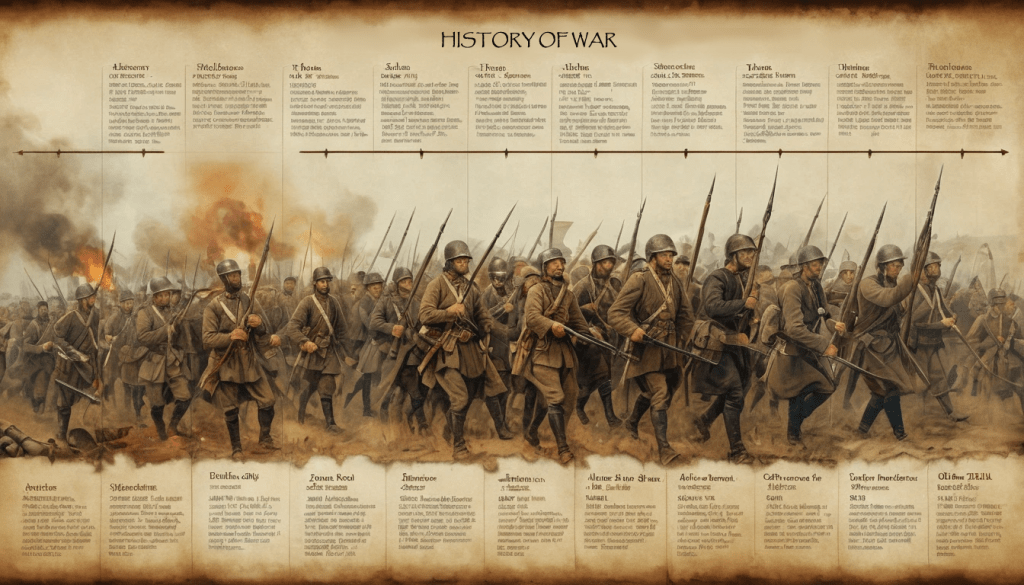
Polemology
IPA Pronunciation: /ˌpɒl.əˈmɒl.ə.dʒi/
Part of Speech: Noun
Etymology
From Greek polemos (πόλεμος), meaning “war,” and -logia (-λογία), meaning “study” or “discourse.” Coined in the mid-20th century, polemology emerged as an academic term for the systematic, interdisciplinary study of war and conflict in human society.
Core Definition
1. The Scholarly Study of War and Conflict
Polemology refers to the analysis of war, not merely in its tactical or military dimensions, but as a complex sociopolitical, psychological, economic, and historical phenomenon. It seeks to understand why wars begin, how they are waged, and what their lasting effects are on civilization.
“The rise of polemology as a discipline reflected humanity’s need not just to fight wars, but to understand and perhaps prevent them.”
Scope and Interdisciplinary Nature
Unlike pure military history or strategic studies, polemology is:
- Analytical, not prescriptive
- Broad in scope, involving history, political science, sociology, anthropology, psychology, and ethics
- Concerned with origins, patterns, and consequences of armed conflict
- Often focused on conflict resolution and peace studies as well as on the machinery and mechanisms of war
Historical and Academic Context
The term gained prominence through the work of Gaston Bouthoul, a French sociologist who, after World War II, founded the Institute of Polemology in Paris. His goal was to scientifically examine the causes of war to create a framework for understanding—and potentially curbing—human violence on a mass scale.
Polemology has since influenced:
- Peace research
- International relations theory
- Strategic and security studies
- The ethics of war (jus ad bellum and jus in bello)
Examples in Context
- “Her thesis in polemology examined the psychological impact of asymmetric warfare on civilian populations.”
- “Through polemological analysis, the historian uncovered recurring patterns of escalation preceding major conflicts.”
- “Polemology does not glorify war—it interrogates it.”
Contrast with Related Fields
| Term | Focus |
|---|---|
| Military History | Chronicles battles, leaders, strategies |
| Strategic Studies | Focuses on military planning and policy |
| Peace Studies | Seeks methods for resolving or avoiding conflict |
| Polemology | Investigates war’s origins, structures, behaviors, and impacts |
Thematic Concerns in Polemology
- Structural violence and systemic causes
- Nationalism, ideology, and identity in conflict
- The role of economics and resource scarcity
- Technological change and arms races
- Non-state actors, insurgency, and terrorism
- The evolution of warfare—from tribal feuds to cyberwarfare
Symbolism and Cultural Reflection
War, though often viewed as a matter of heroism or horror, becomes in polemology a subject of dispassionate scrutiny—a mirror to the deepest structures of human society. It confronts the paradox: that humans both abhor and repeatedly return to organized violence.
Polemology asks:
- What triggers war in the collective psyche?
- Can conflict ever be fully understood, or truly unlearned?
- Is peace the natural state of civilization—or a fragile exception?
Takeaway
Polemology is not about glorifying battle—it is about grasping the anatomy of war: its causes, its progression, and its aftermath. It is the science of strife, the study of our darkest instincts, and perhaps, paradoxically, a necessary path toward preventing future violence.
Polemology:
The intellectual battlefield where historians, philosophers, and scientists strive not to wage war—but to understand it, and to chart the map to its end.
 Word of the Day - The English Nook
Leave a comment