
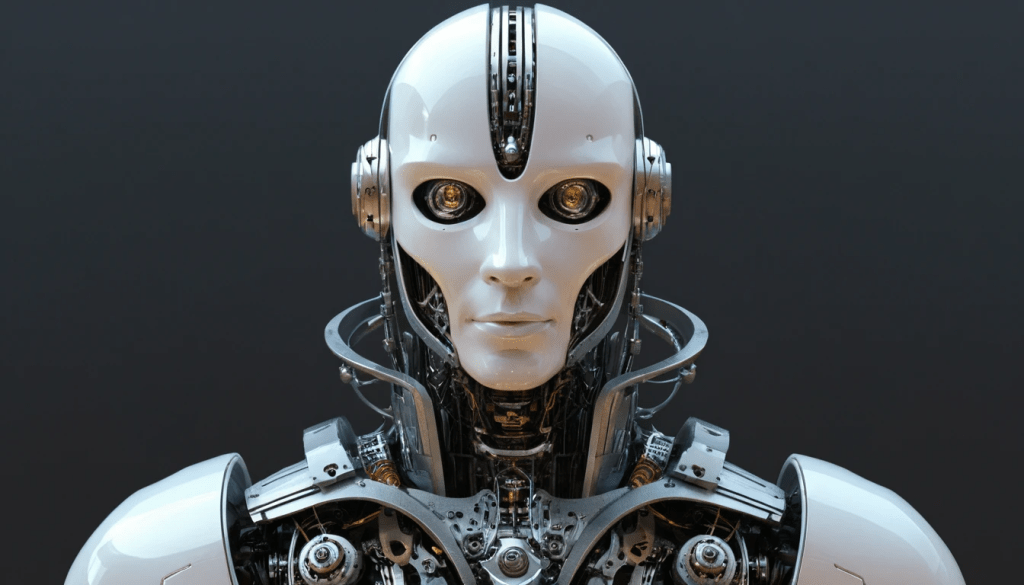
Automaton
IPA Pronunciation: /ˈɔː.tə.mə.tɒn/ (UK), /ˈɑː.tə.mə.tɑːn/ (US)
Part of Speech: Noun
Plural: Automata (/ɔːˈtɒ.mə.tə/ or /əˈtɑː.mə.tə/) or Automatons
Etymology
From Greek αὐτόματον (automaton) meaning “acting of itself,” from auto- (“self”) and -matos (from ma, “to think” or “to act”). The word was first used in Latin as automaton, later entering English in the 17th century to describe self-operating machines or beings that mimic life.
Core Definitions
1. A Self-Operating Machine or Robot
An automaton is a device that performs actions independently, often through mechanical or programmed means. Historically, these were intricate, clockwork constructs built to imitate human or animal motions.
“The golden automaton bowed with eerie grace, its gears whirring in silent obeisance.”
2. A Person Who Acts in a Robotic or Unthinking Manner (Figurative)
Used metaphorically to describe someone who moves or behaves with mechanical predictability, lacking spontaneity, emotion, or conscious engagement.
“She moved through the day like an automaton—efficient, exhausted, and numb.”
Historical and Cultural Significance
Mechanical Marvels of the Past
Automata have fascinated human imagination for millennia. From Heron of Alexandria’s steam-powered inventions (1st century CE) to Da Vinci’s mechanical knight, to the elaborate clockwork dolls of the Enlightenment, they represent a dream of life mimicked by mechanism.
- The Digesting Duck (1739) by Jacques de Vaucanson: a mechanical duck that appeared to eat and digest food.
- The Silver Swan (1773) by John Joseph Merlin: a graceful automaton that simulates a swan gliding and preening.
These machines weren’t just novelties—they blurred the line between life and artifice.
In Literature and Philosophy
The automaton often symbolizes the tension between human and machine, soul and mechanism, freedom and determinism.
- Mary Shelley’s Frankenstein explores the ethical horror of animation without soul.
- Karel Čapek’s R.U.R. (1920), where the term “robot” was coined, portrays automatons as tragic figures caught between utility and revolt.
- Modern sci-fi automata (e.g., Westworld, Ex Machina, Blade Runner) raise questions of consciousness, rights, and what it means to be “alive.”
Themes and Symbolism
- Soulless Functionality – Performing without will or passion.
- Artificial Intelligence – The edge where human creation becomes autonomous.
- Alienation – Modern life reducing individuals to repetitive, lifeless patterns.
- Uncanny Mimicry – The eerie closeness of the automaton to human likeness.
- Control vs. Autonomy – Machines that act “freely,” yet within imposed design.
Modern Contexts
Today, “automaton” is often applied to:
- Robots and AI: machines with autonomy, used in manufacturing, logistics, and even companionship.
- Cognitive science: debates around whether human consciousness can be modeled algorithmically.
- Work culture: critique of dehumanizing routines—“They’ve turned us all into automatons under fluorescent lights.”
Examples in Context
- “The ancient automaton raised its head, eyes glowing with arcane purpose.”
- “He followed orders without thought, an automaton in a soldier’s uniform.”
- “Their society, though efficient, had become a parade of automatons, smiles pre-programmed.”
Synonyms & Related Terms
| Literal | Figurative |
|---|---|
| Robot | Drone |
| Machine | Puppet |
| Android | Functionary |
| Golem | Bureaucrat |
| Mechanoid | Conformist |
Antonyms
- Free spirit
- Thinker
- Rebel
- Artisan
- Creator
In Myth & Legend
- Talos, the bronze giant of Crete, was one of the earliest mythical automatons—powered by ichor and designed to protect Europa.
- Pygmalion’s statue, brought to life by Aphrodite, reflects the yearning for the automaton to transcend mechanism and become real.
Takeaway
The Automaton is more than a machine—it is a mirror. It reflects both our genius for creation and our fear of losing what makes us human. Whether in the ticking limbs of a 17th-century doll or the algorithms of a modern AI, it asks: If it walks like us, talks like us, and thinks like us… is it still “other”?
Automaton:
A marvel of motion and mimicry—engineered to act, built to obey, and forever suspended between life and illusion.
 Word of the Day - The English Nook
Leave a comment