
Leat
IPA Pronunciation: /liːt/
Part of Speech: Noun
Plural: Leats
Etymology
From Old English gelǣt, meaning “a watercourse” or “drain,” related to lǣdan (“to lead”). The term has survived in regional English dialects, especially in the West Country and parts of Scotland, where it remains associated with traditional water management systems.
Definitions
1. A Man-Made Water Channel or Ditch, Especially One That Diverts Water from a River or Stream
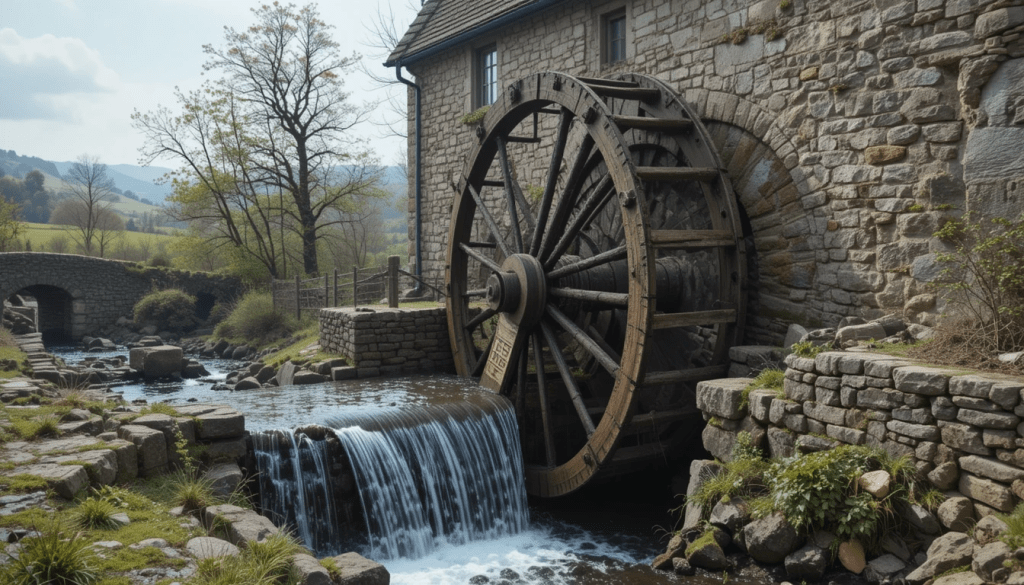
A leat is an artificially constructed watercourse, typically designed to channel flowing water for industrial, agricultural, or domestic use. It often diverts water to power mills, irrigate land, or supply reservoirs.
“The leat carried a silver ribbon of river water to turn the ancient mill’s wheel.”
Types and Uses
- Mill Leat: Delivers water to a watermill, creating mechanical energy through flow or gravity.
- Irrigation Leat: Waters agricultural fields, especially in terraced landscapes.
- Mining Leat: Historically used in tin or copper mining to supply water for sluicing or washing ore.
- Aqueduct Leat: Feeds urban reservoirs or cisterns, often part of a larger civil engineering system.
Leats may run above ground, cut into the earth, or be lined with stone to prevent erosion and control flow.
Historical Context
Leats have existed since ancient times and were especially prominent in:
- Medieval Europe, where they powered waterwheels and enabled early manufacturing
- Roman Britain, with aqueduct-fed leats serving bathhouses and towns
- Dartmoor, Cornwall, and the Lake District, where mining and milling communities depended on intricate networks of leats
They reflect pre-industrial ingenuity, using the land’s contours to sustain both industry and life without modern machinery.
Examples in Context
- “The leat snaked down from the moor, feeding the spinning mill that had stood for centuries.”
- “An abandoned leat still winds through the forest, moss-grown and silent.”
- “They walked beside the leat, its waters whispering tales of forgotten miners and millers.”
Cultural and Poetic Resonance
A leat conjures a sense of rural heritage, quiet continuity, and human interaction with the natural world. It embodies a kind of ecological harmony, where utility and landscape blend seamlessly.
In literature and folklore, leats may symbolize:
- Guided flow — the channeling of force or emotion
- Legacy — remnants of vanished labor or old ways of living
- Threshold — borders between wilderness and settlement
“The leat was a thread of memory stitched across the hillside, still carrying water and wonder.”
Related Terms
| Term | Description |
|---|---|
| Aqueduct | A structure or channel designed to transport water over distances |
| Canal | A larger, often navigable man-made waterway |
| Millrace | The fast-moving watercourse that drives a watermill’s wheel |
| Flume | A narrow, controlled channel for water, often elevated or enclosed |
| Watercourse | General term for any flowing channel of water, natural or artificial |
Takeaway
The leat is a humble but profound innovation—an emblem of humanity’s early relationship with water as power. It channels life, movement, and memory, carving quiet paths through stone and soil in service of both survival and industry.
Leat:
A slender river made by hand—flowing not by nature’s design, but by our need to turn water into work, and work into history.
 Word of the Day - The English Nook
Leave a comment