
Stygian
IPA Pronunciation: /ˈstɪdʒ.i.ən/
Part of Speech: Adjective
Etymology:
From Latin Stygius, derived from Greek Stygios (Στύγιος), meaning “of the river Styx” — the mythological river that formed the boundary between Earth and the Underworld in Greek mythology. The term has evolved from classical roots to convey a sense of profound darkness and otherworldly gloom.
Definitions:
- Relating to the River Styx or the Underworld:
Connected to the dark, mysterious, and ominous aspects of Hades’ realm. - Extremely Dark, Gloomy, or Mysterious:
Evoking a sense of oppressive darkness, foreboding, or impenetrable shadow.
Explanation:
Mythological Origins:
In Greek mythology, the River Styx was the boundary between the mortal world and the realm of the dead. It was said to be a river of hate and solemn oaths; even the gods swore by it. Thus, anything “Stygian” carries the weight of mythic darkness and an almost sacred, unbreakable quality.
Literary and Artistic Usage:
“Stygian” has long been a favorite in literature and art to describe settings or atmospheres that are profoundly shadowy, mysterious, and sometimes ominous. From Gothic horror to epic poetry, it evokes a sense of timeless dread and deep mystery.
Modern Contexts:
Beyond its mythological origins, “Stygian” has become a potent metaphor for any setting or experience shrouded in darkness — literal or metaphorical. It’s used to describe inky blackness, as in the depths of a cave or a moonless night, as well as emotional states of deep despair or melancholy.
Examples in Context:
Mythological Reference:
“The hero journeyed across the Stygian waters to reach the underworld and confront the spirits of the dead.”
Literary Setting:
“The forest had a Stygian quality, its twisted branches blotting out all light.”
Figurative Use:
“After the tragic news, a Stygian gloom settled over the household, heavy and inescapable.”
Describing Visual Darkness:
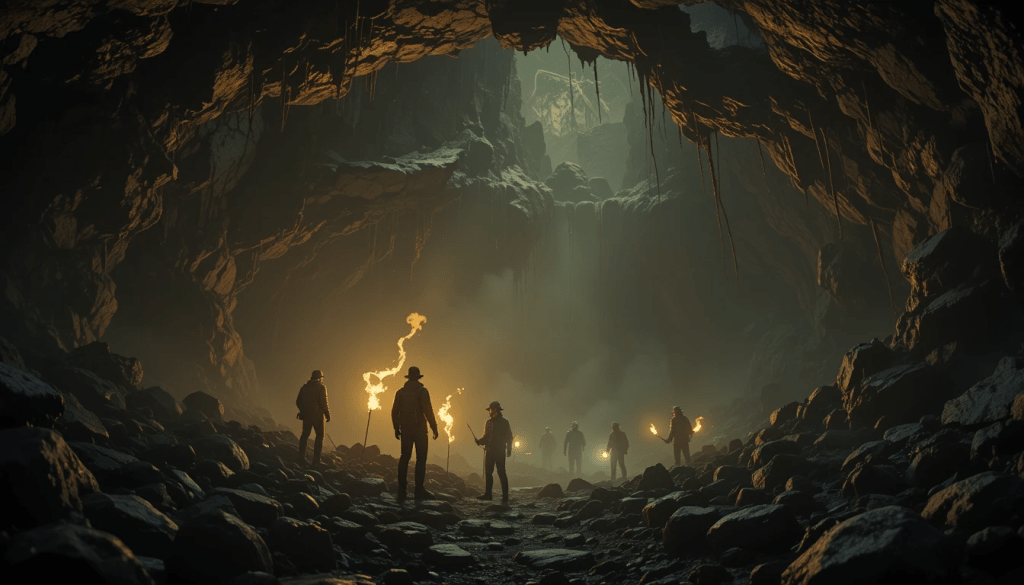
“The Stygian depths of the cave swallowed their torchlight, leaving them disoriented and wary.”
Related Terms and Synonyms:
- Tenebrous: Dark, shadowy, and obscure.
- Cimmerian: Another mythologically inspired term for deep, impenetrable darkness.
- Umbral: Relating to shadow or gloom.
- Infernal: Pertaining to hell or the underworld, often implying fiery darkness.
Cultural and Literary Resonance:
The term “Stygian” resonates with Gothic and Romantic sensibilities. Writers such as H.P. Lovecraft and Edgar Allan Poe have employed it to craft atmospheres of unsettling gloom. In visual art, “Stygian” suggests a palette of obsidian blacks and inky blues, where light barely grazes the surface.
Moreover, it has a psychological dimension: to describe an emotional or existential darkness — the “Stygian recesses” of the mind — where fear, despair, or the unknown lurk.
Takeaway:
“Stygian” isn’t merely a synonym for darkness — it’s a word that conjures the mythological, the poetic, and the psychological. It speaks to that part of human experience drawn to mystery, to the interplay of light and shadow, and to the undercurrents of the unknown. In a single word, it unites the mythic depths of the River Styx with the everyday shadows that shape our world.
Stygian: A darkness that isn’t merely absence of light, but presence of myth, mystery, and the deep unknown.
 Word of the Day - The English Nook
Leave a comment