
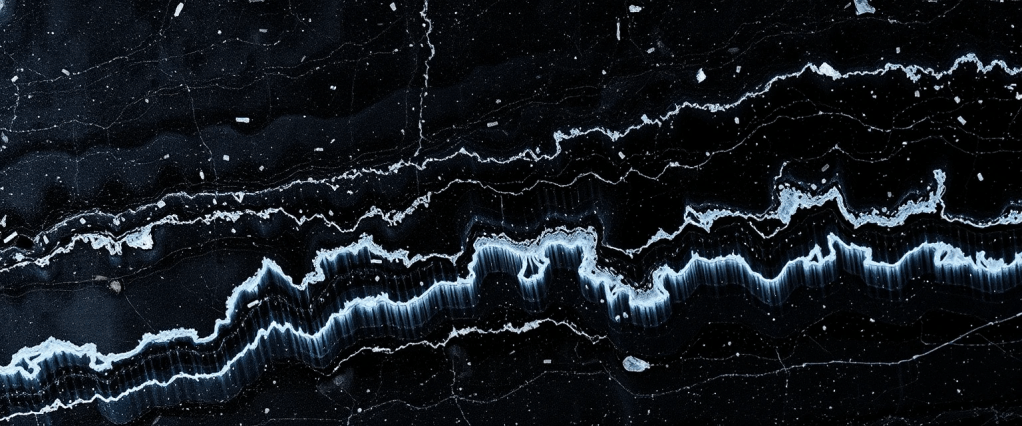
Obsidian
IPA Pronunciation: /əbˈsɪd.i.ən/
Part of Speech: Noun
Core Definition:
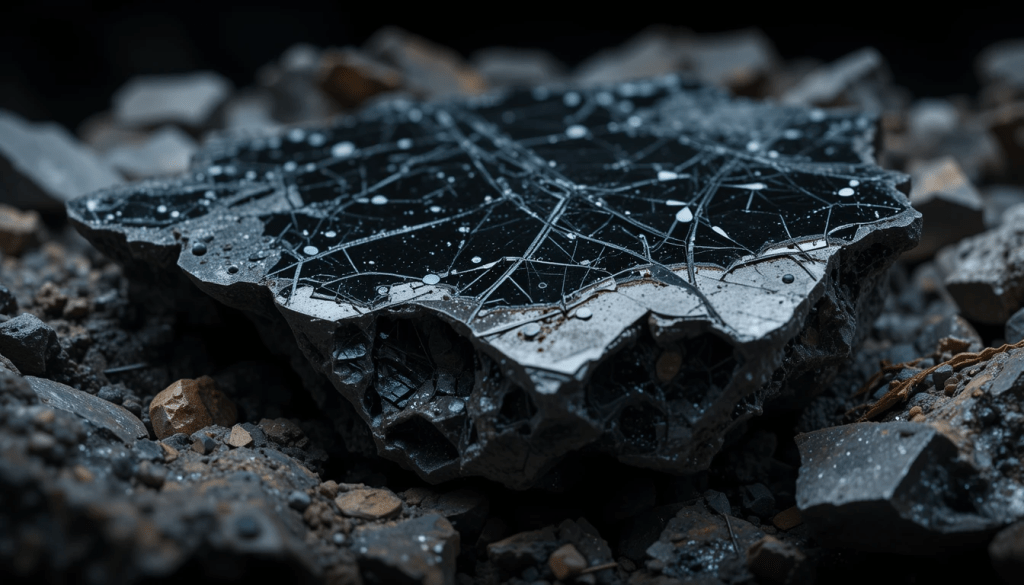
Obsidian is a naturally occurring, volcanic glass formed from felsic lava that cools so rapidly that atoms are unable to arrange into a crystalline structure. This unique process results in a hard, brittle material with a smooth, glass-like texture and a characteristic conchoidal fracture.
Physical Characteristics:
- Color: Most commonly deep black, but can range through mahogany, green, snowflake (with white spherulites), rainbow (due to refraction), and even golden or sheen obsidian.
- Luster: Vitreous (glassy)
- Hardness: ~5–5.5 on the Mohs scale
- Structure: Amorphous (non-crystalline)
Etymology & Historical Naming:
The name “obsidian” comes from the Latin lapis obsidianus, meaning “stone of Obsius,” supposedly after a Roman explorer who first brought it to attention from Ethiopia. The earliest known mention appears in Natural History by Pliny the Elder in the 1st century CE.
Geological Origins:
Obsidian forms during the final stages of volcanic eruptions, when silica-rich lava is extruded and cools so quickly that crystal formation is arrested. It is often found around the edges of lava domes and in areas of high volcanic activity such as:
- The Ring of Fire
- Iceland, Mexico, New Zealand, and Ethiopia
Cultural and Historical Significance:
1. Prehistoric Utility:
- Used by early humans across the globe for crafting tools, weapons, and cutting instruments.
- Prized for its razor-sharp edge, obsidian blades were sharper than steel and remained a cornerstone of survival and warfare.
2. Ritual and Myth:
- In Aztec culture, obsidian was sacred. Mirrors were used in rituals to summon gods or see visions. The god Tezcatlipoca (“Smoking Mirror”) was closely associated with obsidian’s reflective powers.
- Mayan and Incan civilizations used obsidian in both warfare and religious offerings.
3. Medieval and Early Modern Europe:
- Employed as a gemstone and in amulets, often believed to ward off evil or reflect harmful magic.
4. Contemporary Spiritual Uses:
- In metaphysical and New Age practices, obsidian is used for psychic protection, grounding, and the clearing of emotional blockages.
- Mirror obsidians are still made and used for scrying and introspective rituals.
Examples in Use:
- “The obsidian arrowhead found at the site was as sharp as the day it was made.”
- “She gazed into the obsidian mirror, seeking answers from her subconscious.”
- “The altar was ringed with protective stones, the centerpiece a polished slab of black obsidian.”
- “Obsidian scalpels, despite being ancient in origin, are still used in specialized surgical applications.”
Scientific and Medical Applications:
Even today, obsidian blades are used experimentally in microsurgery because their edges can be up to 500 times sharper than steel, creating cleaner incisions and faster healing.
Symbolic Meanings:
- Protection: Wards off psychic and emotional harm.
- Clarity: Cuts through illusions and lies.
- Introspection: Encourages truth-seeking and shadow work.
- Transformation: Acts as a guide during times of upheaval.
Types of Obsidian:
- Snowflake Obsidian: Contains white or gray cristobalite spherulites, giving a snowflake appearance.
- Mahogany Obsidian: Reddish-brown with black streaks; associated with grounding and strength.
- Rainbow Obsidian: Displays iridescent colors due to microscopic bubbles or inclusions.
- Sheen Obsidian: Reflective golden or silver luster.
- Apache Tears: Small, rounded obsidian nodules, often translucent.
Related Terms & Concepts:
- Tephra – Fragmental volcanic material
- Macuahuitl – A Mesoamerican weapon lined with obsidian blades
- Igneous rock – Rock formed from solidified lava or magma
- Volcanology – The scientific study of volcanoes and volcanic materials
Interesting Fact:
A single flake of obsidian is thinner than a red blood cell. In experimental surgeries, obsidian scalpels have created cuts so clean that under a microscope, cell walls appear virtually undisturbed.
Takeaway:
Obsidian is more than molten rock frozen in time — it is a symbol of contrast: delicate yet dangerous, earthly yet mystical. Whether in the hands of ancient shamans or modern surgeons, it continues to bridge the realms of nature, craftsmanship, spirituality, and science.
Originally published on May 25, 2025, on
The-English-Nook.com.
From Ritual Blades to Surgical Scalpels—Obsidian Cuts Through Time.
“Tap like and let your edges gleam with quiet power.” 🖤🗡️
 Word of the Day - The English Nook
Leave a comment