
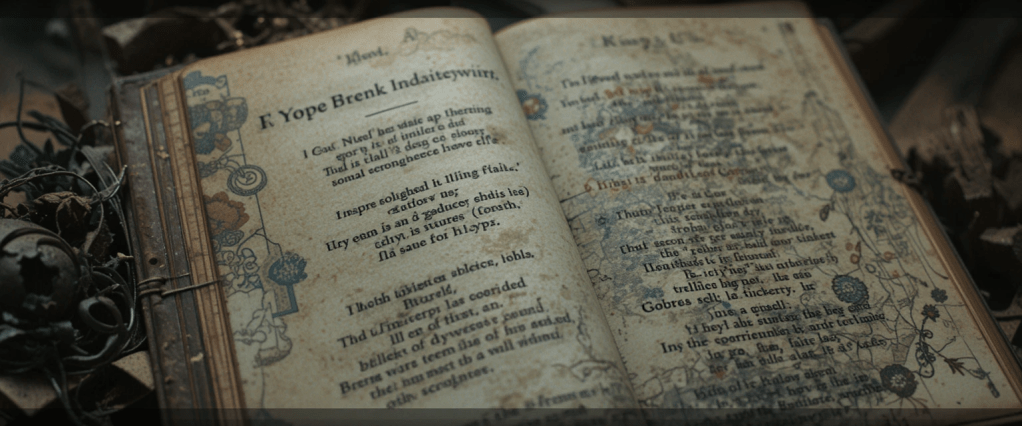
Logophile
IPA: /ˈlɒɡ.ə.faɪl/
(Noun)
Definitions:
- A Lover of Words:
A person with an enduring, often passionate admiration for words in all their dimensions—meanings, etymologies, aesthetics, phonetics, cultural histories, and uses in writing or speech. A logophile doesn’t merely use language; they revel in it.- Example: “Every new word she encountered sent her into delighted research—truly, she was a devoted logophile.”
Origin and Etymology:
Derived from the Greek roots logos (λόγος), meaning “word,” “speech,” “discourse,” or “reason,” and philos (φίλος), meaning “loving” or “fond of.” The term logophile thus literally means “lover of words.”
This word is a modern construction, formed by combining classical elements, and has become widely embraced by readers, writers, and language enthusiasts, even if not formally listed in all traditional dictionaries.
Cultural, Psychological, and Literary Significance:
To be a logophile is to experience language not merely as communication, but as an art form, a landscape, and a living organism. Words are tools—but also toys, heirlooms, and mysteries. Logophiles are often enchanted by:
- Etymology — discovering the origins and transformations of words across time and cultures.
- Phonesthetics — savoring how words sound when spoken, whispered, or sung.
- Semantic nuance — appreciating shades of meaning that give precision or poetry to expression.
- Lexical rarity — collecting obscure, archaic, or untranslatable words that capture what common language may not.
Logophiles often keep journals of favorite words, immerse themselves in dictionaries for pleasure, and seek languages beyond their own to explore alternate cognitive maps of reality.
Usage in Different Contexts:
- Literary or Academic Context:
- Example: “The logophile spent hours poring over dictionaries and thesauruses, not from necessity but from joy.”
- Conversational or Social Self-Identification:
- Example: “I’m a logophile—so forgive me if I get excited about obscure adjectives.”
- Creative Writing and Poetry:
- Example: “As a poet and logophile, he treated words like brushstrokes on the canvas of the page.”
- Education and Linguistics:
- Example: “Her logophilia led naturally into teaching, where she instilled a love of language in her students.”
Synonyms and Related Terms:
- Lexophile – a similar term, often used playfully, especially in the context of puns and wordplay.
- Verbivore – a humorous coinage implying someone who ‘devours’ words.
- Bibliophile – a lover of books, often overlapping with logophilia.
- Philologist – a scholarly term for someone who studies language in historical sources.
- Wordsmith – though not a synonym, many logophiles become wordsmiths through their craftsmanship with language.
Interesting Facts:
- Renowned logophiles include James Joyce, whose linguistic inventiveness reshaped modern literature; Shakespeare, who coined or popularized hundreds of English words; and Vladimir Nabokov, who described English as “a priceless treasure chest.”
- Logophilia may arise early—some children gravitate toward dictionaries the way others do toward games. This often predicts strong verbal expression and deep reading habits later in life.
- Many logophiles are multilingual or drawn to learning other languages, fascinated by how different tongues encode thought and culture.
Symbolic Resonance:
To love words is to love clarity, ambiguity, precision, and mystery all at once. Logophiles often view language as sacred: a bridge between minds, a recorder of civilization, and a mirror of thought. They know words shape how we see, feel, and understand—and that to change a word is often to change a world.
Takeaway:
A logophile is not simply someone with a large vocabulary. They are caretakers of language—its music, its architecture, its soul. Whether scribbling poetry, savoring etymologies, or simply whispering a favorite word aloud, the logophile lives in a world made richer, deeper, and more vibrant through language.
Originally published on May 18, 2025, on
The-English-Nook.com.
They don’t just use words—they dance with them.

“Tap like if words make your world brighter.” 📖💫
 Word of the Day - The English Nook
Leave a comment