

Umami
IPA: /uːˈmɑː.mi/
(Noun)
Definitions:
- The Fifth Basic Taste:
A savory, rich, and deep flavor profile distinct from the traditional four tastes—sweet, sour, salty, and bitter—often associated with broths, aged cheeses, mushrooms, meats, soy sauce, and fermented foods.- Example: “The dashi broth imparted a profound umami that elevated the entire dish.”
Origin and Etymology:
Umami is a Japanese word, derived from umai (うまい), meaning “delicious” or “pleasant tasting,” and mi (味), meaning “taste” or “flavor.” It was first scientifically identified in 1908 by Kikunae Ikeda, a Japanese chemist who isolated glutamate as the compound responsible for the flavor in kombu (kelp) broth.
Although long appreciated in Japanese cuisine, umami was only formally recognized in Western food science in the late 20th century, when receptors for umami taste were discovered on the human tongue.
Chemical Basis and Sensory Experience:
Umami is primarily triggered by glutamates and nucleotides like inosinate and guanylate, which occur naturally in many protein-rich and fermented foods. It produces a sensation of fullness and depth in flavor, often described as mouthwatering or meaty.
Unlike the sharpness of sour or the sweetness of sugar, umami is a round, mellow, and lingering taste that enhances the complexity and satisfaction of a dish.
Usage in Different Contexts:
- Culinary Description:
- Example: “The addition of miso gave the soup a rich umami that balanced the sweetness of the carrots.”
- Scientific and Nutritional Discussion:
- Example: “Researchers continue to explore how umami compounds influence appetite, satiety, and overall food enjoyment.”
- Gastronomic Innovation:
- Example: “Modern chefs deliberately craft umami bombs by layering mushrooms, soy, and slow-cooked meats.”
Synonyms and Related Concepts:
- Savory
- Meaty
- Brothy
- Mouth-filling
- Flavor depth
Cultural and Scientific Notes:
- Global Recognition: Though the term originated in Japan, umami is a universal taste found in many cuisines, from the tomato-based sauces of Italy to the anchovy and Parmesan combinations of Mediterranean dishes, to the Worcestershire-enhanced stews of England.
- Umami-Rich Foods:
- Parmesan cheese
- Soy sauce
- Shiitake mushrooms
- Tomatoes (especially cooked)
- Seaweed
- Fermented products (e.g., kimchi, fish sauce)
- Cured meats
- MSG Connection: Monosodium glutamate (MSG), a salt of glutamic acid, is a well-known umami enhancer used in seasoning blends worldwide, though its reputation has fluctuated in public discourse.
Takeaway:
Umami is the flavor of depth and satisfaction—the soulful undertone of a rich broth, the lingering savor of a well-aged cheese, or the primal comfort of roasted meat. As a bridge between taste and complexity, umami not only nourishes the body but evokes culinary pleasure that resonates across cultures and cuisines.
Originally published on May 8, 2025, on The-English-Nook.com.
Umami: the savory symphony your taste buds didn’t know they were missing.
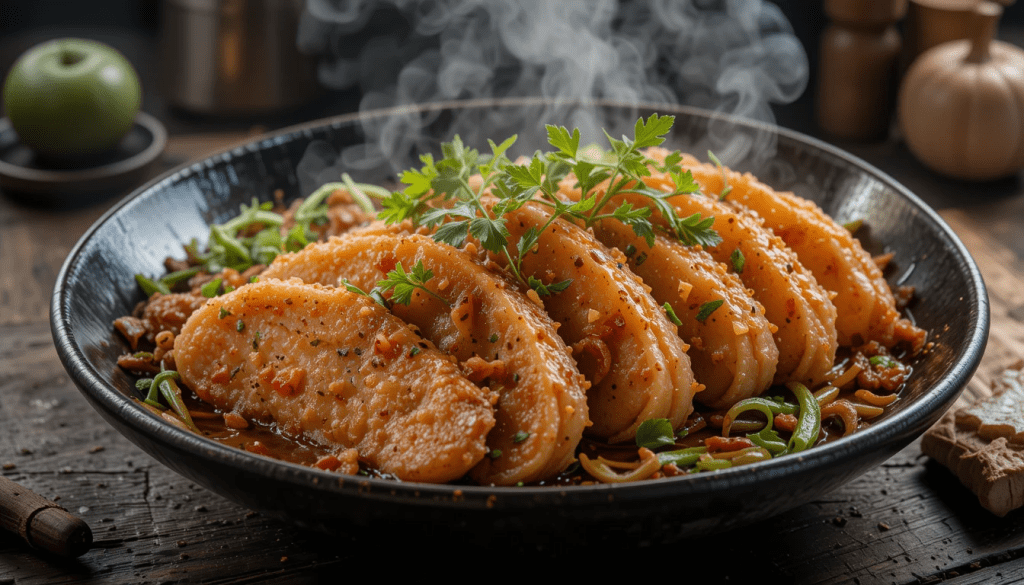
“Tap like if this post hits that fifth flavor just right.” 🍜😋
 Word of the Day - The English Nook
Leave a comment