
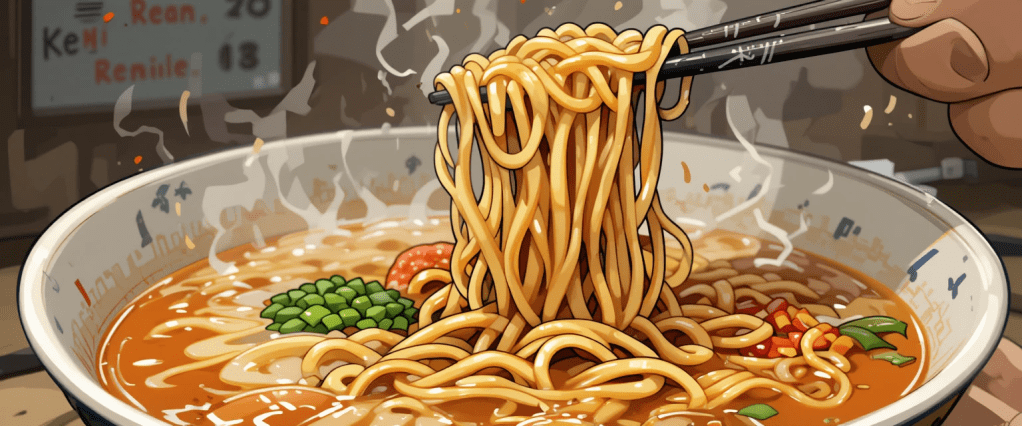
Ramen
IPA: /ˈrɑː.mən/
(Noun)
Definitions:
- Japanese Noodle Dish: A popular Japanese dish consisting of Chinese-style wheat noodles served in a flavorful broth, typically accompanied by toppings such as sliced pork (chashu), soft-boiled eggs, seaweed (nori), green onions, and bamboo shoots.
- Example: “She slurped her ramen eagerly, savoring the rich umami of the miso-based broth.”
- Instant Ramen: A pre-packaged version of the dish with dried noodles and flavoring packets, widely consumed around the world for its convenience and affordability.
- Example: “College students often rely on instant ramen as a late-night snack or quick meal.”
Origin and Etymology:
The word ramen is derived from the Chinese lāmiàn (拉麵), meaning “pulled noodles.” The dish was introduced to Japan from China in the late 19th or early 20th century and evolved into a uniquely Japanese culinary phenomenon. Today, ramen represents both street food culture and gourmet innovation.
Cultural and Culinary Significance:
A National Icon in Japan:
Though its roots are Chinese, ramen has been thoroughly adapted into Japanese cuisine. Each region of Japan has developed its own ramen style—such as Hakata’s creamy tonkotsu (pork bone broth), Sapporo’s hearty miso ramen, or Tokyo’s soy-based shoyu ramen. Ramen shops (ramen-ya) range from hole-in-the-wall counters to Michelin-starred establishments, showcasing a deep appreciation for broth-making and noodle texture.
Global Reach:
Instant ramen, developed in 1958 by Momofuku Ando, revolutionized convenience food. Today, it’s a staple in households and a cultural icon in its own right, with international ramen festivals, collector fandom, and high-end reinterpretations.
Usage in Different Contexts:
- Culinary Discussion:
- Example: “The chef aged his tare for weeks to perfect the balance of flavor in his signature ramen.”
- Cultural Commentary:
- Example: “Ramen embodies the fusion of humble origins and artisanal craftsmanship, bridging fast food and fine dining.”
- Global Cuisine Reference:
- Example: “Fusion dishes like kimchi ramen or vegan ramen have become staples in modern culinary scenes.”
Types of Ramen Broth:
- Shoyu (Soy Sauce): Clear brown broth with a salty, savory base.
- Miso: Thick and nutty, made from fermented soybean paste.
- Shio (Salt): Light and clear, often seafood-based.
- Tonkotsu: Rich, creamy broth from simmered pork bones.
Related Terms:
- Noodles
- Udon
- Soba
- Tare (seasoning sauce)
- Umami
- Tsukemen (dipping ramen)
Interesting Notes:
- Slurping ramen is not only acceptable in Japan but encouraged—it’s believed to enhance the flavor and show appreciation.
- Ramen culture is so ingrained in Japan that there are ramen museums, such as the Shin-Yokohama Ramen Museum.
- Ramen’s complexity lies in the broth: some take 12+ hours to prepare, incorporating elements like chicken fat, fish stock, or roasted vegetables.
Takeaway:
Ramen is more than noodles in soup—it is an expression of culinary philosophy, a social ritual, and a symbol of cultural exchange. Whether slurped in a bustling Tokyo alley or microwaved in a dorm room, ramen continues to evolve, nourishing bodies and imaginations across the globe.
Originally published on May 6, 2025, on The-English-Nook.com.
🍥 From street stall to Michelin star—ramen stirs the world, one slurp at a time.

“Tap like and let your soul slurp joy!” 🍜✨
 Word of the Day - The English Nook
Leave a comment