
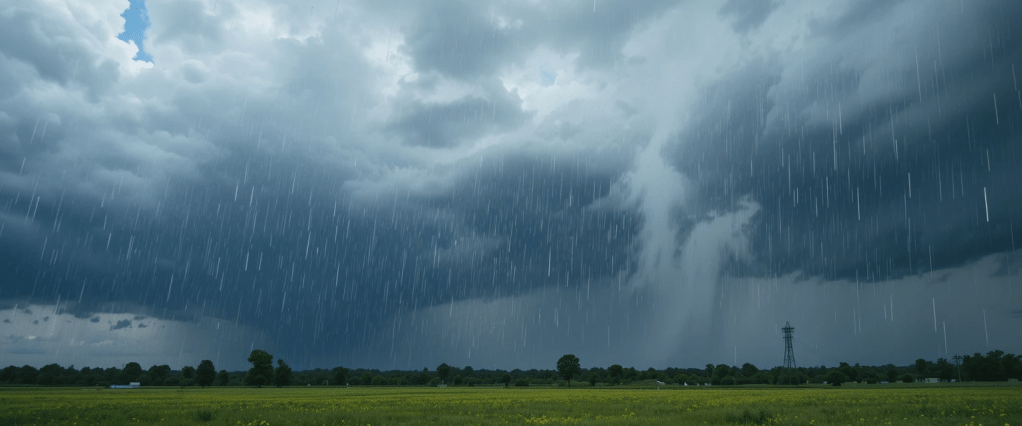
Virga
IPA: /ˈvɜːr.ɡə/
(Noun)
Definitions:
- Meteorological Phenomenon: Visible trails or streaks of precipitation (such as rain or snow) descending from clouds that evaporate or sublimate before reaching the ground due to dry air below the cloud base.
- Example: “The desert sky shimmered with wisps of virga trailing beneath the clouds, never touching the parched earth.”
Origin and Etymology:
From Latin virga, meaning “rod,” “switch,” or “twig,” the term reflects the slender vertical lines formed as precipitation falls from clouds in rod-like formations. The word was adopted into meteorological vocabulary in the 20th century to describe this specific, visually arresting event.
Scientific Characteristics:
Virga is typically observed beneath high-based clouds such as altocumulus, altostratus, or cumulonimbus formations. It occurs when precipitation begins to fall through the atmosphere but encounters a layer of dry air, causing the droplets or snowflakes to evaporate (in the case of liquid water) or sublimate (in the case of ice) before they can reach the surface.
While virga leaves the ground dry, it can still affect the lower atmosphere. As falling precipitation evaporates, it cools the surrounding air, potentially producing gusty downdrafts. These downdrafts, particularly in virga associated with thunderstorms, may result in microbursts—intense, dangerous wind shear events that are critical considerations for aviation safety.
Visual and Cultural Significance:
Aesthetically, virga appears like ghostly curtains, tendrils, or streamers hanging from the sky. Its fleeting presence often lends itself to metaphor in literature, visual art, and philosophical reflection—symbolizing impermanence, thwarted promise, or longing. Writers and poets have invoked virga as a visual metaphor for emotional states like unfulfilled desire or unreachable comfort.
Usage in Context:
- Scientific Observation:
- Example: “Meteorologists tracking virga formation in arid regions study how it influences surface wind patterns and thermal dynamics.”
- Literary and Poetic Imagery:
- Example: “Beneath a leaden sky, threads of virga unraveled like a memory that couldn’t quite be touched.”
- Environmental Monitoring:
- Example: “The virga was a common sight during the dry season—every cloud a promise broken in midair.”
- Aviation Alerts:
- Example: “The pilot adjusted course to avoid turbulence beneath the virga streaks trailing from the thunderhead.”
Related Terms and Concepts:
- Microburst – A small, intense downdraft caused by cooling from evaporating precipitation.
- Sublimation – The process by which a solid (such as snow or ice) changes directly into vapor.
- Precipitation Shaft – A concentrated column of rainfall that does reach the surface.
- Ghost Rain – A colloquial term for virga, highlighting its deceptive appearance.
Interesting Facts:
- Planetary Atmospheres:
NASA has observed virga-like phenomena on Mars, where snow falls from thin clouds and sublimates due to the planet’s low atmospheric pressure, never touching the Martian ground. - Role in Climate Perception:
Virga can mislead observers into believing rainfall has occurred. In agricultural regions, its presence without actual rain highlights the tenuous relationship between hope and environmental reality. - Influence on Folklore and Art:
The haunting quality of virga has made it a favored motif in desert photography, surrealist landscapes, and even speculative fiction where unseen or unreachable phenomena carry thematic weight.
Takeaway:
Virga is a meteorological phenomenon steeped in both science and symbolism—a visual echo of rain that hints at moisture yet denies it. It reflects the delicate balance between appearance and impact, the seen and the unfelt. From the deserts of Earth to the thin skies of Mars, virga serves as a quiet testament to the fleeting nature of beauty, the intricacies of atmospheric dynamics, and the poetry of weather suspended just out of reach.
Originally published on May 4, 2025, on The-English-Nook.com.
When the sky weeps but the earth stays dry—virga, nature’s vanishing act.
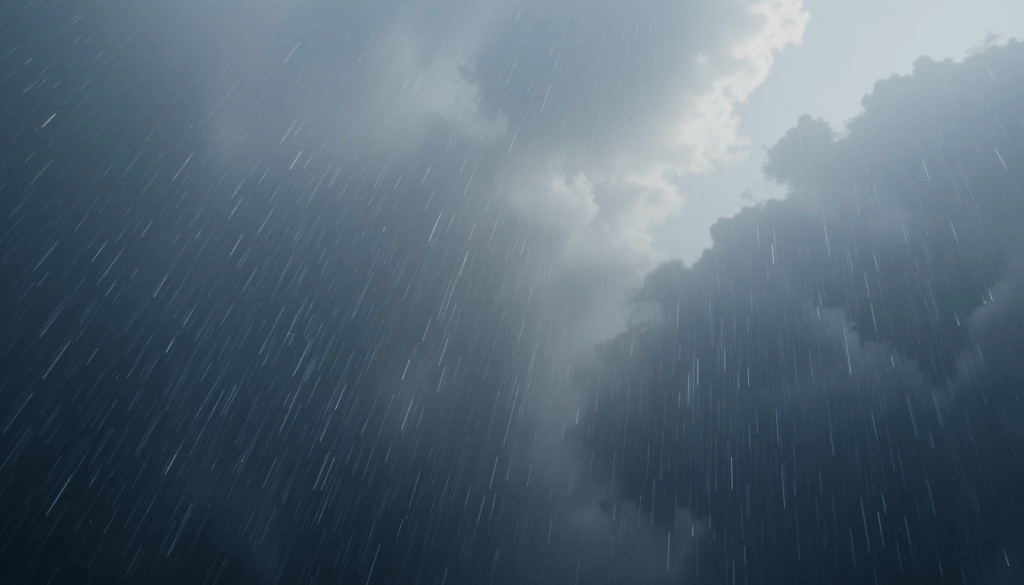
“Tap like for the rain that never lands, only lingers.” 🌧️✨
 Word of the Day - The English Nook
Leave a comment