
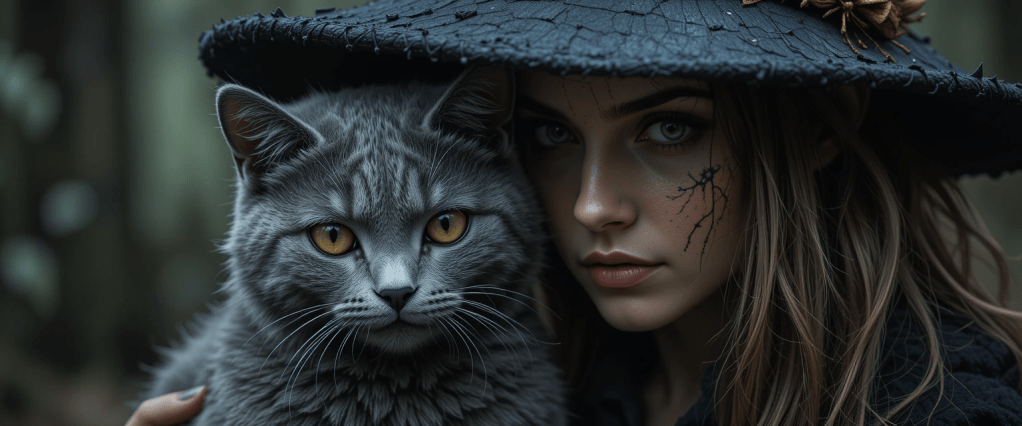
Grimalkin
IPA Pronunciation: /ˈɡrɪm.æl.kɪn/
(Noun)
Definition:
Grimalkin refers to an old or fierce-looking female cat, often with supernatural, mystical, or ominous undertones. Traditionally, the term implies a cat that is not just elderly but also wise, temperamental, or otherworldly in character. Its connotation may range from affectionate to menacing, depending on the cultural or literary context.
- Example: “The grimalkin sat atop the fence, her yellow eyes glowing eerily under the full moon.”
Etymology & Origins:
- Derived from Middle English:
- “Gray” (color) + “Malkin” (a diminutive of Maud or Matilda, and also a name historically applied to cats or lower-class women).
- The term malkin was sometimes used pejoratively in medieval English to denote a disheveled or scruffy woman, which lent a certain derogatory flair to the term when applied to a cat.
- Historical Use:
- First documented around the 16th century, in association with superstition and witchcraft.
- The association of cats with magic and omens further enriched the symbolic meaning of “grimalkin.”
Folklore & Cultural Associations:
- Witchcraft & the Occult:
- In Early Modern Europe, grimalkins were believed to be witches’ familiars — supernatural animals thought to serve as magical assistants.
- Cats, especially old or stray ones, were feared as omens or agents of the devil.
- In Shakespeare’s Macbeth, the witch’s call: “I come, Graymalkin!” immortalized the term in English literature as a token of dark enchantment.
- Symbolism in Literature:
- Used to invoke feelings of ancient knowledge, eerie quietude, or veiled threat.
- In gothic and fantasy literature, grimalkins often guard secrets, shadow the heroine, or mark the threshold between worlds.
- Contemporary Depictions:
- Still appears in modern fantasy and folklore-inspired works, especially stories with witches, magical realism, or gothic themes.
- In some cases, the term has been reclaimed affectionately by cat lovers, denoting a wise and venerable feline companion.
Examples in Context:
- “The villagers whispered about the grimalkin that roamed the forest, saying it was a witch reborn in feline form.”
- “She kept a grimalkin by her hearth, its knowing gaze unsettling to strangers.”
- “In the flickering candlelight, the grimalkin leapt silently onto the spellbook-laden table.”
- “Legends told of a grimalkin who guarded the ancient ruins, cursed to wander in cat form forever.”
- “Despite its matted fur and sharp claws, the grimalkin was revered as the guardian of the old apothecary’s secrets.”
Synonyms & Related Terms:
- Cat (archaic or poetic use)
- Familiar
- Mouser
- Crone-cat
- Graymalkin (variant spelling)
- Witch’s cat
Antonyms:
- Kitten
- Domestic housecat
- Playful pet
- Youthful feline
Interesting Facts:
- The term “Graymalkin” is often used interchangeably with grimalkin and appears in literary and dramatic texts.
- In Scottish and English folklore, some believed that a grimalkin was a shape-shifted witch, serving as a spy or familiar.
- The association between cats and supernatural power—especially during the witch trials—helped solidify the grimalkin’s eerie legacy.
- In modern Dungeons & Dragons and fantasy literature, grimalkins may appear as intelligent, even magical, feline creatures who serve as advisors or watchers.
Modern Usage:
While largely obsolete in casual conversation, grimalkin lives on in fantasy novels, folklore scholarship, poetry, and witchcraft literature, where it preserves its eerie allure and symbolic richness.
Takeaway:
A grimalkin is not merely a cat—it is a symbol woven through centuries of folklore, literature, and superstition. With its enigmatic presence and storied past, it evokes the mystical, the arcane, and the wise. Whether crouched by a hearth or silhouetted against a stormy sky, the grimalkin remains a creature of mystery, memory, and magic.
Originally published on April 29, 2025, on The-English-Nook.com.
Not just a cat—a whisper from the shadows of legend.
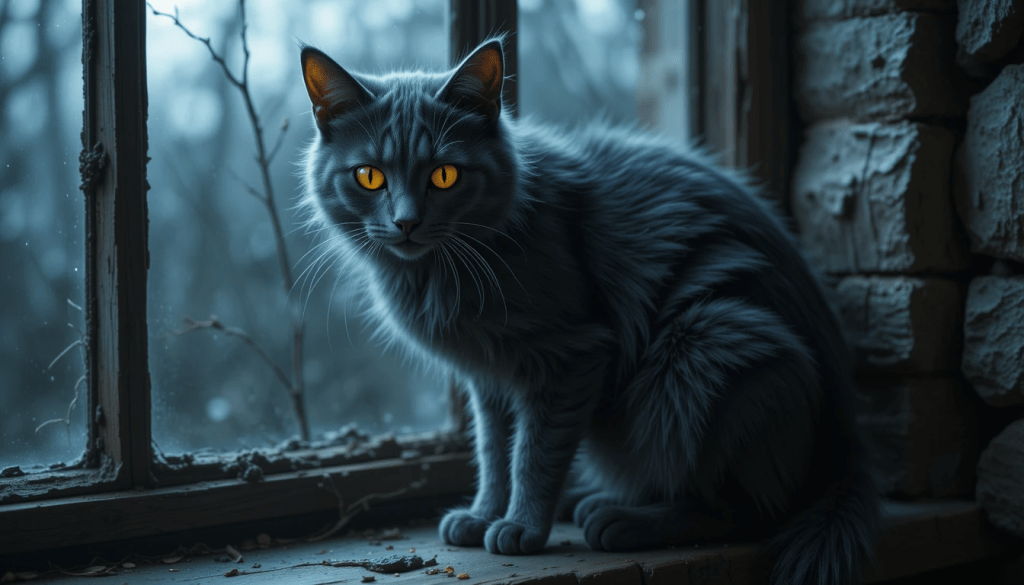
“Tap like and let the witch’s cat curl ’round your soul.” 🐈⬛🌒
 Word of the Day - The English Nook
Leave a comment