
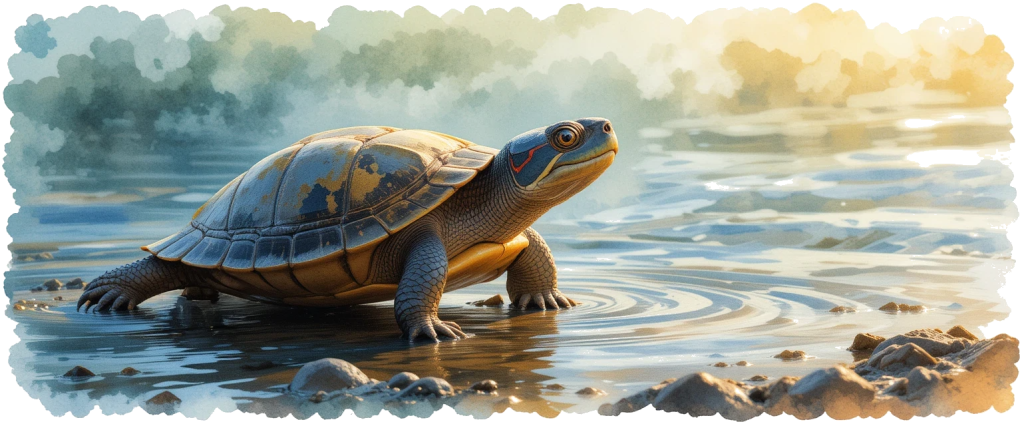
Terrapin
IPA Pronunciation: /ˈtɛr.ə.pɪn/
(Noun)
Definition:
A terrapin is a type of small to medium-sized freshwater or brackish-water turtle, especially those belonging to the family Emydidae. The term is often used to refer to aquatic turtles that inhabit marshes, swamps, and tidal creeks, particularly in North America.
- Example: “The terrapin basked on a sun-warmed log near the edge of the pond.”
Though sometimes used broadly, “terrapin” most commonly refers to the diamondback terrapin (Malaclemys terrapin), a species native to the brackish coastal tidal marshes of the eastern and southern United States.
Etymology and Origins:
The word “terrapin” comes from the Algonquian word torope or toropein, meaning “a little turtle.” It was adopted into English during colonial times, where it specifically described turtles found in the Chesapeake Bay region and similar habitats.
- Unlike “turtle” (which is more general) and “tortoise” (typically referring to land-dwelling species), “terrapin” was a regional term that later gained scientific and cultural significance.
Biological Classification:
- Kingdom: Animalia
- Phylum: Chordata
- Class: Reptilia
- Order: Testudines
- Family: Emydidae (for most terrapin species)
- Genus & Species: Varies; Malaclemys terrapin (diamondback terrapin) is the most well-known
Distinguishing Features:
- Habitat: Lives in brackish or freshwater environments such as estuaries, mangroves, lagoons, or tidal marshes.
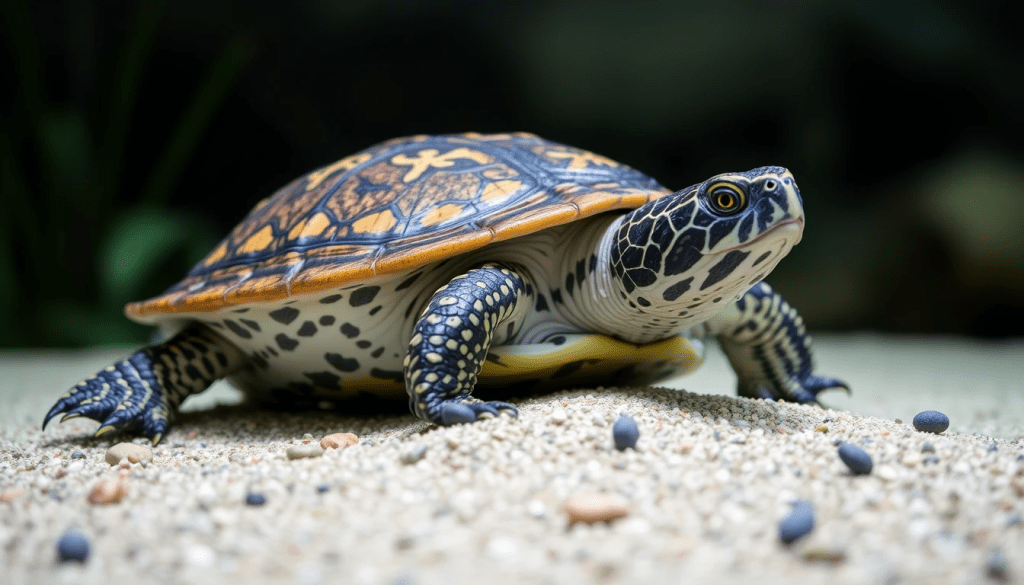
- Shell: Typically oval, domed, and often ornately patterned; coloration may include grays, greens, browns, or yellows.
- Size: Most terrapins range from 4 to 9 inches (10–23 cm) in shell length.
- Feet: Webbed, adapted for swimming, but also capable of limited land movement.
- Diet: Omnivorous — eats small fish, crustaceans, mollusks, aquatic insects, and plant matter.
Ecological Role:
Terrapins play a key role in their ecosystems by helping control populations of aquatic invertebrates and cleaning up detritus. Their burrowing and basking behaviors also influence habitat structure and microclimates in marshy regions.
Conservation Status:
Many species of terrapin, especially the diamondback terrapin, are considered vulnerable or threatened due to:
- Habitat loss (coastal development, pollution)
- Road mortality during nesting migrations
- Bycatch in crab traps (a major threat)
- Illegal pet trade
Conservation efforts include:
- Nest protection programs
- Wildlife corridors and “turtle fences”
- Modified crab traps with turtle excluder devices (TEDs)
Cultural and Historical Significance:
- Culinary History: Terrapin meat was once considered a delicacy in North America, particularly in the 18th and 19th centuries. Terrapin soup became a signature dish in fine dining, especially in the American South and in presidential banquets.
- Symbolism: In Native American traditions, turtles—including terrapins—often symbolize patience, longevity, and resilience.
- Sporting Mascot: The University of Maryland’s athletic teams are nicknamed the Terrapins (“Terps”), and the species serves as a cultural and environmental symbol in the Chesapeake Bay area.
Common vs. Scientific Usage:
While “terrapin” can sometimes be used colloquially for various small turtles, scientists tend to apply the term narrowly — often referring specifically to the diamondback terrapin.
Related Terms and Distinctions:
| Term | Habitat | Shell Type | Common Examples |
|---|---|---|---|
| Turtle | Mostly aquatic | Streamlined | Sea turtles, pond turtles |
| Tortoise | Terrestrial | Domed, heavy | Galápagos tortoise, sulcata |
| Terrapin | Fresh/brackish water | Semi-domed, hard | Diamondback terrapin, red-eared slider |
Synonyms & Related Terms:
- Freshwater turtle (general)
- Brackish-water turtle
- Diamondback (specific species)
Antonyms:
- Land-dwelling reptiles: Tortoises
- Fully marine turtles: Sea turtles (Cheloniidae, Dermochelyidae)
Examples in Context:
- “Terrapins are particularly active during the warmer months, often seen basking in clusters on rocks and logs.”
- “Due to habitat fragmentation, terrapins now struggle to reach nesting grounds safely.”
- “The bay’s ecosystem depends in part on the presence of terrapins, which help keep crab and snail populations in balance.”
Interesting Facts:
- Terrapins are among the few reptiles adapted to live in brackish water, where salt and freshwater mix.
- Female terrapins are significantly larger than males — a trait known as sexual dimorphism.
- A group of terrapins is called a bale.
- Some terrapins can hold their breath for over an hour while resting underwater.
Takeaway:
The terrapin is a resilient and ecologically vital creature, straddling the worlds of freshwater and saltwater. From its role in coastal marshlands to its cultural imprint on cuisine and regional identity, the terrapin is more than a turtle — it’s a symbol of adaptability, tradition, and natural heritage.
Originally published on April 21, 2025, on The-English-Nook.com.
More than a turtle — the terrapin carries nature, history, and culture on its back.
“One like for every slow, deliberate step toward resilience.” 🐢💚
 Word of the Day - The English Nook
Leave a comment