
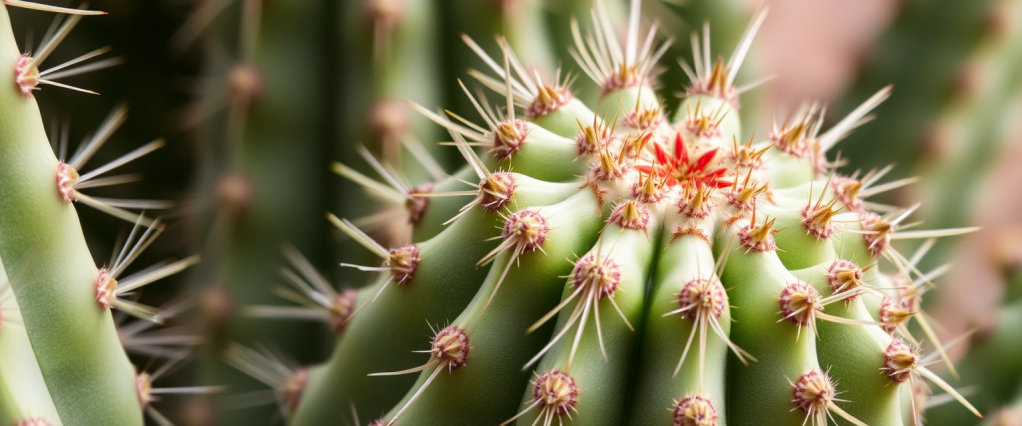
Areole
IPA Pronunciation: /ˈɛə.ri.oʊl/ or /ˈær.i.oʊl/
(Noun)
Definition:
An areole is a specialized structure found on the surface of cacti, functioning as a growth center from which spines, flowers, and new branches may develop. It is often small, rounded or oval, and may appear as a tufted or woolly patch distinct from the cactus’s epidermis.
- Example: “The cactus’s sharp spines emerged from tiny areoles evenly spaced along its ridges.”
In botanical terms, the areole is a defining feature of the Cactaceae family, making it a key taxonomic trait that distinguishes true cacti from other succulent plants.
Etymology and Origins:
From Latin areola, meaning “a small open space” or “little area,” which is a diminutive of area. The term was adopted into botanical vocabulary to describe these discrete, specialized zones on plant surfaces.
- Related to the word areola, which in anatomy refers to the pigmented area around the human nipple, though the botanical and anatomical uses are contextually distinct.
Morphology and Botanical Role:
Areoles are modified axillary buds—structures that in other plants typically give rise to branches or flowers. In cacti, they have evolved uniquely to accommodate a variety of functions:
- Spine production: Primary function for defense.
- Glochid development: In some genera like Opuntia, areoles produce barbed hair-like spines.
- Flowering points: Cactus flowers almost always develop from areoles.
- Cladode or stem branching: New growth or offsets often emerge from these sites.
Areoles may appear as:
- Tufts of white, woolly hairs
- Circular cushions or slight bumps on ribs or tubercles
- Zones bearing dense spine clusters
Ecological Importance:
The areole plays a central role in the adaptation of cacti to arid environments. By consolidating all growth-related functions into compact, protected nodes, cacti:
- Minimize water loss
- Reduce herbivory through defensive spines
- Maximize reproductive efficiency
Areoles often serve as a first line of identification in cactus taxonomy, with their shape, size, spacing, and spine configuration used to distinguish genera and species.
Example in Nature:
- “The golden barrel cactus has symmetrical areoles arranged in neat rows, each one topped with clusters of golden spines.”
- “After spring rains, flower buds began to swell from the areoles of the prickly pear cactus.”
Related Botanical Concepts:
| Term | Meaning |
|---|---|
| Tubercles | Protruding bumps from which areoles may emerge in some cactus species. |
| Glochids | Tiny, barbed hairs that grow from areoles in the Opuntia genus. |
| Axillary Buds | Generalized growth points in many plant species—evolutionary origin of areoles. |
Synonyms and Related Terms:
- Spine cluster (informal)
- Growth point (generalized)
- Floral node (for flower-emergent areoles)
Antonyms:
While areoles are unique to cacti, their absence in other succulent species is sometimes mistakenly overlooked.
- Non-cactaceous succulents: Plants like Euphorbia may resemble cacti but lack areoles, helping differentiate them taxonomically.
Scientific and Horticultural Significance:
- Identification Tool: Areoles are critical to distinguishing true cacti from impostor succulents.
- Horticulture: Knowledge of areole behavior aids in propagation techniques and predicting flowering cycles.
- Research: Their evolutionary development is a key study area in understanding cactus specialization.
Interesting Facts:
- Areoles are unique to the cactus family (Cactaceae)—if a plant doesn’t have them, it’s not a true cactus.
- Some cacti, such as Pereskia, have leaf-bearing areoles, suggesting ancestral traits before spine-only adaptations evolved.
- The number and orientation of spines from an areole are often species-specific and can form intricate, symmetrical patterns.
Takeaway:
The areole is more than a small spot on a cactus—it is a signature of evolutionary innovation. Compact yet multifunctional, it represents the cactus’s finely tuned adaptation to harsh, dry environments, and stands as a botanical hallmark that blends form, function, and beauty in nature’s harshest terrains.
Originally published on April 20, 2025, on The-English-Nook.com.
Small spot, big role—areoles are the cactus’s secret weapon for survival and identity!
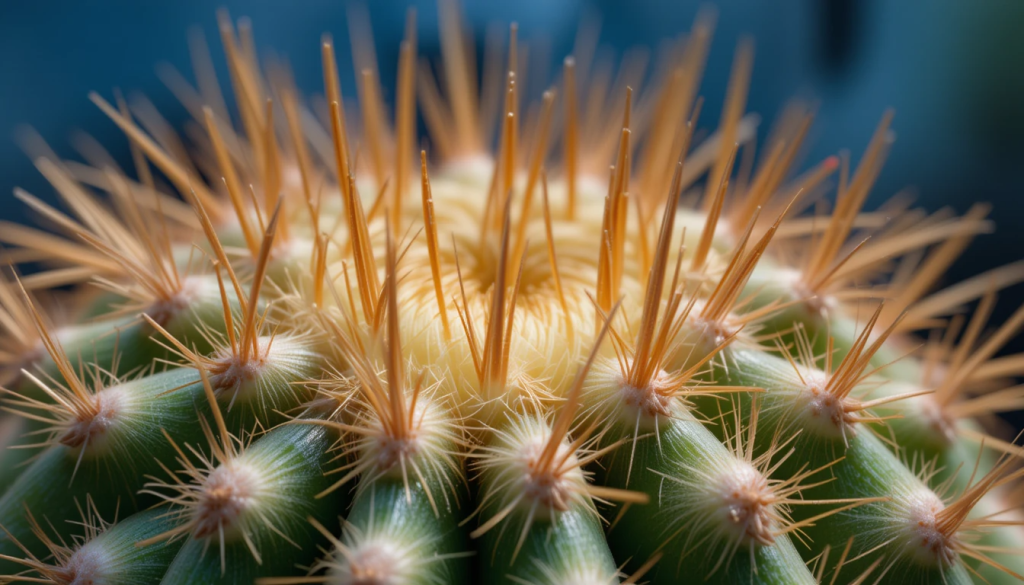
“Tap like and bloom from the stillness, as the cactus births brilliance from its areole.” 🌵✨
 Word of the Day - The English Nook
Leave a comment