
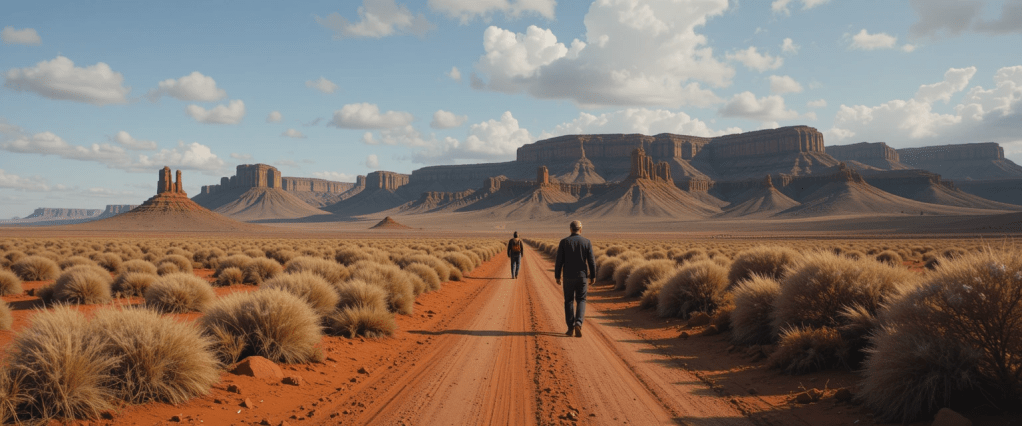
Karoo
IPA Pronunciation: /kəˈruː/
(Proper Noun)
Definition:
The Karoo is a vast, semi-arid plateau region in South Africa, known for its stark beauty, distinctive ecology, dramatic geological history, and cultural significance. It comprises two major sub-regions: the Great Karoo and the Little Karoo, each with unique climates, landscapes, and biodiversity.
Etymology and Origins:
The word Karoo is derived from the Khoekhoe (a Khoe language) term ǃ’Aukarob or Karusa, meaning “land of thirst” or “dry place”, reflecting the region’s often harsh, arid environment.
- Indigenous San and Khoekhoe peoples lived in the Karoo for thousands of years, adapting to its sparse resources with rich oral traditions and a deep relationship to the land.
Geographic and Environmental Characteristics:
| Feature | Description |
|---|---|
| Location | Central South Africa, spanning multiple provinces including the Northern Cape, Eastern Cape, and Western Cape. |
| Topography | Expansive plains, low-lying hills, tablelands, and isolated mountain ranges. |
| Climate | Semi-desert: hot, dry summers; cold winters with frost and occasional snow in higher elevations. |
| Soil and Water | Shallow, rocky soil with poor water retention. Scarce surface water, but rich in underground aquifers and fossil beds. |
Sub-Regions of the Karoo:
- Great Karoo
- The larger and more arid of the two.
- Dominated by expansive plains, sparse vegetation, and dramatic skies.
- Home to fossil-rich deposits from the Karoo Supergroup, a key geologic formation used in global paleontological research.
- Little Karoo (Klein Karoo)
- Smaller, slightly more fertile, nestled between mountain ranges (Swartberg and Langeberg).
- Famous for ostrich farming, vineyards, and art towns like Oudtshoorn.
- A blend of Mediterranean and semi-arid climates.
Ecological Significance:
Despite its aridness, the Karoo is a biodiversity hotspot, particularly for succulents and endemic plant species.
- Vegetation:
- Dominated by fynbos, renosterveld, karroid shrubs, and aloes.
- Adapted to drought, with minimal leaf area and deep root systems.
- Wildlife:
- Includes meerkats, aardvarks, bat-eared foxes, bustards, and many reptiles and insects specially adapted to dry climates.
- Paleontology:
- The Karoo Basin holds one of the richest fossil records of pre-dinosaur and early reptilian life on Earth.
- The Permian-Triassic extinction event, the most significant mass extinction in Earth’s history, is well-documented in the region’s strata.
Cultural and Historical Context:
- San Rock Art: Some of the oldest known examples of indigenous rock paintings are found in the Karoo, revealing the rich symbolic and spiritual life of early inhabitants.
- Colonial History: The Karoo was a crossroads during South Africa’s colonial expansion and the Great Trek.
- Railways and Infrastructure: Towns like Matjiesfontein and Beaufort West played pivotal roles in the spread of rail travel and commerce across South Africa.
Modern Relevance and Usage:
- Astronomy: The Karoo is now home to major international observatories, including the MeerKAT and SKA (Square Kilometre Array) radio telescopes — taking advantage of its clear, dark skies and low electromagnetic interference.
- Agriculture: Sheep farming (especially karakul and dorper sheep), ostrich rearing, and rooibos cultivation are prominent.
- Tourism: A growing destination for eco-tourism, stargazing, fossil tours, and cultural heritage.
Examples in Sentences:
- “The long, silent plains of the Karoo stretched endlessly toward the horizon, broken only by windmills and acacia trees.”
- “Paleontologists from around the world come to the Karoo to study fossils that date back over 250 million years.”
- “Her childhood was spent under the searing sun and crystalline stars of the Karoo, where silence was a living presence.”
Synonyms and Related Terms:
- Plateau, semi-desert, veld, scrubland (contextual and ecological similarities)
- Fossil beds, succulent biome, arid zone
Antonyms:
- Rainforest, wetland, tropical zone, humid lowland
Interesting Facts:
- The Karoo Supergroup is a globally studied geological formation that records a near-continuous span of Earth’s history from Carboniferous to Jurassic periods.
- The skies above the Karoo are among the clearest on the planet, making it one of the most important radio astronomy sites in the Southern Hemisphere.
- The word “Karoo” has entered poetic and travel literature as a symbol of solitude, space, and existential silence.
Takeaway:
The Karoo is more than a region — it is a place of paradoxes: harsh and delicate, desolate and teeming with life, ancient and yet at the cutting edge of science. It speaks to South Africa’s geological grandeur, ecological uniqueness, and the enduring presence of time carved into its vast, sunburned landscape.
Originally published on April 17, 2025, on The-English-Nook.com.
“Where the Earth remembers—and the stars still speak.”

“Tap like and feel the stillness of the Karoo stretch to the horizon.” 🌵🌅
 Word of the Day - The English Nook
Leave a comment