
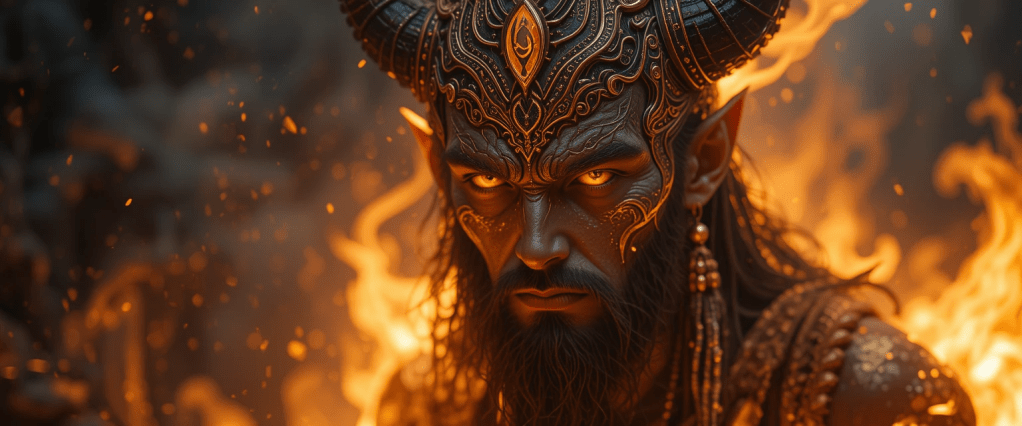
Ifrit
IPA Pronunciation: /ˈɪf.riːt/
(Noun – Mythological Being)
Plural: Ifrits or Afārīt (/ˌæ.fɑːˈriːt/)
Definition:
An Ifrit is a supernatural entity from Islamic mythology and Middle Eastern folklore, typically portrayed as a powerful, fiery jinn associated with strength, vengeance, rebellion, and the underworld. Although often considered malevolent, Ifrits are capable of free will, and in some legends, they can be benevolent, loyal, or even heroic — depending on the tale and the summoner’s intent.
Etymology & Origins:
The term Ifrit (Arabic: عِفْرِيت, ʿifrīt) likely stems from the Arabic root ʿ-f-r, which can be linked to meanings of rebellion, cunning, or force.
In pre-Islamic and early Islamic lore, Ifrits were described as one of the most formidable types of jinn, later becoming culturally distinct as beings of elemental fire, often misunderstood as “demons” in Western translations.
Mythological Context & Cosmology:
- According to Islamic theology, jinn were created by Allah from smokeless fire, unlike humans (from clay) or angels (from light).
- Among these jinn, the Ifrit is a particular category or tribe, often marked by their fiery nature, strength, and independent will.
- In the Qur’an (Surah An-Naml, 27:39), an Ifrit of the jinn offers to bring Queen Bilqis’s throne to Solomon before he finishes rising from his seat — indicating that Ifrits are not merely chaotic, but capable of intelligence and service.
Characteristics & Traits:
| Aspect | Description |
|---|---|
| Elemental Nature | Associated with fire, flame, smoke, ash, and heat |
| Physical Form | Often depicted as tall, fearsome, horned beings with flaming auras or smoldering eyes |
| Disposition | Fierce, proud, independent — but not always evil |
| Abilities | Shape-shifting, invisibility, immense strength, magical combat, flight |
| Dwelling | Deserts, ruins, subterranean chambers, or hidden spirit realms |
| Moral Alignment | Ambiguous — capable of good or evil actions depending on their choices or control by others |
In Literature & Folklore:
Ifrits appear in classical Islamic and Arabic literature, including:
- “One Thousand and One Nights (Arabian Nights)” — where they feature as cursed princes, vengeful guardians, or punished spirits.
- Islamic traditions — as beings who, while rebellious, can still submit to God or be bound by magic, prayer, or talismans.
Modern Depictions:
- In Final Fantasy, Ifrit appears as a fire elemental summon, often portrayed as a flame-covered beast.
- In Dungeons & Dragons, Ifrits are reimagined as a fiery genie-like race.
- In novels like The City of Brass (S.A. Chakraborty) and The Bartimaeus Trilogy (Jonathan Stroud), Ifrits are powerful and morally complex spirits.
Magical Lore:
- Control Methods: Spells, seals, divine names, enchanted rings, or amulets can control or bind an Ifrit.
- Warnings in Lore: Summoning an Ifrit without full knowledge is considered reckless — tales often warn that failing to command one properly may result in the summoner’s destruction.
Cultural Variants and Relatives:
| Related Spirit | Region | Description |
|---|---|---|
| Marid | Arabian | Proud, oceanic jinn with great magical power |
| Shaitan | Islamic | Evil spirit, often aligned with Iblis (Satan) |
| Jann | Arabian desert lore | Generally benevolent, ancestral spirits of the desert |
| Genie | Western fiction | Sanitized version of jinn, derived from French “génie” |
Usage in Sentences:
- “Legends say that deep beneath the city’s ruins, an Ifrit still sleeps, bound by silver chains and ancient spells.”
- “The magician dared to summon an Ifrit, knowing that one mistake could ignite a war between realms.”
- “Not all jinn are wicked, but beware the wrath of an unbound Ifrit.”
Symbolism and Meaning:
Ifrits symbolize raw power, rage, and the primal forces of fire. They are manifestations of unchecked will, and their presence in stories often represents a test of strength, intellect, or control. In some mystical traditions, confronting or bargaining with an Ifrit can signify a confrontation with one’s inner demons or shadow self.
Takeaway:
An Ifrit is not just a creature of myth — it is a mirror of our understanding of power without compassion, fire without direction, will without boundaries. Whether portrayed as villains, protectors, or tragic figures, Ifrits endure as fascinating symbols of what lies beyond the veil of fire and myth.
Originally published on April 15, 2025, on The-English-Nook.com.
Born of fire, ruled by will — the Ifrit is myth’s fiercest flame.
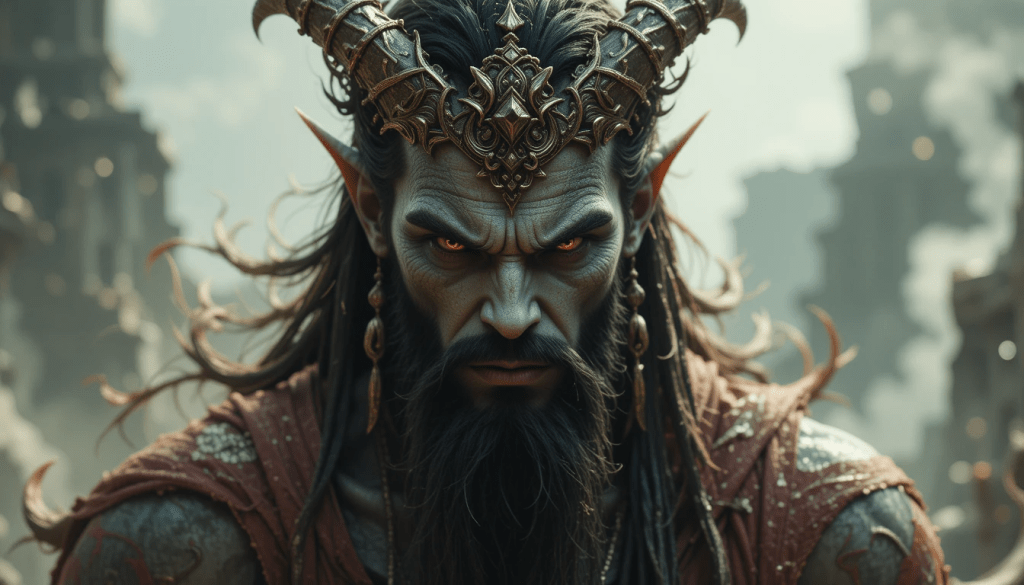
“One like to summon the stormwalker, crowned in fire and fury.” 🌪️👑
 Word of the Day - The English Nook
Leave a comment