
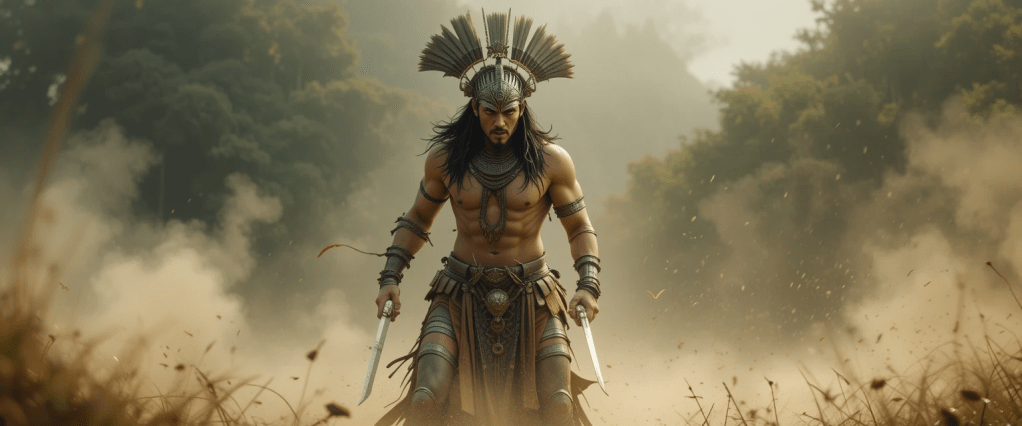
Haka
IPA: /ˈhɑː.kə/
(Noun)
Origin: From the Māori language of Aotearoa (New Zealand), with ancestral roots in Polynesian traditions of ceremonial and martial expression.
Definition:
A traditional Māori posture dance characterized by synchronized movements, vigorous foot-stamping, rhythmic body slapping, and forceful vocal chanting. The haka expresses a range of powerful emotions—challenge, unity, pride, grief, joy—and serves many cultural functions, from welcoming guests to preparing for battle, from mourning the dead to celebrating life.
- Example: “Before the match, the All Blacks performed a powerful haka, echoing through the stadium with raw emotion and pride.”
Etymology and Cultural Origins:
- The word haka comes from the Māori language and originally described any form of dance or performance, not just war dances.
- Its deeper roots can be traced through Polynesian voyaging cultures, who brought forms of ceremonial dance across the Pacific, evolving uniquely in Aotearoa as haka under Māori tikanga (customs and values).
Purpose and Functions:
Haka is not simply performance—it is cultural embodiment, used in:
- Wero (Challenge):
Historically performed before battle to intimidate enemies and declare strength, courage, and readiness. - Pōwhiri (Ceremonial Welcome):
Offered to guests as a sign of honor, respect, and the spiritual acknowledgment of their presence. - Tangihanga (Funerals):
Performed as an expression of deep mourning, respect for the deceased, and connection to ancestors. - Celebration and Solidarity:
Used during weddings, graduations, military honors, and sporting events to mark pride, achievement, and unity. - Protest and Resistance:
Haka can also serve as a form of cultural resistance and political statement, reclaiming Māori voice and visibility.
Structure and Characteristics:
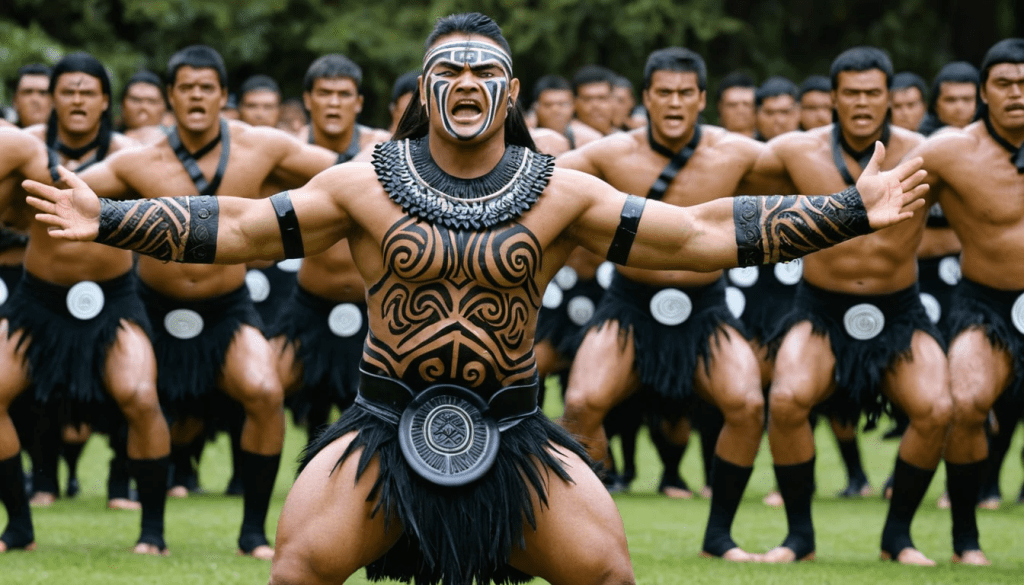
- Posture: Performed standing, with knees bent, chest forward, and eyes wide—embodying alertness and intensity.
- Actions: Include body slapping, foot-stomping, tongue protrusions (pūkana), and eye bulging to heighten emotional power.
- Voice: The haka is accompanied by chanting, often in unison, telling a story or transmitting a message.
- Leadership: One or more leaders may guide the performance, prompting responses from the group.
Famous Types of Haka:
- Ka Mate:
Composed by Te Rauparaha, a 19th-century Ngāti Toa chief. It is the most globally recognized haka, famously performed by New Zealand’s All Blacks rugby team.- “Ka mate, ka mate! Ka ora, ka ora!” — “It is death, it is death! It is life, it is life!”
- Kapa o Pango:
A modern haka created specifically for the All Blacks, emphasizing New Zealand’s identity and the silver fern symbol. - Peruperu:
A traditional war haka involving leaps into the air and weaponry—performed with fierce intensity before battle. - Ngāti Porou haka, Ngāti Kahungunu haka, etc.:
Each iwi (tribe) has distinct haka forms, rhythms, and meanings, rooted in their unique tribal history and tikanga.
Cultural Significance:
Haka is a taonga (treasure), deeply embedded in Māori identity. It is more than movement—it is whakapapa (genealogy), wairua (spirit), and mana (prestige). Each performance connects the living with ancestors, with the land, and with each other.
- Spiritual Power: Haka is an embodiment of mauri (life force), performed with full presence and intention.
- Intergenerational Connection: Haka preserves oral history, passing down stories, values, and tribal identity.
- Expression of Mana: Performing haka gives voice to identity, courage, and communal pride.
Examples in Context:
- “The haka before the ceremony moved everyone to tears—it was both a tribute and a farewell.”
- “Children learned the haka not just for performance, but to understand where they come from.”
- “During the protest, the haka rang out defiantly, reminding all of the strength of Māori resistance.”
Modern Recognition and Global Reach:
- Internationally, haka is most known through New Zealand’s national sports teams, particularly the All Blacks, who perform it before matches as a powerful emblem of national and indigenous pride.
- However, haka is not exclusive to sports and must be approached with respect—cultural misappropriation or caricature can deeply offend Māori communities.
- Māori-led initiatives continue to educate, revitalize, and protect haka traditions, ensuring their sacred integrity endures.
Related Terms:
- Kapa haka: Māori performing arts groups that combine haka with song and poi.
- Waiata: Song, often used in tandem with haka in ceremonial settings.
- Pūkana: Facial expressions used to convey fierce emotion.
- Mana: Power or authority carried within haka and the people who perform it.
Takeaway:
Haka is a living, breathing expression of identity, history, spirit, and strength. Rooted in ancient tradition and still evolving, it is a sacred language of the body and voice. To witness a haka is to feel the heartbeat of a people. To perform it—properly and respectfully—is to stand in the current of ancestral power.
Originally published on April 9, 2025, on The-English-Nook.com.
Haka and the Voice of Aotearoa 🗣️🌿
Like the haka—fierce, proud, and full of mana—New Zealand English pulses with identity. It’s more than just words; it’s rhythm, culture, and connection.
Want to feel the language that moves with the spirit of Aotearoa?
Read on and experience English, Kiwi-style.
British English vs. New Zealand English
More than a dance—haka is the heartbeat of a people, echoing across generations.
“Hit like and let your soul stomp the earth — fierce as the ancestors, loud as the skies.” 🌍🌩️
 Word of the Day - The English Nook
Leave a comment