
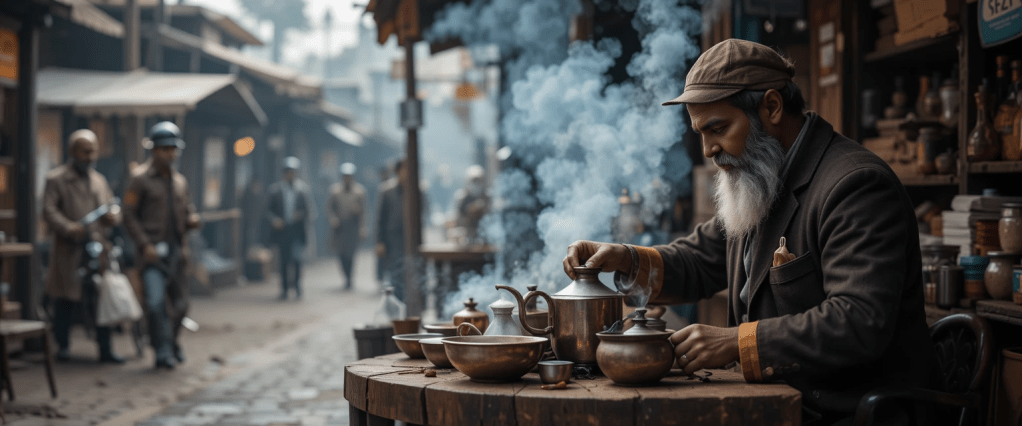
Chaiwala
IPA: /ˈtʃaɪ.wɑː.lɑː/
(Noun)
Definitions:
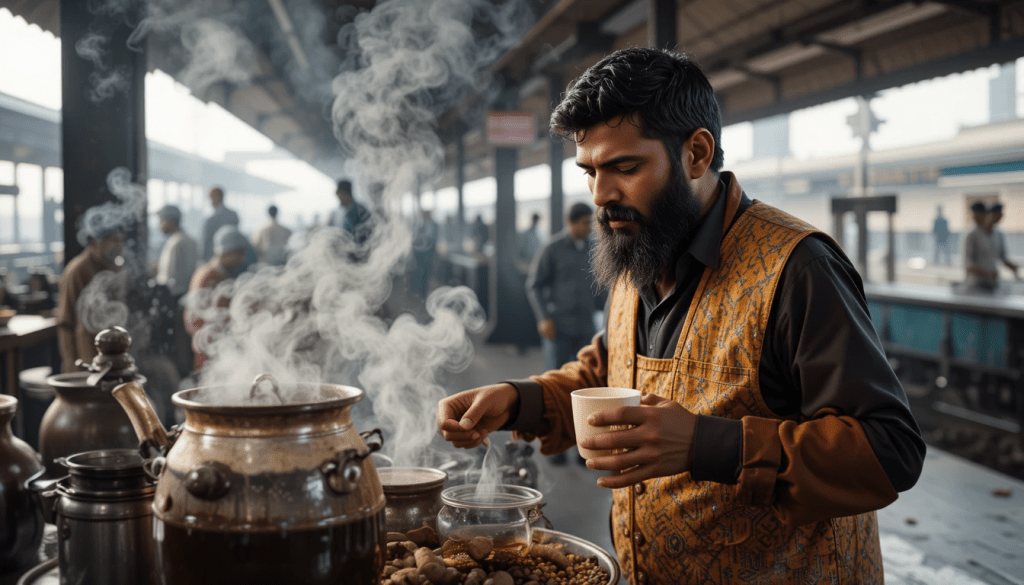
- Tea Vendor: A street-side or small shop owner who specializes in preparing and selling chai (Indian spiced tea), often found in bustling marketplaces, train stations, and street corners.
- Example: “The chaiwala at the station brewed tea with fresh ginger and cardamom, filling the air with a rich aroma.”
- Cultural Icon: A symbol of India’s vibrant tea culture, where chaiwalas serve as storytellers, social connectors, and integral parts of daily life.
- Example: “For decades, the old chaiwala had been serving tea to office workers, students, and travelers alike.”
Expanded Explanation:
Etymology and Origins:
The term chaiwala comes from Hindi चायवाला (chāyawālā), where:
- Chai (चाय) means “tea” (borrowed from Chinese chá).
- Wala (वाला) is a suffix used in Hindi, Urdu, and other South Asian languages to denote a person associated with a trade or occupation.
Thus, chaiwala literally translates to “tea person” or “tea seller.” - Example: “The word chaiwala is commonly used in India, Pakistan, Nepal, and Bangladesh to refer to tea vendors.”
Roles and Significance of a Chaiwala:
- Street-Side Chaiwalas:
- Found in bustling markets, railway stations, and street corners, they serve hot chai in small clay cups or glass tumblers.
- Example: “The chaiwala poured the tea skillfully from a height, creating a frothy, aromatic cup for his customers.”
- Chai as a Social Ritual:
- Chaiwalas are often the heart of informal gatherings, serving as community hubs where people discuss politics, business, and daily life.
- Example: “Every evening, workers gathered at the roadside chaiwala’s stall to share news and unwind after a long day.”
- Train Station Chaiwalas:
- Indian railways are famous for chaiwalas walking through train compartments, selling steaming cups of tea to passengers.
- Example: “A chaiwala’s call of ‘chai, chai garam!’ (hot tea!) is a familiar and comforting sound for train travelers in India.”
- Symbol of Hard Work and Entrepreneurship:
- Many chaiwalas start with humble setups and grow their businesses into thriving tea stalls or cafés.
- Example: “From a roadside stall to a chain of tea cafés, the chaiwala’s journey was one of determination and success.”
Synonyms and Related Terms:
- Tea seller
- Tea vendor
- Chai vendor
- Tea maker
Antonyms:
- Coffeehouse barista (for contrast with modern café culture)
- Self-service tea machine (for an automated alternative)
Examples in Context:
- “The chaiwala near my office knows exactly how I like my tea—extra strong with a pinch of ginger.”
- “During monsoon season, nothing beats a cup of chai from a roadside chaiwala and a plate of hot pakoras.”
- “The railway chaiwala handed out cups of piping hot masala chai to passengers hurrying onto the train.”
- “Even in the digital age, chaiwalas remain an essential part of Indian daily life, serving tea to millions every day.”
Cultural and Historical Significance:
- A National Staple: Chai is deeply woven into Indian culture, and chaiwalas serve as the keepers of this tradition.
- Global Recognition: Chaiwalas have gained international fame, with the term being recognized worldwide due to India’s tea culture.
- Famous Chaiwalas:
- Narendra Modi, Prime Minister of India, once worked as a chaiwala in his early years.
- Arshad Khan, a Pakistani chaiwala, became an internet sensation due to his striking looks, leading to a modeling career.
Interesting Facts:
- Masala chai, often sold by chaiwalas, is made by boiling black tea with spices like cardamom, ginger, cinnamon, and cloves.
- Many chaiwalas prepare tea using a “pulling” method, pouring it from one container to another to aerate the liquid and enhance its flavor.
- In some regions, tea is served in kulhads (small clay cups), which add an earthy aroma to the drink and are eco-friendly.
- Chaiwalas often have their own secret recipes, passed down through generations, giving each stall a unique taste.
Takeaway:
A chaiwala is not just a tea vendor but a cultural cornerstone of South Asian society—serving as a daily comfort, a meeting point, and a symbol of resilience and entrepreneurship. Whether at a bustling market, a railway platform, or a quiet street corner, the humble chaiwala continues to keep traditions alive, one cup at a time.
Originally published on April 2, 2025, on The-English-Nook.com.

Chaiwala and the Language Brew
Like a roadside chaiwala blending spices into the perfect cup of tea, Indian English mixes regional flavors, global influences, and cultural identity. From Hinglish to corporate boardrooms, this evolving linguistic brew reshapes communication and challenges norms worldwide.
☕ Discover how Indian English is redefining language—read more!
Indian English: A Tapestry of Regional Diversity and Global Influence
More than tea—chaiwalas brew culture, conversations, and a taste of tradition in every cup! 🍵✨
“Like this and take a moment to pause, sip, and embrace the simple joys!” 🍵🌿
 Word of the Day - The English Nook
Leave a comment