

Darshan
IPA: /ˈdɑːrʃən/
(Noun)
Definitions:
- Sacred Sight or Vision: The act of seeing and being seen by a deity, saint, or revered figure, often in a religious or spiritual context.
- Example: “Pilgrims travel great distances to receive darshan of the sacred idol at the temple.”
- Philosophical Insight or Spiritual Realization: A profound moment of understanding, often linked to Hindu, Buddhist, and Jain traditions, where one gains deeper knowledge through vision or contemplation.
- Example: “During meditation, he experienced a moment of darshan, feeling an intense connection with the divine.”
- The Physical Presence of a Holy Person: The act of being in the presence of a guru, saint, or enlightened master, often believed to confer blessings or spiritual energy.
- Example: “Disciples gathered to have darshan of their guru, feeling uplifted by his mere presence.”
Expanded Explanation:
Etymology and Origins:
The word darshan comes from Sanskrit दर्शन (darśana), meaning “sight,” “vision,” or “to see.” It is derived from the root dṛś (दृश्), meaning “to see” or “to perceive.” The term has deep roots in Hindu, Buddhist, Jain, and Sikh traditions, where seeing a sacred being or object is considered a spiritual experience.
- Example: “In Hindu temples, devotees queue for hours just to have a brief darshan of the deity, believing that a single glance can purify the soul.”
Types and Contextual Uses:
- Temple Darshan (Sacred Vision):
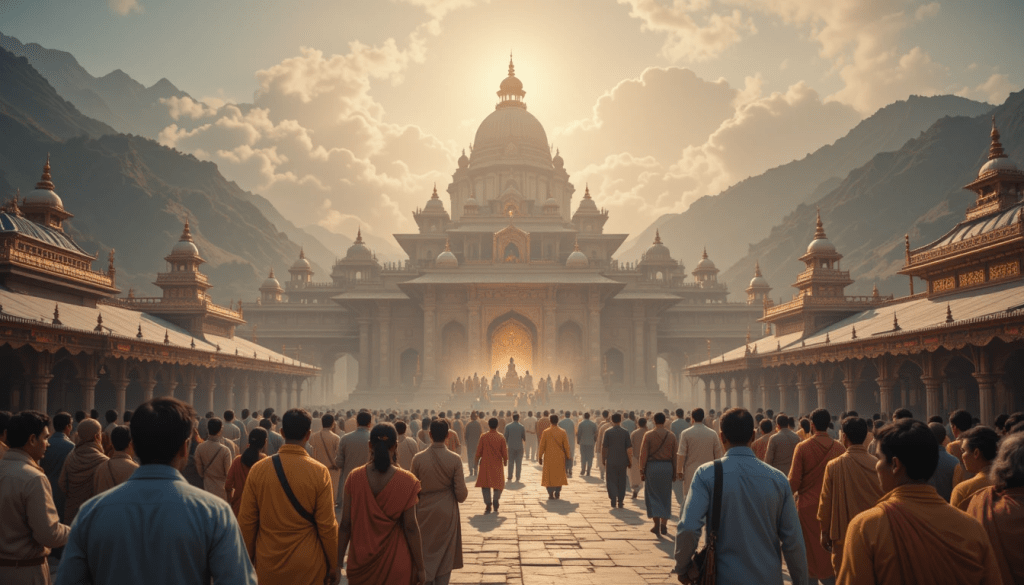
- The act of seeing a deity’s image in a temple or shrine, often accompanied by rituals and prayers.
- Example: “At the famous Tirupati temple, thousands of devotees wait in line every day for darshan of Lord Venkateswara.”
- Guru Darshan (Presence of a Spiritual Teacher):
- Receiving blessings from a guru or enlightened being by being in their presence.
- Example: “His life changed after receiving darshan from a great saint, who radiated wisdom and peace.”
- Philosophical Darshan (Schools of Thought):
- In Hindu philosophy, Darshanas refer to six major schools of thought that provide different perspectives on reality and the nature of existence.
- Example: “Vedanta and Yoga are two of the six classical darshanas of Hindu philosophy, each offering a different path to enlightenment.”
- Mystical or Spontaneous Darshan:
- A sudden spiritual vision, often reported by mystics or seekers during deep meditation or devotion.
- Example: “As she chanted the mantras, she had an unexpected darshan of Lord Krishna in her mind’s eye.”
Synonyms and Related Terms:
- Divine sight
- Spiritual vision
- Epiphany (Western equivalent of sudden spiritual realization)
- Mystical experience
- Sakshatkara (direct perception of divinity)
Antonyms:
- Avidya (ignorance or lack of spiritual awareness)
- Blindness (both literal and metaphorical, referring to the inability to perceive the divine)
Examples in Context:
- “The old woman’s eyes filled with tears as she received darshan of the goddess, feeling an overwhelming sense of peace.”
- “He traveled to the Himalayas in search of darshan from a living saint who was known for his wisdom.”
- “The six darshanas of Hindu philosophy provide different ways of understanding the nature of existence.”
- “Many believe that even a fleeting moment of darshan from a true guru can change one’s life forever.”
Cultural and Historical Significance:
- In Hinduism: Darshan is central to temple worship, where it is believed that seeing a deity’s idol is a direct interaction with the divine.
- In Buddhism: Many Buddhist traditions emphasize darshan of sacred relics, statues of the Buddha, or enlightened monks.
- In Jainism: Darshan of Tirthankaras (spiritual teachers) and sacred sites is considered a path to spiritual liberation.
- In Sikhism: Seeing the Guru Granth Sahib (holy scripture) or receiving darshan of a great Sikh guru is an important spiritual practice.
Interesting Facts:
- The Kumbh Mela, the largest religious gathering in the world, is centered around receiving darshan of saints and bathing in sacred rivers.
- Mahatma Gandhi’s autobiography is titled “Satya Ke Darshan” (The Vision of Truth), reflecting the philosophical use of darshan as insight.
- In some traditions, it is believed that darshan is not just about seeing the divine, but also about the divine seeing you—a reciprocal experience of presence.
Takeaway:
Darshan is more than just “seeing”—it is a profound spiritual experience that connects the devotee with the divine, a guru, or ultimate wisdom. Whether through temple worship, philosophical teachings, or mystical encounters, it represents the transformative power of vision in spiritual traditions.
Originally published on April 1st, 2025, on The-English-Nook.com.

Darshan and the Glimpse Beyond
A vision, a threshold, a moment of clarity—darshan is the act of truly seeing and being seen. When Elliot begins receiving letters from the Dream Post Office, each one draws him deeper into a world just beyond reality’s edge. Guided by cryptic messages, he must decide: follow the unseen path or sever the connection forever.
Step into the mystery—read the story!
The Dream Post Office
More than just seeing—darshan is the moment when the divine sees you too! ✨
“Tap like and receive the vision of the divine!” 👁️✨
 Word of the Day - The English Nook
Leave a comment