
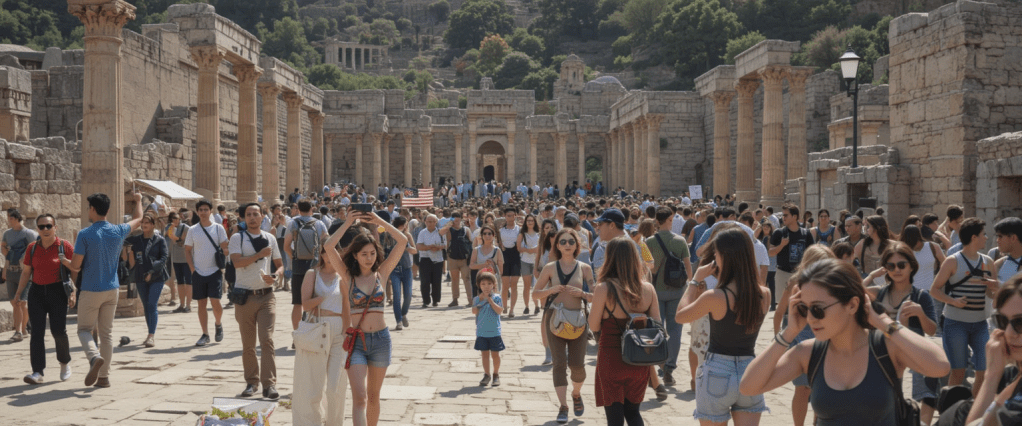
Throng
IPA: /θrɒŋ/ (UK), /θrɔːŋ/ (US)
(Noun & Verb)
Definitions:
- (Noun) A Large, Densely Packed Crowd: A great number of people or things gathered closely together, often in motion or excitement.
- Example: “The throng of festival-goers surged toward the main stage as the band began to play.”
- (Noun) A Pressing Multitude or Mass: A gathering that exerts pressure due to its size, creating a sense of congestion or intensity.
- Example: “A throng of reporters surrounded the politician, eager for a statement.”
- (Verb) To Crowd or Fill a Space in Large Numbers: To move or assemble in a dense group, often in an excited or chaotic manner.
- Example: “Fans thronged the stadium entrance, eager to catch a glimpse of their favorite players.”
- (Verb) To Approach or Surround in Large Numbers: To press in on something or someone, often in overwhelming fashion.
- Example: “Tourists thronged around the ancient ruins, snapping photos at every turn.”
Expanded Explanation:
Etymology and Origins:
The word throng originates from the Old English þrang, meaning “a crowd, tumult, or press of people.” It is related to the Old Norse þröng, meaning “a tight press” or “dense gathering.” Over time, it evolved to describe not just physical crowds but any intense convergence of people or things.
- Example: “Medieval markets often saw throngs of traders and shoppers haggling over goods.”
Types and Contextual Uses:
- Crowds in Public Spaces: Refers to large gatherings in markets, concerts, stadiums, or city streets.
- Example: “A throng of commuters flooded the subway platform during rush hour.”
- Historical and Cultural Events: Often describes mass movements of people in times of war, protest, celebration, or ceremony.
- Example: “The coronation of the queen drew a throng of spectators to the palace gates.”
- Religious or Spiritual Gatherings: Used in reference to large congregations, such as those attending religious festivals, pilgrimages, or ceremonies.
- Example: “A throng of worshippers gathered at the temple during the annual festival.”
- Symbolic or Figurative Crowds: Can describe metaphorical gatherings, such as a “throng of emotions” or a “throng of memories.”
- Example: “A throng of doubts clouded his mind before the big decision.”
- Military and Battlefield Scenes: Used to depict massed ranks of warriors or armies in historical and literary descriptions.
- Example: “The battlefield was a chaotic throng of clashing swords and battle cries.”
Synonyms and Related Terms:
- For a Large Crowd: Horde, swarm, multitude, mass, congregation, mob, assembly
- For Pressing or Gathering: Cluster, crush, pack, press, congestion
- For Figurative Use: Surge, wave, flood, influx
Antonyms:
- For Dispersed Groups: Isolation, emptiness, solitude, scarcity
- For Calm or Orderly Gatherings: Organization, tranquility, dispersal
Examples in Context:
- “The narrow streets of the bazaar were filled with a throng of merchants and shoppers, each haggling over prices.”
- “As soon as the gates opened, a throng of enthusiastic fans rushed toward the front of the concert stage.”
- “During the holiday season, a throng of shoppers filled the department store, searching for last-minute gifts.”
- “The general stood before a throng of soldiers, preparing them for the battle ahead.”
- “A throng of fireflies lit up the summer night, their glow creating an enchanting atmosphere.”
Cultural and Historical Significance:
- Historical Gatherings: Throngs have played a pivotal role in history, from protests and revolutions (such as the crowds at the Bastille in the French Revolution) to mass migrations.
- Religious and Festive Throngs: Events like the Hajj pilgrimage, India’s Kumbh Mela, or New Year’s celebrations in Times Square showcase the power and energy of throngs.
- Literary Usage: Many classic novels and epics use throng to describe vast crowds or intense action, emphasizing movement and urgency.
Interesting Facts:
- The phrase “thronging with life” is often used poetically to describe a bustling or lively atmosphere.
- In medieval times, town squares would often be “filled to thronging” during royal proclamations or public executions.
- Some species of animals exhibit “throng behavior”, such as swarming insects, migrating birds, or stampeding wildebeests.
Takeaway:
A throng represents gathering, movement, and intensity, whether it’s a physical crowd of people, a flood of emotions, or a surge of energy in nature. It conveys the power of numbers, the dynamism of mass motion, and the chaos or excitement of great assemblies.
Originally published on March 28, 2025, on The-English-Nook.com.

A Throng of Words: Navigating “Vosotros” and “Ustedes”
Spanish, like a bustling throng of voices in a crowded plaza, carries regional distinctions that shape communication. In Spain, “vosotros” flows informally among friends, while “ustedes” adds a touch of formality. Across Latin America, however, “ustedes” stands alone, uniting both casual and formal speech. These differences extend to verb conjugations, making it essential for learners to navigate the ever-shifting crowd of language with confidence.
Join the conversation and master the rhythm of Spanish speech!
The Difference Between ‘Ustedes’ and ‘Vosotros’ in Spanish
“When life gets overwhelming, just remember—you’re part of the throng!”
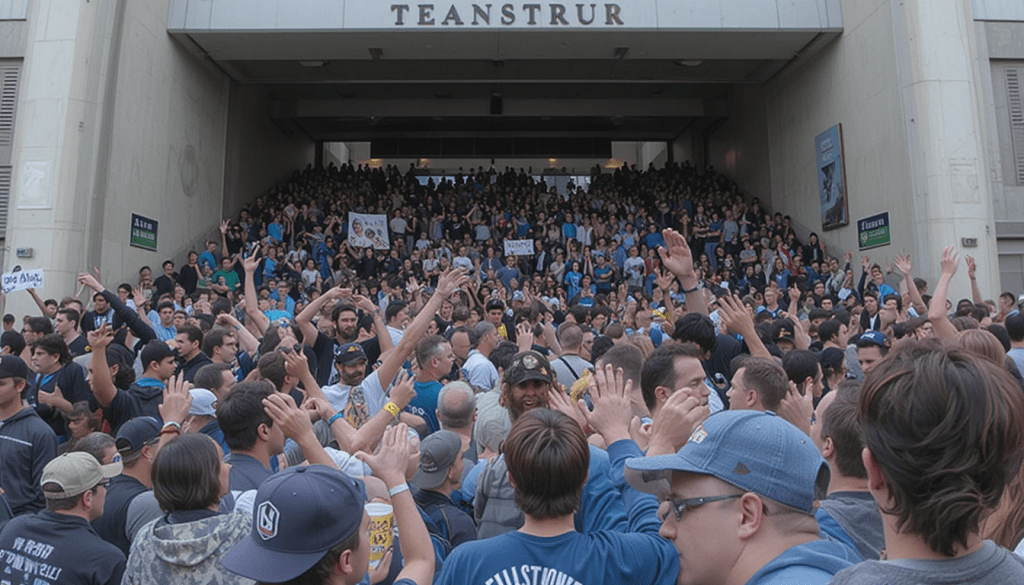
“One like closer to the pulse of the crowd, where every step echoes!” 🏙️💫
 Word of the Day - The English Nook
Leave a comment