
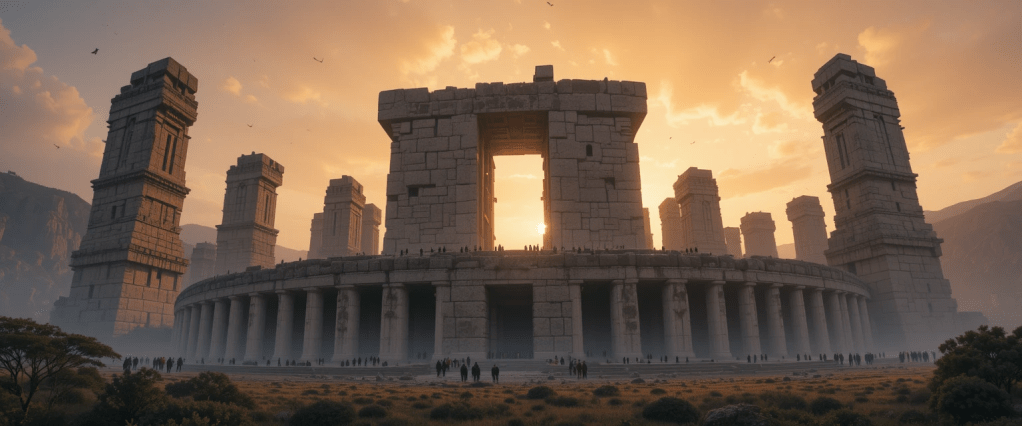
Cyclopean
IPA: /ˌsaɪ.kloʊˈpiː.ən/ or /ˌsɪk.ləˈpiː.ən/
(Adjective, occasionally noun)
Definitions:
- Massive, Monolithic, and Roughly Constructed: Describes something of enormous size, often built with large, irregularly shaped stones without mortar, reminiscent of ancient Cyclopean masonry.
- Example: “The fortress walls, made of massive uncut boulders, were a perfect example of Cyclopean architecture.”
- Relating to the Cyclops of Greek Mythology: Associated with the legendary one-eyed giants known as Cyclopes, often implying something primitive, powerful, or awe-inspiring.
- Example: “His Cyclopean gaze seemed to pierce through the darkness, as if possessing supernatural vision.”
- Colossally Vast or Overwhelmingly Grand: Used metaphorically to describe something of staggering scale or immense proportions, whether in architecture, nature, or concepts.
- Example: “The Cyclopean cliffs towered over the ocean, a testament to the raw power of nature.”
Explanation:
Etymology and Origins:
The word Cyclopean derives from Cyclops (Κύκλωψ in Greek), the one-eyed giants of Greek mythology, most famously encountered by Odysseus in The Odyssey. The ancient Greeks attributed certain massive stone structures to the Cyclopes, believing only creatures of such immense strength could have built them.
- Example: “The Mycenaean walls, constructed with colossal stones, were called ‘Cyclopean’ because ancient Greeks believed they must have been built by giants.”
Types and Contextual Uses:
- Cyclopean Masonry: A type of ancient construction using large, unworked stone blocks without mortar. Seen in Mycenaean Greece, Incan Peru, and other prehistoric cultures.
- Example: “Machu Picchu’s stone walls, fitted together seamlessly without mortar, showcase true Cyclopean craftsmanship.”
- Metaphorical Use for Immensity or Monolithic Scale: Used to describe massive, overwhelming, or grand structures, whether natural or man-made.
- Example: “The skyscraper loomed over the city, its Cyclopean silhouette dominating the skyline.”
- Descriptive of Singular or Monolithic Vision: Sometimes used figuratively to describe something narrow-minded or singularly focused, akin to a one-eyed perspective.
- Example: “His Cyclopean determination to succeed blinded him to the needs of those around him.”
- Mythological and Fantasy Use: Often appears in literature, fantasy, and gaming, referring to Cyclops-like creatures or beings of enormous strength.
- Example: “The dungeon was guarded by a Cyclopean beast, its single glowing eye scanning for intruders.”
Synonyms and Related Terms:
- For Massive or Monolithic Things: Colossal, titanic, gargantuan, megalithic, monumental
- For Rough or Primitive Structures: Unrefined, unpolished, archaic, primordial
- For Narrow or Singular Focus: Tunnel-visioned, monolithic, one-dimensional
Antonyms:
- For Small or Delicate Structures: Minuscule, dainty, intricate
- For Polished or Smooth Masonry: Refined, sophisticated, precise
Examples in Context:
- “The Cyclopean ruins of the ancient city were a marvel of prehistoric engineering, their giant stones still standing after millennia.”
- “A Cyclopean boulder blocked the mountain pass, as if placed there by the gods themselves.”
- “His Cyclopean ambition allowed him to build an empire, but at the cost of human connection.”
- “Lovecraftian horror often describes vast, Cyclopean cities built by forgotten cosmic beings.”
- “The soldiers stood before a Cyclopean fortress, its sheer size making them feel insignificant in comparison.”
Cultural and Historical Significance:
- Cyclopean Architecture: Found in Mycenae (Greece), Machu Picchu (Peru), and various prehistoric sites, these massive stone constructions remain some of the most enduring feats of engineering.
- Greek Mythology: Cyclopses were considered primordial beings, often linked to volcanic activity and blacksmithing, as in the case of Polyphemus (encountered by Odysseus) and the forgers of Zeus’s thunderbolts.
- Literature and Science Fiction: H.P. Lovecraft frequently used “Cyclopean” to describe incomprehensibly large and ancient alien structures.
- Modern Usage: The term is often applied to massive construction projects, overwhelming bureaucracies, or anything of staggering scale.
Interesting Facts:
- The Cyclopean walls of Mycenae are made of such massive stones that even modern engineers debate how they were constructed.
- The Incas used a Cyclopean-style construction, fitting stones so precisely that a knife blade cannot pass between them.
- The word “Cyclopean” was frequently used by H.P. Lovecraft to describe ancient, eldritch architecture beyond human comprehension.
- In optometry, a “Cyclopean image” refers to how our two eyes merge visual input into a singular perception.
Takeaway:
The term Cyclopean evokes images of immense scale, raw power, and ancient mystery—whether referring to prehistoric architecture, colossal natural formations, or monolithic ambitions. Whether discussing fortresses, myths, or overwhelming structures, anything Cyclopean stands as a testament to grandeur and the enduring legacy of giants—both real and imagined.
Originally published on March 27, 2025, on The-English-Nook.com.

Cyclopean Landmarks: Towers of Language and Stone
The divide between British and American English is as vast as the towering cliffs of Dover and the Grand Canyon—both shaped by time, yet distinct in form. Like ancient cyclopean ruins, dialects, idioms, and accents stand as monumental markers of cultural history. From London’s Cockney slang to the Southern drawl of the U.S., each linguistic landmark tells a story. Yet, as global media erodes some differences, the foundation remains—massive, enduring, and unmistakable.
Step into this linguistic landscape and uncover the towering roots of English!
Differences Between British and American English: Beyond Words and Accents
When history builds big, it builds Cyclopean!
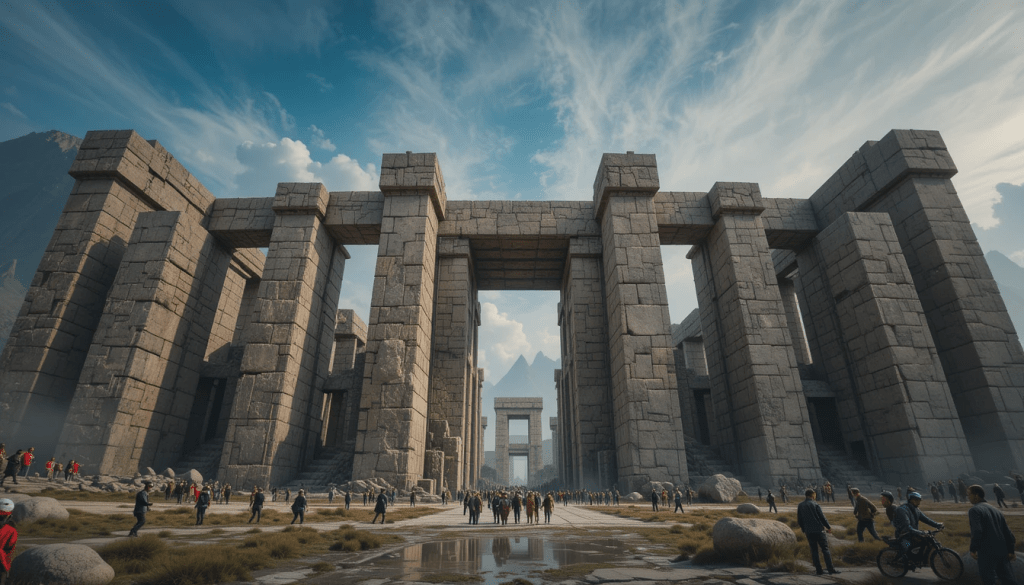
“Hit like if you marvel at the colossal, the monolithic, the truly cyclopean!” 🏛️⚒️
 Word of the Day - The English Nook
Leave a comment