
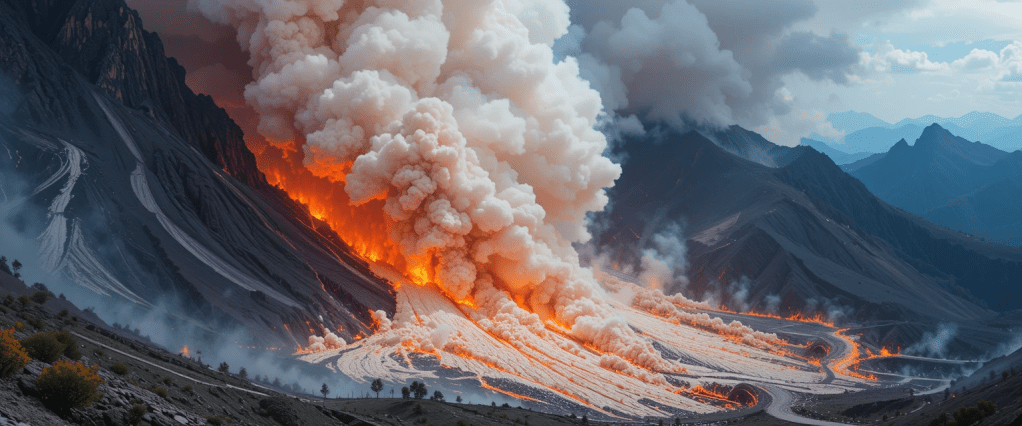
Pyroclastic Flow
IPA: /ˌpaɪ.roʊˈklæs.tɪk floʊ/
(Noun)
Definitions:
- A Fast-Moving Current of Hot Gas and Volcanic Matter: A deadly avalanche of superheated gases, ash, and rock fragments that descends rapidly down the slopes of a volcano during an explosive eruption.
- Example: “The town was devastated by the pyroclastic flow that surged down the mountainside.”
- An Extremely Hazardous Volcanic Phenomenon: One of the most dangerous aspects of volcanic eruptions, with temperatures exceeding 1,000°C (1,832°F) and speeds reaching over 700 km/h (435 mph).
- Example: “The pyroclastic flow from Mount Vesuvius in AD 79 buried the cities of Pompeii and Herculaneum.”
Explanation:
Etymology and Origins:
The term pyroclastic comes from the Greek words pyr (fire) and klastos (broken), meaning “fire-broken” or “fragmented by fire.” It describes the turbulent, fiery mixture of ash, lava fragments, and gases ejected during a volcanic explosion.
- Example: “The term ‘pyroclastic flow’ was first used by volcanologists to describe fast-moving, dense clouds of volcanic debris.”
Formation and Behavior:
Pyroclastic flows occur when a volcanic column collapses or when an eruption expels a dense cloud of material at ground level. The flow is driven by gravity and can travel across land or water, obliterating everything in its path.
- Causes of Pyroclastic Flows:
- Volcanic Column Collapse: When an eruption ejects a tall column of ash and gas that loses buoyancy and falls back to Earth.
- Lava Dome Collapse: When a dome of viscous lava at the volcano’s summit crumbles under its own weight.
- Directed Blasts: When an eruption produces an explosive lateral explosion, as seen in the 1980 eruption of Mount St. Helens.
- Characteristics:
- Temperature: 200°C to over 1,000°C (392°F to 1,832°F), hot enough to incinerate organic matter instantly.
- Speed: Can travel faster than 700 km/h (435 mph), outrunning even the fastest human escape attempts.
- Composition: Superheated gas, volcanic ash, pumice, and rock fragments.
- Effects: Suffocation, thermal shock, burial under volcanic deposits, and landscape alteration.
- Example: “The pyroclastic surge engulfed the valley, leaving behind a barren wasteland.”
Notable Pyroclastic Flow Events:
- Mount Vesuvius (AD 79):
- Buried the Roman cities of Pompeii and Herculaneum, killing thousands.
- Example: “The pyroclastic flow from Vesuvius left a thick layer of ash that preserved the cities for centuries.”
- Mount Pelée (1902):
- Destroyed the town of Saint-Pierre, Martinique, killing over 29,000 people in minutes.
- Example: “The pyroclastic flow from Mount Pelée was so fast that many victims died instantly.”
- Mount St. Helens (1980):
- A lateral blast produced a high-speed pyroclastic flow, devastating 600 square kilometers of forest.
- Example: “Mount St. Helens’ eruption released pyroclastic flows that reshaped the surrounding landscape.”
Synonyms and Related Terms:
- For Volcanic Activity: Nuée ardente (French, meaning “glowing cloud”), pyroclastic surge, volcanic avalanche
- For Flow Characteristics: Ash flow, tephra surge, debris cloud
Antonyms:
- For Non-Explosive Volcanic Activity: Lava flow, effusive eruption, fumarole
Examples in Context:
- “Scientists monitored the volcano closely, fearing a sudden pyroclastic flow.”
- “The sheer force of the pyroclastic surge left a landscape of scorched earth.”
- “Rescue efforts were impossible due to the lingering heat from the pyroclastic deposits.”
- “Villagers had mere minutes to escape before the pyroclastic flow consumed their homes.”
Interesting Facts:
- Deadliest Volcanic Hazard: Pyroclastic flows are responsible for some of the most catastrophic volcanic disasters in history.
- Speed and Force: A pyroclastic flow can flatten forests, move boulders, and carve new landscapes in seconds.
- Survivability: Very few people have survived direct exposure to a pyroclastic flow due to its immense heat and velocity.
- Long-Term Effects: Pyroclastic deposits can create fertile soil over time, leading to rich agricultural land in volcanic regions.
Takeaway:
Pyroclastic flows are among the most powerful and devastating forces of nature, capable of reshaping entire landscapes and erasing civilizations in an instant. Understanding their formation, behavior, and historical impacts is crucial for volcanic hazard preparedness and scientific study.
Originally published on March 15, 2025, on The-English-Nook.com.

Pyroclastic Flow: Language in the Face of Disaster
When nature unleashes its force, understanding key vocabulary can be vital. If you are learning Spanish or English, expanding your knowledge of disaster-related terms enhances your ability to follow safety instructions, discuss emergencies, and stay prepared. Explore essential words and phrases to navigate these critical moments with confidence.
Vocabulario de Desastres Naturales – Inglés-Español
Faster than a jet, hotter than lava—when a pyroclastic flow starts, there’s no outrunning nature’s fury.
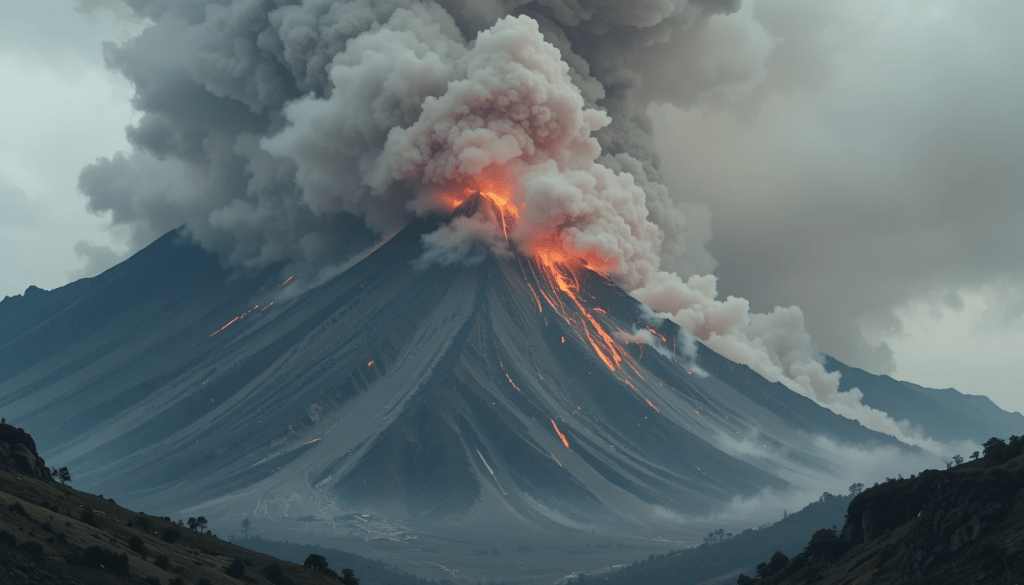
“A like as swift and searing as the mountain’s breath!” 🔥🏔️
 Word of the Day - The English Nook
Leave a comment