
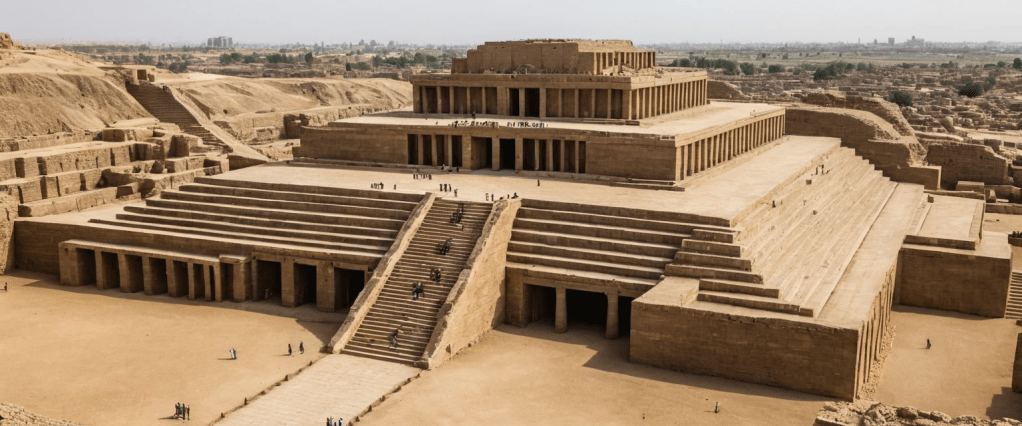
Ziggurat
IPA: /ˈzɪɡəˌræt/
(Noun)
Definitions:
- A Terraced, Step-Pyramid Temple: A massive, multi-tiered religious structure built in ancient Mesopotamia, typically dedicated to a deity and serving as the center of worship.
- Example: “The ruins of the ziggurat still towered over the desert, a testament to the grandeur of ancient Sumerian civilization.”
- A Symbolic Sacred Mountain: A representation of a bridge between heaven and earth, often designed to mimic a divine dwelling place.
- Example: “To the Babylonians, the ziggurat was a sacred space where the gods could descend and commune with mortals.”
Explanation:
Etymology and Origins:
The word “ziggurat” derives from the Akkadian ziqqurratu, meaning “to build high” or “pinnacle.” These monumental structures were built by the Sumerians, Akkadians, Babylonians, and Assyrians in what is now Iraq and Iran.
- Example: “The construction of ziggurats began as early as 3000 BCE, making them some of the oldest known religious structures.”
Architectural Characteristics:
- Stepped Pyramid Design: Unlike the smooth pyramids of Egypt, ziggurats were built with multiple receding levels, creating a tiered effect.
- Example: “Each level of the ziggurat was smaller than the one below it, forming a stepped pyramid.”
- Constructed with Sun-Dried and Baked Bricks: The core was made of mud bricks, while the exterior often featured baked bricks inscribed with the names of rulers.
- Example: “The outer walls of the ziggurat were glazed in brilliant colors, symbolizing the heavens and elements.”
- Dedicated to a Deity: Each ziggurat was associated with a patron god or goddess, whose temple was situated at the summit.
- Example: “The Ziggurat of Ur was dedicated to Nanna, the Sumerian moon god.”
- No Interior Chambers: Unlike Egyptian pyramids, ziggurats were solid structures without burial chambers, serving purely religious and administrative functions.
- Example: “Unlike the tombs of Pharaohs, ziggurats were not intended as final resting places but as places of worship.”
Cultural and Religious Significance:
- Sacred Axis Mundi: The ziggurat was viewed as a cosmic center, linking earth with the divine realm.
- Example: “Priests ascended the steps of the ziggurat to perform sacred rituals, believing they were closer to the gods.”
- Symbol of Power and Stability: Often commissioned by kings, ziggurats were a demonstration of royal authority and divine favor.
- Example: “By constructing grand ziggurats, rulers legitimized their rule as chosen by the gods.”
- Influence on Later Religious Structures: Some scholars believe ziggurats inspired later architectural forms, such as biblical Tower of Babel myths and temple designs across civilizations.
- Example: “The concept of sacred, elevated places in many religions may trace its roots to ziggurat-style temples.”
Notable Ziggurats:
- Ziggurat of Ur (c. 2100 BCE): One of the best-preserved examples, dedicated to Nanna, the moon god.
- Example: “Archaeologists uncovered the Ziggurat of Ur, revealing its massive foundation and stairways.”
- Etemenanki (Babylon’s Ziggurat): Believed to have inspired the biblical Tower of Babel.
- Example: “Etemenanki, dedicated to Marduk, may have reached heights of over 90 meters.”
- Chogha Zanbil (Elamite Ziggurat): A unique example in Iran, showcasing non-Mesopotamian influences.
- Example: “The ziggurat of Chogha Zanbil remains an impressive remnant of Elamite civilization.”
Synonyms and Related Terms:
- For Sacred Structures: Temple, sanctuary, shrine, pyramid
- For Elevated Platforms: Stepped pyramid, terraced structure, sacred mound
Antonyms:
- For Secular Buildings: Palace, fortress, dwelling, tomb
- For Non-Terraced Structures: Dome, flat-roofed temple, open-air altar
Examples in Context:
- “The ancient priests climbed the ziggurat’s steps to present offerings to their gods.”
- “Unlike Egyptian pyramids built for the dead, ziggurats were constructed as places of worship for the living.”
- “Archaeological excavations have revealed the grand scale of Mesopotamian ziggurats, emphasizing their importance in early civilization.”
- “The imposing silhouette of the ziggurat stood against the desert sky, evoking a lost era of kings and deities.”
Interesting Facts:
- No Ziggurats Remain Fully Intact: Due to the materials used, most ziggurats have eroded over time, with only their foundations or partial structures surviving.
- They Were Painted in Vibrant Colors: Some ziggurats had different levels painted in symbolic hues—blue for the sky, red for fire, and white for purity.
- They Required Constant Restoration: Mud bricks were prone to weathering, so ziggurats needed regular maintenance and reconstruction.
- Influence on Literature and Myth: The biblical story of the Tower of Babel may have been inspired by towering Mesopotamian ziggurats.
Takeaway:
Ziggurats were monumental achievements of early civilization, embodying religious devotion, architectural innovation, and political power. As sacred stairways to the heavens, they stood at the heart of Mesopotamian cities, linking gods and mortals in a grand architectural testament to human ambition and spirituality.
Originally published on March 12, 2025, on The-English-Nook.com.

The Tower of Unburdening
Like an ancient ziggurat, the mysterious tower in Elmsworth loomed over the town, demanding confessions and feeding on buried guilt. Whispers wove through its walls, eroding the foundations of secrecy until nothing remained—except the echoes of what had been revealed. Step closer, listen carefully… some whispers never fade.
The Tower Without Doors
Ziggurats: where gods met kings, and myths touched the sky!
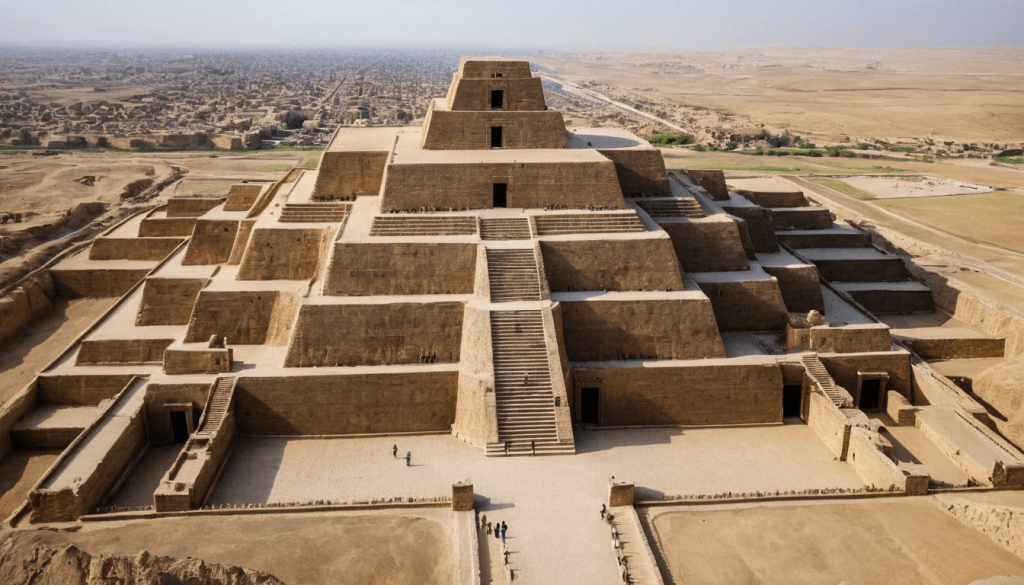
“A like as enduring as the bricks of Babylon!” 🏗️🔥
 Word of the Day - The English Nook
Leave a comment