
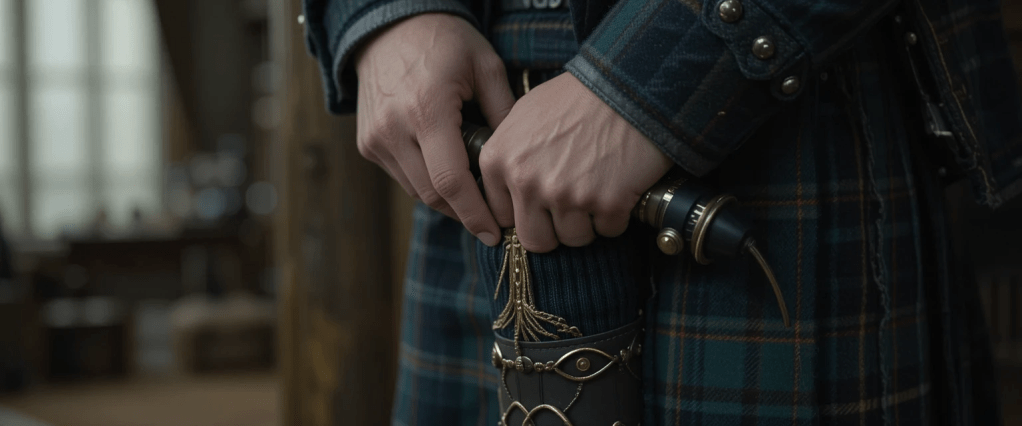
Sgian-dubh
IPA: /ˌskiːən ˈduː/
(Noun)
Definitions:
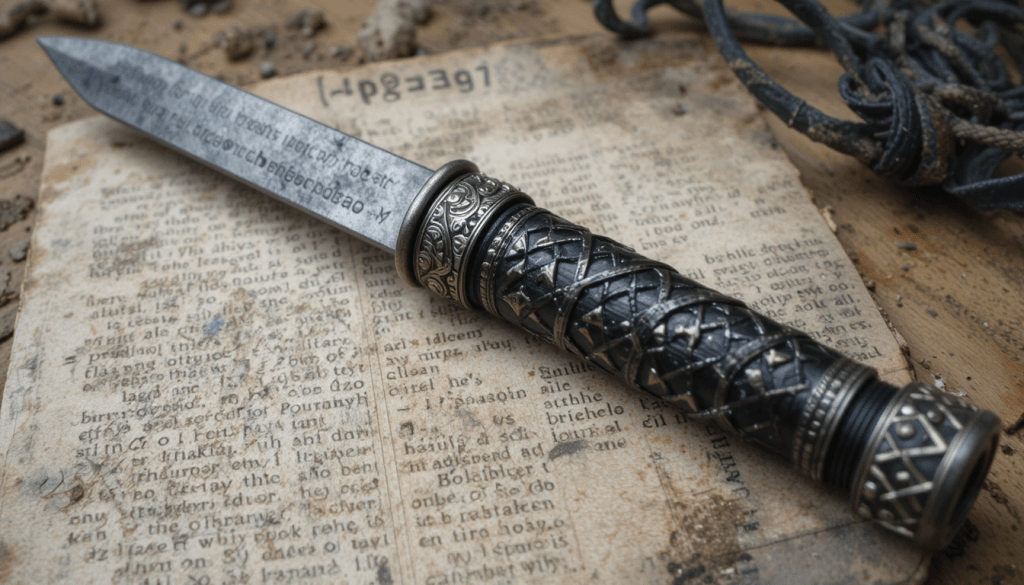
- A Small Scottish Dagger: A traditional single-edged knife worn as part of Highland dress, typically tucked into the top of a kilt hose.
- Example: “The ceremonial sgian-dubh, adorned with a decorative handle, completed his Highland attire.”
- A Weapon of Self-Defense: Historically, a discreet knife carried for protection, often concealed within clothing.
- Example: “He discreetly reached for his sgian-dubh, ready to defend himself if necessary.”
Explanation:
Etymology and Origins:
The term “sgian-dubh” originates from Scottish Gaelic: sgian meaning “knife” or “dagger” and dubh meaning “black.” The name is thought to refer either to the dark handle of the knife or the practice of carrying it concealed. The sgian-dubh evolved from larger knives used for hunting and combat, eventually becoming a formalized element of Scottish Highland dress.
- Example: “In Gaelic tradition, the sgian-dubh was both a practical tool and a symbol of heritage.”
Types and Characteristics:
- Traditional Sgian-dubh: Crafted with a wooden, bone, or horn handle, sometimes adorned with silver or gemstones. The blade is typically around 3-4 inches long.
- Example: “His sgian-dubh featured intricate Celtic knot engravings on the hilt.”
- Modern Sgian-dubh: Often made with synthetic materials and sometimes dulled for ceremonial use in formal settings.
- Example: “A modern sgian-dubh, designed for safety, lacks a sharpened blade.”
- Concealed Sgian-dubh: Historically carried hidden within clothing, in line with the term’s original meaning.
- Example: “In times of conflict, the sgian-dubh was kept hidden for self-defense.”
Cultural and Historical Significance:
- Part of Highland Dress: Today, the sgian-dubh is worn as a symbolic accessory, completing the traditional Scottish kilt outfit.
- Example: “At weddings and ceremonies, the sgian-dubh is displayed as a mark of tradition.”
- Symbol of Honor and Courtesy: In Scottish tradition, guests entering a home were expected to show they carried no concealed weapons—hence, the sgian-dubh was worn visibly in the sock as a gesture of goodwill.
- Example: “By wearing his sgian-dubh openly, he signified his peaceful intentions.”
- Historical Utility: Originally used for cutting food, skinning game, and everyday tasks, the sgian-dubh was both a practical tool and a personal safeguard.
- Example: “Highlanders relied on their sgian-dubh for survival in the rugged terrain.”
Synonyms and Related Terms:
- For Weaponry: Dagger, dirk, knife, blade
- For Ceremonial Use: Dress knife, Highland blade
Antonyms:
- For Peaceful Accessories: Ornament, decoration, unarmed attire
Examples in Context:
- “The Scottish groom proudly displayed his sgian-dubh as part of his wedding attire.”
- “He polished the handle of his sgian-dubh, its silver pommel gleaming under the firelight.”
- “During the 18th century, Highlanders carried a sgian-dubh for both protection and practicality.”
- “Though he no longer needed it for survival, his sgian-dubh remained a cherished heirloom.”
Interesting Facts:
- Royal and Military Use: Many Scottish regiments incorporate the sgian-dubh into their formal uniforms.
- Legal Restrictions: In some countries, carrying a sharp sgian-dubh in public is regulated, though dulled versions for ceremonial wear are often permitted.
- Connection to Clan Heritage: Many Scottish families pass down sgian-dubhs as heirlooms, preserving intricate craftsmanship and historical lineage.
Takeaway:
The sgian-dubh is a deeply symbolic and practical element of Scottish heritage, evolving from a concealed blade for protection to a ceremonial accessory worn with pride. Whether as a mark of Highland tradition, a historical relic, or a modern keepsake, the sgian-dubh continues to hold cultural and historical significance in Scotland and beyond.
Originally published on March 8, 2025, on The-English-Nook.com.
A Hidden Edge of Language
Like a sgian-dubh, the small blade tucked into a Highlander’s attire, Scottish English carries hidden depths—familiar yet distinct. With words like aye and wee, and sounds that echo Scots and Gaelic, its charm lies in the details. Uncover the nuances of Scottish English and its unique character.
Differences Between British English and Scottish English
From hidden blade to Highland pride—the sgian-dubh cuts through history.
“Hit like if you believe in honor and steel!” ⚔️🔥
 Word of the Day - The English Nook
Leave a comment