
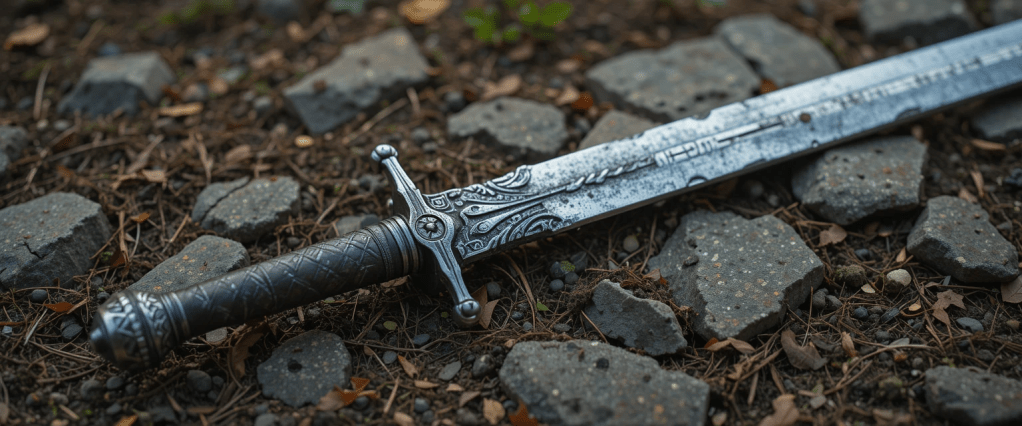
Claymore
IPA: /ˈkleɪmɔːr/
(Noun)
Definitions:
- A Large Scottish Broadsword: A two-handed sword used in Scotland from the late Middle Ages through the 18th century, characterized by a long blade and distinctive hilt.
- Example: “The warrior brandished his claymore, its massive blade gleaming in the sunlight.”
- A Directional Anti-Personnel Mine: A modern military explosive device, officially called the M18 Claymore mine, designed to project shrapnel in a specific direction.
- Example: “The soldiers set up a Claymore mine to protect their perimeter.”
Explanation:
Etymology and Origins:
The word “claymore” comes from the Scottish Gaelic claidheamh mòr, meaning “great sword.” It originally referred to large two-handed swords used by Scottish Highland warriors in the 15th to 17th centuries. The term was later adapted in military terminology to describe the M18 Claymore mine, named due to its deadly effectiveness in combat.
- Example: “The historical use of the claymore is central to Scotland’s warrior legacy.”
Types of Claymores:
- Scottish Claymore: A massive, two-handed weapon, often associated with Highland warriors and Scottish clan battles. Recognizable by its cross-hilt with forward-sloping arms.
- Example: “The museum displayed a 16th-century claymore once wielded in battle.”
- Basket-Hilted Claymore: A later one-handed version with a protective basket-shaped hilt, used in the 17th and 18th centuries.
- Example: “Unlike the traditional claymore, the basket-hilted sword allowed for greater control and defense.”
- M18 Claymore Mine: A modern U.S. military anti-personnel mine designed to detonate in a fan-shaped blast of shrapnel, typically used for defensive purposes.
- Example: “The Claymore mine is activated remotely or by tripwire, making it highly effective in battlefield defense.”
Historical Significance:
- Medieval and Renaissance Warfare: The claymore was a weapon of choice for Scottish warriors, particularly during conflicts like the Wars of Scottish Independence and the Jacobite Rebellions.
- Symbol of Scottish Heritage: Today, the claymore is an enduring symbol of Scottish pride, often used in Highland games and reenactments.
- Modern Military Usage: The M18 Claymore mine was first developed in the 1950s and played a crucial role in conflicts such as the Vietnam War.
Cultural and Symbolic Importance:
- Scottish National Identity: The claymore is often depicted in literature, movies, and heraldry as a representation of Scotland’s martial spirit.
- Example: “In Braveheart, the claymore symbolizes Scottish resistance and strength.”
- Symbol of Strength and Valor: The image of a Highlander wielding a claymore is associated with bravery, honor, and resilience.
- Military Legacy: The term “Claymore” is now widely recognized in military contexts due to the M18 mine’s deadly efficiency.
- Example: “Special forces units still use Claymore mines for strategic defense.”
Synonyms and Related Terms:
- For the Sword: Greatsword, longsword, broadsword, Highland sword
- For the Mine: Anti-personnel mine, directional mine
Antonyms:
- For the Sword: Dagger, short sword
- For the Mine: Non-explosive barrier, defensive shield
Examples in Context:
- “The Highland warrior raised his claymore high, ready to charge into battle.”
- “The historian traced the evolution of the claymore from battlefield weapon to ceremonial relic.”
- “Soldiers positioned Claymore mines to deter enemy advancement.”
- “The museum’s collection featured a beautifully engraved claymore with a silver hilt.”
Interesting Facts:
- Not Just a Weapon: The claymore is an important part of Scottish clan culture and tradition, appearing in coats of arms and national symbols.
- Battle Effectiveness: A well-trained Highlander could wield a claymore with devastating power, capable of cutting through armor.
- Modern Military Design: The M18 Claymore mine was named for its resemblance to the broad, deadly swing of the original sword.
Takeaway:
The claymore is a weapon steeped in history, from its origins as a fearsome Scottish battlefield sword to its modern incarnation as a powerful military mine. Whether symbolizing Highland valor or military strategy, the claymore remains an enduring icon of strength, skill, and warfare.
Originally published on March 7, 2025, on The-English-Nook.com.

Blades of Language
Just like a claymore—the iconic Scottish sword—Scottish English is sharp, layered, and steeped in history. Its blend of dialects and idioms carves out a language full of character. Keep reading and discover the richness of Scottish English dialects.
Further Linguistic Nuances in Scottish English
One name, two weapons — the claymore slices through both history and battlefields.
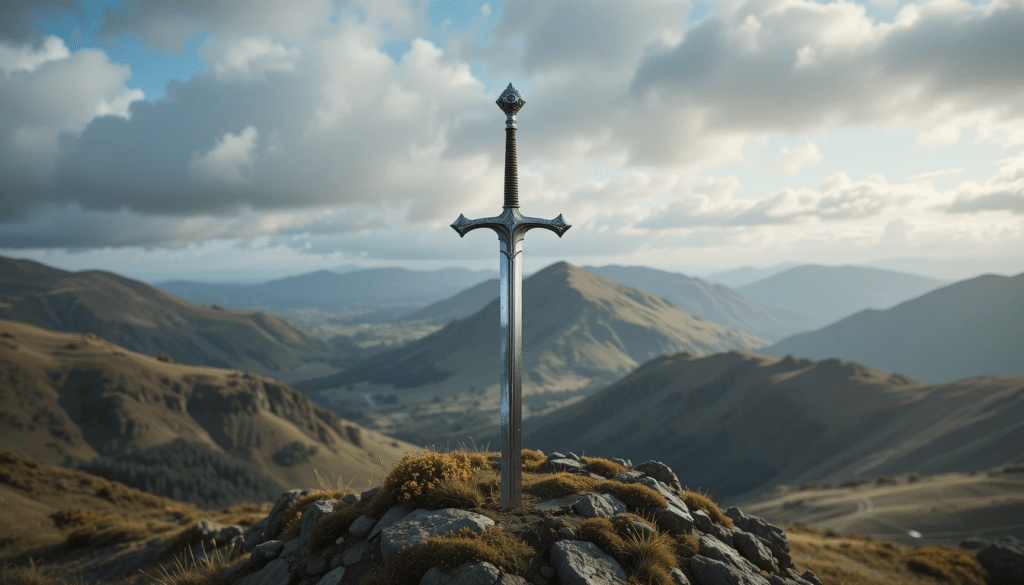
“Hit like if you stand firm in the face of danger!” ⚔️🔥
 Word of the Day - The English Nook
Leave a comment