
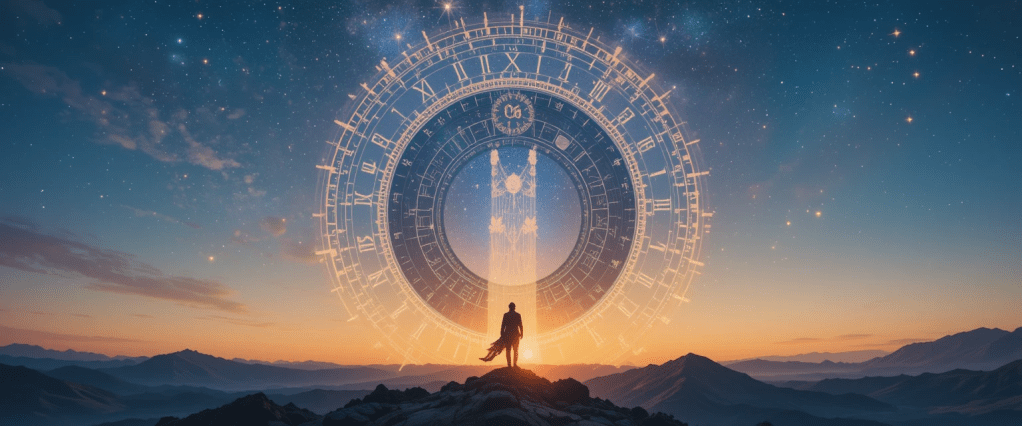
Equinox
IPA: /ˈiː.kwɪ.nɒks/, /ˈɛ.kwɪ.nɒks/
(Noun)
Definitions:
- Astronomical Event of Equal Day and Night: The moment when the sun crosses the celestial equator, resulting in nearly equal hours of daylight and darkness across the Earth. Occurs twice a year: the vernal equinox (around March 20-21) and the autumnal equinox (around September 22-23).
- Example: “Ancient civilizations built monuments to mark the equinox and celebrate the balance of light and darkness.”
- Symbol of Balance and Transition: Metaphorically represents a time of change, harmony, and renewal, often observed in cultural and spiritual traditions worldwide.
- Example: “The equinox is a time for reflection and preparation, as nature shifts between seasons.”
Explanation:
Etymology and Origins:
The word “equinox” comes from the Latin aequinoctium, meaning “equal night,” derived from aequus (equal) and nox (night). This reflects the phenomenon where day and night are nearly the same length across the globe. Historically, the equinoxes have been key markers in timekeeping, agriculture, and spiritual observances.
- Example: “In many cultures, the equinox was considered a sacred time, aligning festivals with the cycles of the sun.”
Scientific Explanation:
- The Earth’s axis is tilted at approximately 23.5 degrees relative to its orbit around the Sun. This tilt causes the variation in day length throughout the year.
- During an equinox, the Sun is directly above the equator, leading to nearly 12 hours of daylight and 12 hours of night across the planet.
- After the vernal equinox, the Northern Hemisphere experiences longer days leading into summer, while the Southern Hemisphere moves toward winter. The reverse occurs after the autumnal equinox.
Cultural and Historical Significance:
- Ancient Civilizations: Many ancient cultures built structures aligned with the equinox, such as Stonehenge in England and Chichén Itzá in Mexico, where the play of light and shadow marked the changing seasons.
- Example: “At Chichén Itzá, the equinox creates the illusion of a serpent slithering down the steps of El Castillo.”
- Religious and Spiritual Observances:
- Pagan Traditions: The equinox is central to Ostara, a celebration of fertility and renewal in Wiccan and Pagan traditions.
- Christian Influence: Easter is often celebrated around the vernal equinox, linking resurrection themes to nature’s renewal.
- Japanese Buddhism: Higan is a Buddhist observance during the equinox, symbolizing crossing from suffering to enlightenment.
- Example: “Many cultures view the equinox as a time for spiritual cleansing and setting new intentions.”
Modern Relevance and Observances:
- Astronomy and Timekeeping: The equinox marks the beginning of astronomical spring and autumn in the respective hemispheres. It plays a role in determining calendars and seasonal transitions.
- Festivals and Celebrations:
- Nowruz: The Persian New Year, celebrated at the vernal equinox, symbolizes renewal and the start of spring.
- Harvest Festivals: Many agrarian societies observe the autumn equinox as a time of thanksgiving and preparation for winter.
- Example: “Nowruz is one of the oldest equinox celebrations, dating back thousands of years.”
Synonyms and Related Terms:
- For Balance and Transition: Equilibrium, midpoint, celestial event, seasonal shift
- For Astronomical Contexts: Solstice (contrasting term), celestial equator crossing
Antonyms:
- For Extreme Light or Darkness: Solstice (marks longest and shortest days of the year)
- For Imbalance: Disproportion, instability
Examples in Context:
- “The ancient druids gathered at Stonehenge to observe the rising sun on the equinox.”
- “As the equinox approached, farmers prepared for the planting season, guided by the rhythms of nature.”
- “In mythology, the equinox is often seen as a battle between light and darkness, a cosmic balance point.”
- “Many people use the equinox as a time for personal realignment, setting goals for the next season.”
Interesting Facts:
- Not Exactly Equal: Although the equinox is said to have equal day and night, atmospheric refraction and the Sun’s size cause a slight variation, making daylight slightly longer.
- Equinox at the Poles: At the North and South Poles, the equinox marks the transition from six months of darkness to six months of daylight, or vice versa.
- Myth of Standing Eggs: A popular belief suggests that eggs can balance upright on the equinox due to gravitational forces, though this is more folklore than science.
Takeaway:
The equinox is a powerful astronomical event symbolizing balance, transition, and renewal. From ancient monuments to modern spiritual practices, it continues to shape human culture, reminding us of the deep connection between celestial movements and earthly life.
Originally published on March 4, 2025, on The-English-Nook.com.
Equinox of the Soul
There are moments when curiosity and reverence, like day and night, find perfect balance within us — opening paths to hidden truths. The equinox not only marks time but invites us to seek harmony between what we know and what remains a mystery.
If you’re learning Spanish, explore La Leyenda de la Montaña — a story where the journey is both outward and inward. Will you let this balance guide you? 🌄✨
La Leyenda de la Montaña
Equinox: when day and night strike the perfect cosmic balance.
“Tap like and balance the light and dark within!” ☀️🌑
 Word of the Day - The English Nook
Leave a comment