
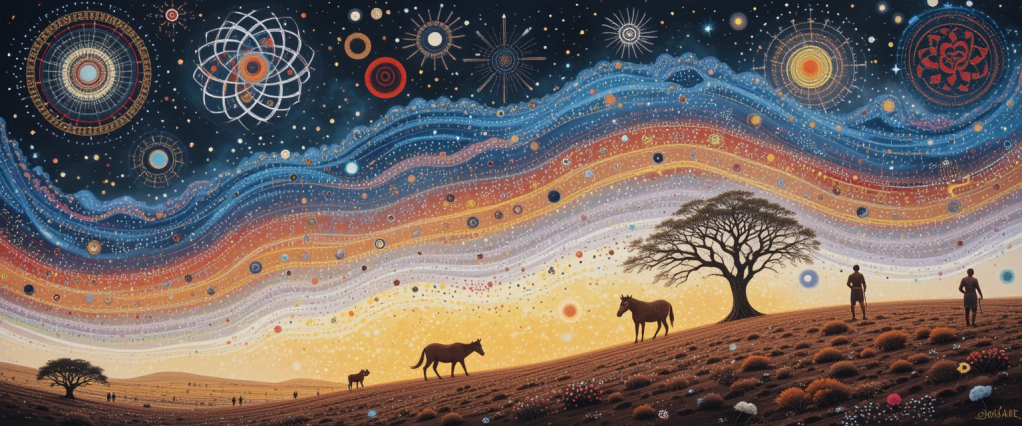
Dreamtime
IPA: /ˈdriːmˌtaɪm/
(Noun – Indigenous Australian Mythology, Spirituality, Temporal Concept)
Definitions:
- The Mythological and Spiritual Time of Creation: A foundational concept in Indigenous Australian belief systems, referring to the sacred era in which ancestral spirits formed the land, people, and laws. Dreamtime is both a past event and a continuing presence in cultural identity.
- Example: “According to Aboriginal tradition, Dreamtime stories explain the origins of the landscape and its creatures.”
- A Timeless and Sacred Dimension: Dreamtime is not merely a past era but an ongoing spiritual reality where the laws of existence, moral codes, and social structures were established by ancestral beings.
- Example: “Dreamtime connects past, present, and future in a continuous cycle of knowledge and spirituality.”
- A Source of Cultural and Moral Guidance: The teachings of Dreamtime shape Aboriginal customs, ceremonies, and relationships with the land. It conveys knowledge through oral traditions, songlines, and sacred sites.
- Example: “Dreamtime stories pass down important lessons about respecting nature and community.”
Explanation:
Etymology and Conceptual Understanding:
The term “Dreamtime” is a Western interpretation of various Indigenous Australian spiritual and cosmological beliefs. Aboriginal languages have their own distinct terms, such as Tjukurrpa (Pitjantjatjara) or Ngarranggarni (Gija), each with its own nuances. The concept encompasses creation stories, ancestral beings, and ongoing cultural continuity.
- Example: “Dreamtime is more accurately understood as ‘The Dreaming,’ an active and eternal process rather than a finite historical period.”
Key Themes and Applications:
- Creation and Origin Stories: Dreamtime narratives explain the formation of landscapes, animals, and human clans.
- Example: “The Rainbow Serpent is a key Dreamtime figure, shaping rivers and mountains in its wake.”
- Spiritual and Temporal Coexistence: Unlike linear time in Western thought, Dreamtime transcends conventional past, present, and future distinctions.
- Example: “For Aboriginal cultures, Dreamtime exists outside of chronological history—it is ever-present.”
- Sacred Sites and Songlines: Dreamtime stories are embedded in geographical locations, with songlines serving as oral maps connecting these sacred places.
- Example: “By following Dreamtime songlines, Indigenous people navigate vast landscapes using ancestral knowledge.”
Cultural and Religious Significance:
- Oral Tradition and Storytelling: Dreamtime is preserved through stories, music, dance, and art, ensuring cultural continuity across generations.
- Example: “Traditional dot paintings depict Dreamtime events and ancestral beings.”
- Moral and Ethical Framework: Dreamtime provides a spiritual and ethical foundation for Indigenous communities, guiding laws and behaviors.
- Example: “Dreamtime stories teach values such as respect, kinship, and environmental stewardship.”
- Interconnection with Land and Identity: Aboriginal identity is deeply tied to Dreamtime, reinforcing the sacred relationship between people and the land.
- Example: “For Indigenous Australians, land is not just a resource but a living extension of Dreamtime ancestors.”
Synonyms and Related Terms:
- For Mythological Time: The Dreaming, Creation Time, Eternal Present
- For Spiritual and Cultural Beliefs: Ancestral Law, Sacred Time, Songline Tradition
Antonyms:
- For Linear Time: Historical past, modern chronology, Western temporality
- For Non-Spiritual Frameworks: Secular history, rationalist worldview
Examples in Context:
- “The elders shared Dreamtime stories, teaching the younger generation about their connection to the land.”
- “According to Dreamtime traditions, every rock and river has a sacred meaning tied to the actions of ancestral spirits.”
- “Indigenous paintings often depict Dreamtime beings, preserving the sacred history of the land.”
- “Through Dreamtime songlines, travelers could find their way across the vast desert using stories as a guide.”
Interesting Facts:
- Dreamtime Is Not a Singular Concept: Different Aboriginal groups have unique interpretations of Dreamtime, tailored to their specific landscapes and histories.
- Dreamtime Art Is Symbolic: Indigenous dot paintings and rock art encode Dreamtime stories, serving as visual records of sacred knowledge.
- Songlines Function as Oral Maps: Some songlines extend across vast distances, allowing Indigenous people to navigate the land through memorized songs and stories.
Takeaway:
Dreamtime represents a profound and intricate system of spiritual knowledge, cosmology, and cultural continuity for Indigenous Australians. More than a creation myth, it is a living, timeless dimension that shapes identity, morality, and the sacred connection between people and the land. Understanding Dreamtime requires recognizing its ongoing significance and deep-rooted presence in Aboriginal culture and philosophy.
Originally published on February 28, 2025, on The-English-Nook.com.
Dreamtime Echoes: The Soul of Australian English
Language carries stories, and Australian English whispers ancient myths alongside modern rhythms. Discover how Indigenous voices, migration waves, and cultural crossroads have shaped this unique dialect—waiting for you on my page!
Deeper Differences Between British and Australian English: Language, Culture, and Identity
Dreamtime: where creation, culture, and timeless wisdom intertwine.
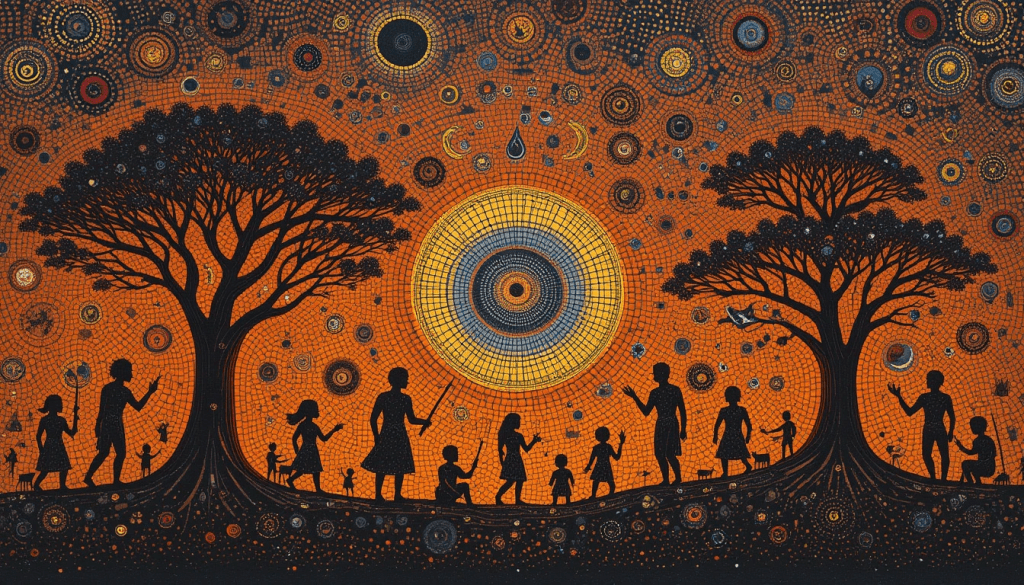
One like to awaken ancient stories!” 🐍🌿
 Word of the Day - The English Nook
Leave a comment