
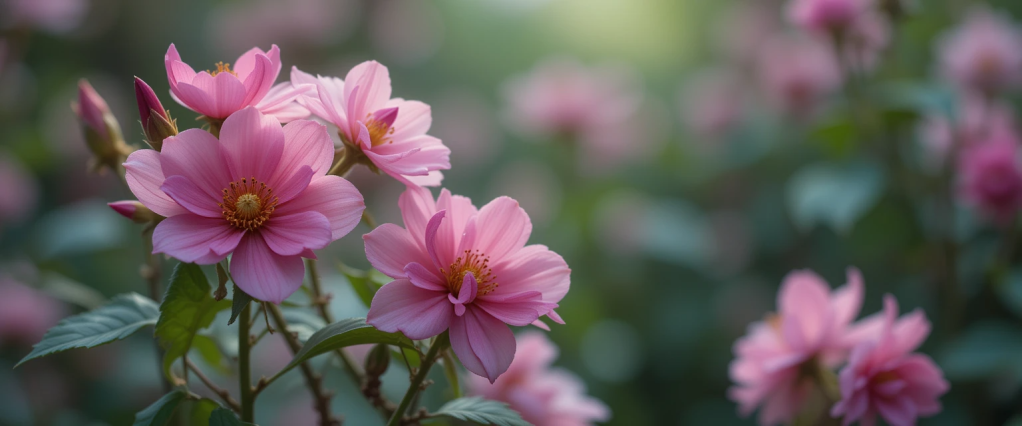
Eglantine
IPA: /ˈɛɡlənˌtaɪn/
(Noun)
Definitions:
- Sweet Briar Rose (Rosa rubiginosa): A species of wild rose known for its fragrant pink flowers, thorny stems, and aromatic leaves. It is native to Europe and western Asia but has been naturalized in many parts of the world.
- Example: “The eglantine bloomed along the garden path, its delicate petals swaying in the breeze.”
- Symbol of Poetic and Literary Romance: Eglantine has long been associated with love, beauty, and nostalgia in literature, often appearing in poetry and classic works.
- Example: “Shakespeare referenced eglantine in his plays as a symbol of grace and nature’s untamed beauty.”
Expanded Explanation:
Etymology and Linguistic Origins:
The word “eglantine” derives from the Old French eglantin and ultimately from the Latin aquilentum, meaning “prickly.” It has been used in English since the medieval period to refer specifically to the sweet briar rose.
- Example: “In medieval herbals, eglantine was prized for both its beauty and medicinal properties.”
Cultural and Historical Context:
Eglantine holds a revered place in mythology, folklore, and literary tradition. In medieval and Renaissance poetry, it was often depicted as a flower of romance and purity.
- Example: “Chaucer’s Canterbury Tales includes mentions of eglantine in its vivid descriptions of nature.”
Symbolism and Literary Significance:
- Love and Romance: Frequently referenced in poetry as a symbol of enduring love and natural beauty.
- Protection and Defense: Its thorny nature has been used metaphorically to illustrate resilience and guarded affection.
- Nostalgia and Longing: Poets and writers have employed eglantine to evoke wistful memories of past loves or idyllic landscapes.
Synonyms:
- Sweet briar
- Wild rose
- Briar rose
- Rosaceae (botanical family)
Antonyms:
- Artificial flower
- Non-fragrant plant
Examples in Context:
Botanical and Natural Contexts:
- “She planted eglantine in her cottage garden, knowing its scent would sweeten the summer air.”
- “The wild hedgerows were adorned with eglantine, their fragrance mingling with the morning dew.”
Literary and Symbolic Contexts:
- “The poet likened her beauty to eglantine, a rare and untamed elegance amid the wild landscape.”
- “Legends tell of lovers exchanging eglantine as a token of devotion and fidelity.”
Cultural and Medicinal Uses:
- Medicinal Properties: Traditionally used in herbal remedies for its astringent and anti-inflammatory qualities, with the hips (fruits) rich in vitamin C.
- Perfume and Aromatics: The leaves and petals of eglantine have been used in fragrance production due to their unique apple-like scent.
- Folklore and Superstition: Some legends suggest eglantine wards off evil spirits or brings good luck when planted near a home.
Interesting Facts:
- In Heraldry: Eglantine has appeared in various coats of arms and emblems as a symbol of beauty and resilience.
- In The Victorian Language of Flowers: Eglantine represents poetry and sentimentality, often included in romantic bouquets.
- In Literature: John Keats, Emily Dickinson, and Lord Alfred Tennyson all referenced eglantine in their poetic works.
Takeaway:
Eglantine, or sweet briar, is more than just a wild rose; it is a symbol of beauty, love, and poetic nostalgia. Whether encountered in a countryside hedge or immortalized in verse, eglantine continues to captivate with its delicate flowers and rich fragrance, bridging nature, literature, and history.
Originally published on February 10, 2025, on The-English-Nook.com.
The Secret of the Painted Rose
Like the wild eglantine, some secrets flourish in silence, their meaning hidden sub rosa. In The Secret of the Painted Rose, a masterpiece holds more than beauty—its truth lingers, waiting to be seen. Will you notice what others overlook?
The Secret of the Painted Rose
Eglantine: where poetry meets petals, and fragrance tells a timeless tale.
“A like is but a petal on the wind, drifting softly yet leaving its scent behind.” 🍃🌸
 Word of the Day - The English Nook
Leave a comment