
IPA: /hæŋk/
(Noun)
Definitions:
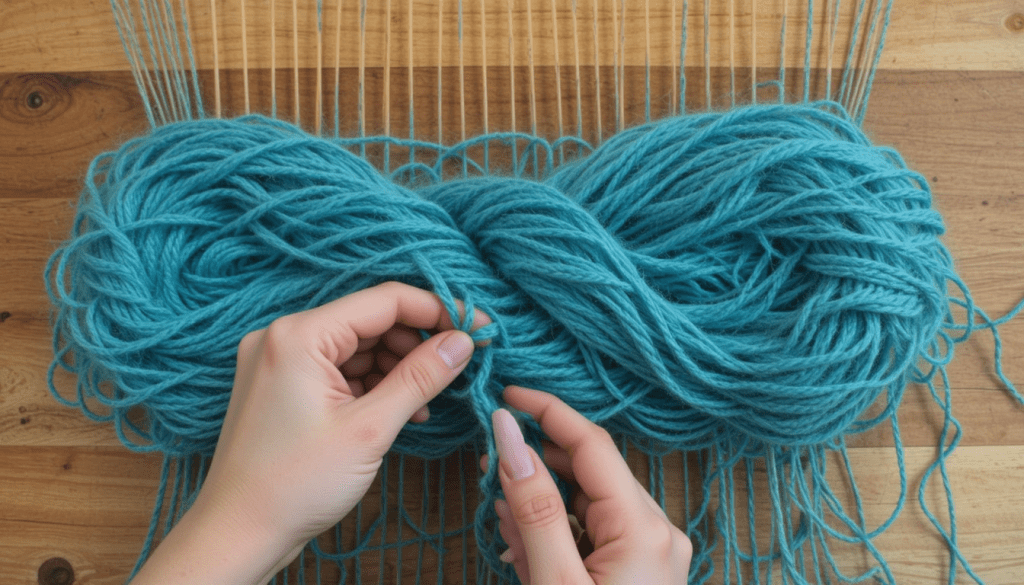
- Bundle of Yarn, Thread, or Rope: A coil or loop of yarn, thread, or rope, often tied or wound into a convenient shape for storage and use.
- Example: “She bought a hank of wool for her knitting project.”
- Small Amount or Quantity(figurative use): A portion or fragment, especially of something string-like or fibrous.
- Example: “He brushed a stray hank of hair away from her face.”
- Nautical Usage: A fitting used to attach a sail to the stay (the rope or wire that supports the mast) on a sailing vessel.
- Example: “The sailor fastened the jib with brass hanks before setting sail.”
Expanded Explanation:
Textile Context:
In the textile industry, a hank refers to a standardized loop or skein of yarn, thread, or rope, coiled for easy handling. The length of yarn in a hank varies depending on the material and the standards of measurement in a given region or industry. For example, in the United States, a hank of cotton is traditionally 840 yards, while for wool, it may differ.
- Example: “Each hank of yarn she bought was dyed in a gradient of soft pastel colors.”
- Historical Note: The concept of hanks dates back centuries when yarn and thread were measured and sold in these coiled forms for consistency and convenience.
Figurative Use:
The word hank is also used metaphorically to describe a small piece or wisp of something, such as hair, string, or even smoke. This usage evokes a delicate or fleeting image, often poetic in nature.
- Example: “The hanks of mist hung low over the meadow, shimmering in the dawn light.”
Nautical Application:
In sailing, hanks are essential components for rigging a sailboat. They are typically made of metal or durable plastic and are used to secure the edge of a sail (the luff) to a stay. This ensures the sail remains aligned with the wind for optimal performance.
- Example: “The sailor ensured all the hanks were securely fastened before heading into the open sea.”
Etymology:
The term hank originates from Middle English hanke or Old Norse hanki, meaning “loop” or “coil.” The word’s root emphasizes the idea of something bound or tied, which aligns with its usage in textiles and sailing.
Synonyms:
- For Yarn/Rope: Skein, coil, loop, bundle
- For Small Amount: Strand, wisp, lock, tuft
Antonyms:
- For Yarn/Rope: Tangle, knot
- For Small Amount: Mass, bulk
Examples in Context:
- Textile Context:
- “The artisan dyed each hank of yarn in a unique shade, creating a vibrant palette for her weaving project.”
- “She purchased several hanks of thread to embroider her wedding veil.”
- Figurative Context:
- “A thin hank of smoke curled from the chimney, a sign of life in the wintery landscape.”
- “She nervously twisted a hank of her hair while waiting for the test results.”
- Nautical Context:
- “The deckhand inspected the sail’s hanks to ensure they were free of corrosion before the voyage.”
- “Strong winds tested the durability of the hanks, but they held firm under the strain.”
Cultural and Historical Context:
- Weaving and Textile Work: Historically, hanks were the standard unit for yarn before the advent of modern packaging, such as spools and balls. The term persists in modern knitting, crochet, and weaving communities.
- Literary Usage: The figurative use of hank to describe wisps or strands can often be found in poetic and descriptive prose, emphasizing fragility or delicacy.
- Sailing History: Hanks were critical for maritime exploration and commerce. Their design has evolved, but their function remains unchanged, highlighting their enduring importance.
Interesting Facts:
- Standardized Measurement: In spinning and weaving, the length of a hank varies by material. For example, one hank of linen is 300 yards, while a hank of cotton is traditionally 840 yards.
- Modern Usage: While spools and balls have largely replaced hanks in commercial settings, hand-dyed or artisan yarns are still commonly sold in hank form.
- Idiomatic Connection: The phrase “hankering for something” (meaning to have a strong desire or craving) shares a distant linguistic root with hank, both suggesting a form of “grasping” or “holding onto.”
Takeaway:
The word hank carries versatile meanings, from its technical applications in textiles and sailing to its poetic and figurative uses. Whether describing a neat bundle of yarn, a wisp of hair, or a nautical fastener, hank encapsulates the notion of binding and connection, serving as a reminder of humanity’s ingenuity in organizing the chaotic threads of life.
Originally published on January 28, 2025, on The-English-Nook.com.
Hank: From threads to sails, it ties history, art, and the sea together!
Unravel the magic—give this post a like and complete the pattern. 🧶✨
 Word of the Day - The English Nook
Leave a comment