
IPA: /ˈtaɪdˌpuːl/
(Noun)
Definition:
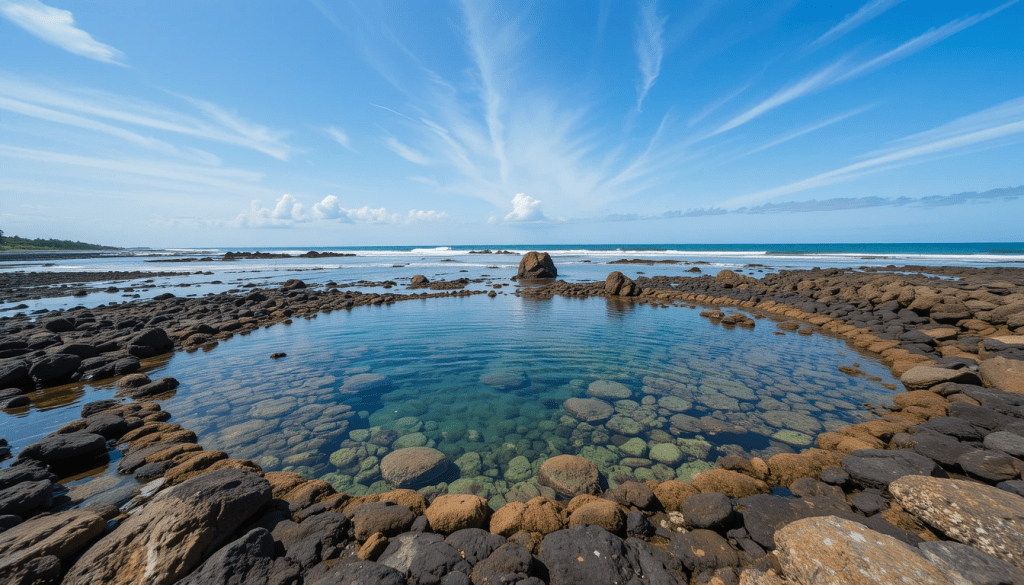
A tidepool, also called a rock pool, is a small, shallow pool of seawater that forms along rocky coastal areas during low tide. These unique ecosystems serve as temporary habitats for an array of marine life, where the ocean’s ebb and flow leave behind a snapshot of life teeming with adaptation and survival.
Detailed Explanation:
Tidepools are formed when the receding tide traps seawater in natural depressions or crevices in coastal rocks. While often seen as tranquil, these environments are dynamic and challenging, marked by fluctuations in water temperature, salinity, and oxygen levels. Despite these hardships, they are home to a stunning diversity of life, from tiny invertebrates to hardy algae, and are considered microcosms of the ocean.
Life in a Tidepool
Tidepools host a variety of species that have adapted to survive extreme conditions such as:
- Fluctuating Temperatures:
Water in tidepools can heat up rapidly under the sun or cool down with passing clouds or wind. Organisms in these environments often develop physiological mechanisms to cope with these changes. - Variable Salinity:
Evaporation caused by sunlight increases salinity, while rainfall dilutes it. Animals like mollusks and crustaceans have mechanisms to manage such shifts. - Predation Risks:
Birds, humans, and other predators frequently forage in tidepools, adding an additional challenge for resident species. - Wave Impact:
Waves can refresh the pool with oxygen and nutrients but can also be strong enough to dislodge unprepared inhabitants.
Organisms Found in Tidepools
Tidepools are biological hotspots where various forms of life thrive, showcasing the adaptability of marine organisms.
Marine Animals:
- Starfish: Iconic tidepool inhabitants that use their tube feet to cling to surfaces.
- Sea Urchins: Spiky creatures that graze on algae.
- Crabs: Agile scavengers, often spotted scuttling across rocks.
- Sea Anemones: Flower-like animals that use stinging tentacles to capture prey.
- Fish: Sculpins, blennies, and gobies hide in the nooks and crannies.
Plants and Algae:
- Seaweed: Kelp and other macroalgae dominate, providing shelter and food.
- Microscopic Algae: The base of the tidepool food chain.
Examples:
- “The tidepool was bustling with hermit crabs swapping shells and a shy octopus hiding under a rock.”
- “She gently pointed to the delicate sea anemones waving in the shallow tidepool waters.”
Etymology:
- Origin: The term “tidepool” derives from the words tide, referring to the ocean’s rhythmic rise and fall, and pool, denoting a small body of standing water.
- Historical Usage: The word entered common usage in the 19th century, primarily among naturalists and coastal communities.
Cultural and Ecological Significance
Tidepools are not only scientifically important but also hold cultural and recreational value. They serve as natural classrooms where people can learn about marine life and ecosystems. Historically, coastal communities have utilized tidepools for fishing and foraging.
Educational Importance:
Tidepools encourage curiosity about the natural world. Field trips, ecotourism, and citizen science projects often involve tidepool exploration, raising awareness about marine conservation.
Ecological Role:
Tidepools are key to coastal biodiversity, offering a haven for species that rely on them for breeding, feeding, or shelter during low tide.
Synonyms:
- Rock pool
- Intertidal pool
- Coastal pool
Antonyms:
- Deep sea
- Open ocean
- Dry shore
Interesting Facts about Tidepools:
- Natural Laboratories: Tidepools provide a glimpse into ocean ecology, making them ideal for scientific studies.
- Resilience of Life: Some organisms in tidepools can endure desiccation (drying out) by going dormant until the tide returns.
- Colorful Ecosystems: Tidepools are visually stunning, showcasing vibrant hues from seaweed greens to starfish oranges.
Tips for Tidepool Exploration:
- Plan Your Visit: Go during low tide for the best visibility.
- Be Respectful: Avoid moving rocks or touching animals unnecessarily.
- Safety First: Wear non-slip footwear and watch for incoming waves.
Example Activity:
- “The children spent hours peering into tidepools, excitedly discovering crabs, snails, and even a small jellyfish.”
Takeaway:
Tidepools are nature’s masterpieces, brimming with life and resilience. They remind us of the adaptability of organisms and the intricate balance of ecosystems. Exploring a tidepool offers not just an educational experience but also a chance to reconnect with the wonders of the natural world.
The word “angler” embodies both the serenity of recreational fishing and the ingenuity of natural evolution. Whether it refers to a patient person fishing by the water or a fascinating deep-sea predator, the term highlights the connection between humans and the natural world. It captures patience, adaptability, and the thrill of the catch, making it a word rich with cultural and ecological significance.
Originally published on January 20, 2025, on The-English-Nook.com.
Tidepools: Nature’s vibrant classrooms where resilience and beauty converge beneath the ocean’s rhythm.
Drift into this tiny world and leave a like—a little treasure in the tide. 🌊✨
 Word of the Day - The English Nook
Leave a comment