
IPA: /ˈwaɪtˌaʊt/
(Noun)
Definitions:
- Meteorological Phenomenon:
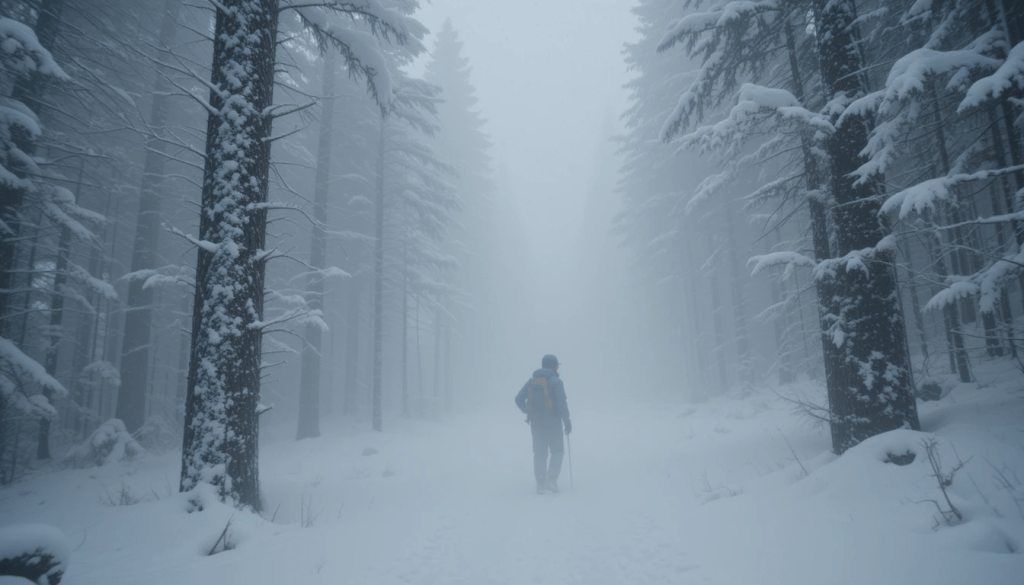
A weather condition in which snow, clouds, or fog reduce visibility so drastically that the horizon disappears, making it nearly impossible to distinguish the ground from the sky.
Example: “The mountaineers were forced to halt their ascent due to a sudden whiteout that obscured their path.” - Correction Fluid (Trademark):
A liquid used to cover up writing errors on paper, typically white in color. The term is sometimes generically used for any brand of correction fluid.
Example: “She used Whiteout to fix the typo in her handwritten letter.” - Visual Effect (Figurative):
A blinding sensation caused by intense white light or an overwhelming field of white, often used metaphorically to describe disorientation.
Example: “The camera flash created a brief whiteout in my vision.”
Detailed Explanation:
The term whiteout encompasses multiple meanings across meteorology, stationery, and figurative language. Each context emphasizes the concept of overwhelming whiteness, whether through natural phenomena, corrective tools, or visual experiences.
Meteorological Phenomenon:
A whiteout in weather occurs primarily in snowy or arctic conditions, where falling or blowing snow combines with overcast skies, eliminating depth perception and visual landmarks.
- Key Characteristics:
- Loss of the horizon line.
- Uniformly white surroundings that confuse perception.
- Dangerous for travelers, pilots, and outdoor adventurers.
- Causes:
- Heavy snowfall or blizzards.
- Fog reflecting off snow-covered ground.
- Low clouds and diffused light.
- Dangers:
- Difficulty navigating terrain.
- Risk of accidents, especially for vehicles and aircraft.
- Increased disorientation and hypothermia for individuals caught outdoors.
Stationery Product (Correction Fluid):
The term Whiteout also refers to a specific product trademarked by BIC Corporation, used to correct handwritten or typed errors. Over time, it has become a generic term for similar correction fluids.
- Usage:
- Applied over mistakes on paper to create a blank, writable surface.
- Common in academic, professional, and personal writing contexts.
- Evolution:
- Originally a thick liquid applied with a brush.
- Modern versions include pens and tape dispensers for precision.
Figurative and Visual Use:
In broader usage, whiteout can describe any overwhelming white visual field, whether literal (bright lights) or metaphorical (a moment of confusion or blankness).
- Example: In literature, a whiteout might symbolize mental fog or an emotional state of feeling lost.
Etymology:
The word whiteout originated in the early 20th century as a compound of white and out, initially used to describe severe arctic weather. Its application to correction fluid came later, through branding.
Synonyms:
- Meteorological Context:
- Blizzard
- Snowstorm
- Fog bank
- Correction Fluid Context:
- Liquid paper
- Correction tape
- Figurative Context:
- Blindness
- Overexposure
Examples in Sentences:
- Meteorological Context:
- “The plane was grounded due to a whiteout that made landing too dangerous.”
- “Caught in a whiteout, the hikers relied on GPS to find their way back to camp.”
- Correction Fluid Context:
- “She grabbed her Whiteout to fix the misspelled word on the invitation.”
- “Modern offices use digital editing tools more often than Whiteout.”
- Figurative Context:
- “The snowstorm created a visual whiteout, as if the world had been erased.”
- “The spotlight on stage caused a temporary whiteout, leaving the actor momentarily blinded.”
Cultural and Real-World Applications:
- Survival Training:
- Whiteout conditions are an essential topic in mountaineering and Arctic survival courses. Knowing how to navigate and remain calm in such conditions can save lives.
- Stationery Use:
- Though less common in the digital age, Whiteout and correction fluid remain staples in traditional offices and schools.
- Pop Culture:
- Films like Whiteout (2009), a thriller set in Antarctica, explore the dangers of being caught in extreme weather.
- The term is also used in video games and literature to describe moments of disorientation or environmental challenges.
- Metaphor in Writing:
- Writers and poets often use whiteout to describe feelings of emptiness, confusion, or sensory overload.
Takeaway:
Whiteout is a versatile term with applications in weather, everyday life, and metaphorical contexts. Whether it’s the disorienting snowstorms of the Arctic, the trusty correction tool on your desk, or a fleeting moment of visual confusion, the concept remains tied to the overwhelming presence of whiteness. From survival challenges to creative metaphors, whiteout highlights the profound impact of both nature and human ingenuity on our perceptions.
Originally published on January 12, 2025, on The-English-Nook.com.
From Arctic storms to paper-perfect fixes, whiteout is where nature meets ingenuity!
Amid this blizzard of words, your like would stand as a beacon of clarity. ❄️✨
 Word of the Day - The English Nook
Leave a comment