
IPA: /kəˈbuːs/
(Noun)
Definition:
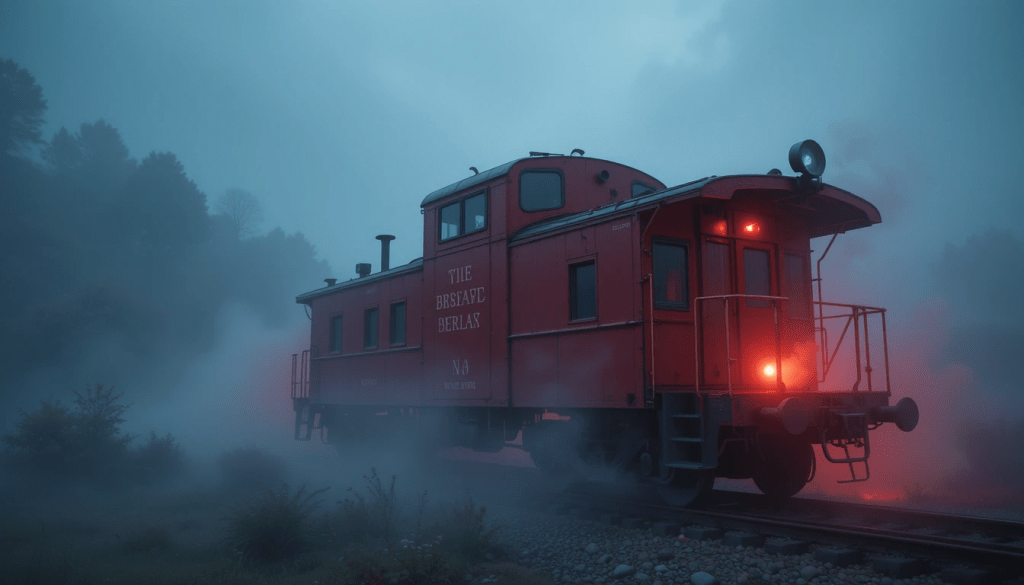
- Railroad Car: A caboose refers to the last car on a freight train, traditionally used by the train’s crew as an office, living quarters, or observation post. Equipped with windows, tools, and workspace, the caboose allowed crew members to monitor the train’s safety, oversee operations, and perform tasks like braking.
- Informal Usage: A playful or humorous slang term for the buttocks or rear end.
Detailed Explanation:
The caboose was an essential part of railroad operations for much of the 19th and early 20th centuries. Positioned at the rear of the train, it served as a multi-functional space where conductors, brakemen, and other crew members could work and rest. Its elevated viewing platform, known as the cupola or bay windows, gave train crews a clear vantage point to observe the cars ahead for potential issues such as shifting loads, mechanical malfunctions, or overheating axles.
Beyond its functionality, the caboose symbolized the camaraderie and resilience of railroad workers. Inside, it was often outfitted with desks, tools, a stove for cooking and warmth, bunks for resting, and storage for supplies. Despite its rugged design, it was also a space where crews built a sense of community during long journeys.
However, with advancements in technology, such as End-of-Train Devices (EOTDs) that monitor brake pressure and other train functions remotely, the caboose became largely obsolete in the late 20th century. Though they are no longer in active service, cabooses remain iconic symbols of the railroad’s golden age and are often preserved in museums, parks, and private collections.
In informal speech, the word caboose is sometimes used humorously to describe the human posterior, owing to its position as the “rear” of the train. This usage adds a playful and lighthearted tone to conversation, especially in casual settings.
Etymology:
The term caboose originates from the Dutch word kabuis, which referred to a ship’s galley or small cooking space. This maritime term transitioned to railroading in the early 19th century, when the last car of a train began to serve as a multifunctional space for the crew. Over time, the word evolved to exclusively denote the final car on a freight train, particularly in North America.
Examples in Sentences:
- “The brightly painted caboose at the end of the train was a charming reminder of the golden age of railroads.”
- “During the rail museum tour, we climbed into a restored caboose and imagined the lives of the train crew.”
- “As the train chugged along the countryside, the conductor stood in the caboose, keeping a watchful eye on the cars ahead.”
- (Informal) “He slipped on the ice and landed right on his caboose, much to everyone’s amusement.”
- “The nostalgic old caboose has been converted into a cozy bed-and-breakfast, offering a unique lodging experience.”
Synonyms:
- Railroad Usage:
- Rear car
- Observation car
- Train guard’s van (British equivalent)
- Informal Usage:
- Backside
- Rear end
- Buttocks
- Derrière
Antonyms:
- Front car
- Engine
- Locomotive
Cultural and Historical Context:
The caboose is more than a relic of the past; it is a symbol of the human ingenuity that powered the railroad industry. From the mid-1800s to the late 1900s, cabooses were a common sight at the end of freight trains, their presence signaling the completion of the train’s long chain of cars. The cupola, an elevated section on the caboose roof, was a unique architectural feature that provided a bird’s-eye view for crew members. This allowed them to spot potential hazards or issues on the train’s length, such as overheating brakes or unbalanced cargo.
As technology advanced, the introduction of air brakes and electronic monitoring systems diminished the need for human oversight at the rear of the train. By the 1980s, most railroads in North America had phased out cabooses in favor of automated systems, which were more cost-effective. Nevertheless, the caboose holds a special place in cultural memory, often romanticized in films, books, and museums as a symbol of exploration and hard work.
Today, cabooses are often repurposed as attractions or accommodations. They are frequently displayed in parks or rail museums and occasionally converted into small homes, diners, or even novelty lodging. Some scenic railways include a caboose in their train composition, offering passengers a nostalgic glimpse into railroad history.
In Informal Speech and Popular Culture:
In its slang usage, the term caboose has become a lighthearted way to refer to someone’s rear end. The playful nature of this usage has made it a staple in comedic contexts, especially in TV shows, movies, and casual banter. For example, a character might quip about “bringing up the caboose” to humorously imply they are lagging behind in a group.
In children’s media, the caboose often takes on an anthropomorphic role, depicted as cheerful and dependable. In works like Thomas & Friends, it is portrayed as an essential companion to the main engine characters, emphasizing teamwork and friendship.
Interesting Trivia:
- The caboose was sometimes personalized by the train crew, who might paint it or decorate it to reflect their unique character or team spirit.
- In addition to observation, the caboose served as a mobile office where conductors could fill out paperwork and keep track of cargo manifests.
- Some cabooses were equipped with a “potbelly stove,” used to cook meals and keep the crew warm on long journeys.
- A few railroads offered luxury cabooses, fitted with plush furniture and upgraded amenities, often reserved for company executives or VIPs.
Modern Nostalgia and Preservation:
The caboose’s retirement from active duty has only enhanced its nostalgic appeal. Many railway enthusiasts and collectors have taken to restoring cabooses, preserving them as a testament to the ingenuity of the past. They are a popular feature in heritage railways, allowing visitors to step back in time and experience the life of a train crew member. Restored cabooses are also sought after by collectors, with some being used as quirky, stationary guesthouses or tiny homes.
The enduring charm of the caboose is also reflected in its continued usage in idiomatic expressions. To “bring up the caboose” means to be last in a sequence or group, a phrase often used in lighthearted or self-deprecating humor.
Takeaway:
The caboose represents an iconic piece of railroad history, embodying the resourcefulness and resilience of train crews during the golden age of rail travel. While modern technology has replaced its functional role, the caboose lives on as a nostalgic symbol of adventure, camaraderie, and ingenuity. Whether experienced in a museum, reimagined as a cozy retreat, or simply remembered in conversation, the caboose continues to captivate the imagination of train enthusiasts and casual admirers alike.
Originally published on January 7, 2025, on The-English-Nook.com.
From trains to talking points, the caboose proves there’s always charm at the rear!
The train’s not complete without your like at the very end. 🚋❤️
 Word of the Day - The English Nook
Leave a comment