
IPA: /ˈvɛstɪdʒ/
Definition:
- A small or faint trace, mark, or remnant of something that once existed or was significant but is now gone, diminished, or obsolete.
- Evidence or indication of a condition, practice, or state that has nearly disappeared or no longer exists.
Detailed Explanation:
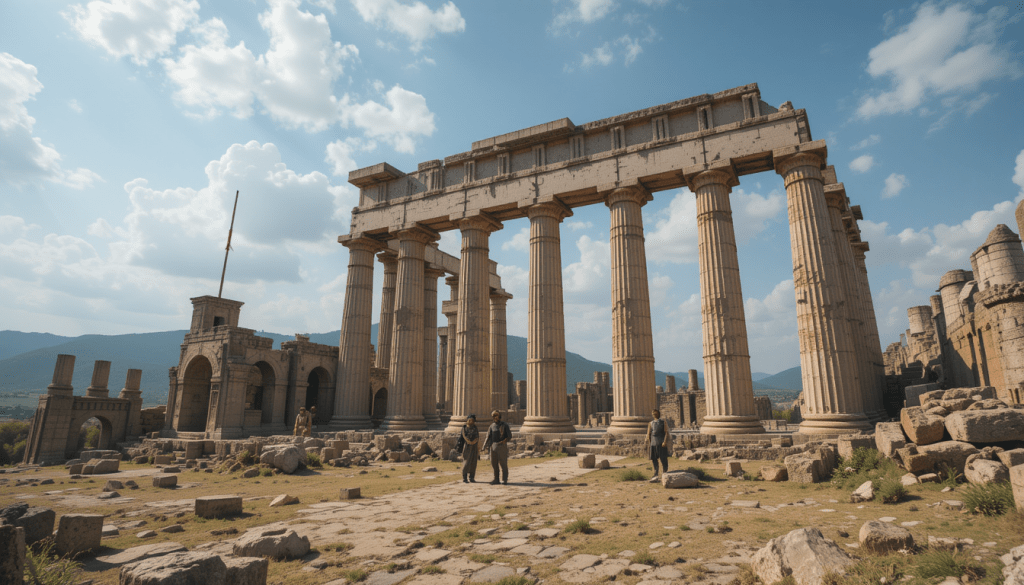
“Vestige” refers to the faint, lingering remains of something that once existed in a fuller form. It could be physical, like ruins of a building, or abstract, like the remnants of a tradition, culture, or emotion. The word is often used metaphorically to describe things that evoke a sense of history, evolution, or transformation. In biological terms, “vestige” can also refer to vestigial structures—parts of an organism that have lost most or all of their original function due to evolution (e.g., the appendix in humans or the pelvic bones in whales).
In everyday use, “vestige” conveys the idea of a shadow or whisper of something that has largely vanished but still leaves an imprint on the present.
Etymology:
The term “vestige” originates from the Latin word vestīgium, meaning “footprint” or “trace.” This Latin root encapsulates the idea of something left behind, a mark or track that hints at what was once there. It was introduced into English through Middle French during the 14th or 15th century, where it retained the meaning of a trace or evidence.
Examples in Sentences:
- “The crumbling walls and overgrown pathways were the only vestiges of the ancient castle.”
- “There wasn’t a vestige of doubt in her mind about the decision she had made.”
- “The traditions they practiced were vestiges of a culture that had been largely forgotten by the younger generation.”
- “The whale’s pelvic bones are vestiges of its land-dwelling ancestors.”
- “Despite the years, a vestige of their friendship lingered in the occasional handwritten letters.”
Synonyms:
- Trace
- Remnant
- Residue
- Relic
- Fragment
- Echo
- Shadow
- Hint
Antonyms:
- Whole
- Entirety
- Bulk
- Core
- Substance
Usage in Different Contexts:
1. Historical and Archaeological Contexts:
Vestige is frequently used to describe the physical remains of ancient civilizations or historical periods.
Example: “The vestiges of the Roman aqueducts scattered across Europe offer glimpses into their advanced engineering.”
2. Biological and Evolutionary Contexts:
In biology, vestiges (or vestigial structures) refer to parts of an organism that were once functional in ancestors but have lost their primary use through evolutionary changes.
Example: “The human coccyx is a vestige of a tail that our primate ancestors once possessed.”
3. Emotional and Psychological Contexts:
The term can also describe faint emotional impressions or memories that linger after the main experience has passed.
Example: “A vestige of sadness remained in her heart long after she had moved on.”
4. Societal and Cultural Contexts:
It is often used to refer to the remnants of traditions, practices, or ideologies that are no longer as relevant or widespread as they once were.
Example: “The use of candles during ceremonies is a vestige of old rituals that predate electricity.”
Related Terms:
- Relic: An object surviving from an earlier time, especially one of historical or sentimental value.
- Remnant: A small remaining piece of something.
- Trace: A small or barely discernible amount of something.
- Echo: A lingering or indirect sign of something.
- Fragment: A small part broken off or detached from something.
Scientific Use:
In scientific contexts, particularly in evolution, a vestige can refer to anatomical structures that serve little to no modern function but provide clues about the evolutionary history of an organism. For example:
- Human Appendix: A vestigial organ once possibly used for digesting cellulose in a herbivorous diet.
- Wisdom Teeth: Remnants of an era when humans required extra molars for grinding tougher food.
- Goosebumps: A physiological vestige from when body hair was raised to make early humans appear larger to predators or to trap heat.
Cultural Symbolism:
Vestiges often evoke a sense of nostalgia, mystery, or loss. In literature and art, they may symbolize the passage of time, the enduring impact of history, or the fragility of human endeavors. The term underscores the fleeting nature of existence, reminding us that even the most grandiose creations eventually fade, leaving behind only whispers of what once was.
Takeaway:
“Vestige” captures the enduring traces of the past, whether physical, emotional, or cultural. It reminds us of the impermanence of life and the small remnants that persist to connect the present with what has been lost. From ancient ruins to personal memories, vestiges tell stories of change, survival, and the enduring marks left behind by time and history.
Originally published on December 30, 2024, on The-English-Nook.com.
Every vestige tells a story of what time couldn’t erase.
A like is a lingering shadow, a memory etched into the essence of this creation. 🌙🖤
 Word of the Day - The English Nook
Leave a comment