
IPA: /nəˈtɪv.ə.ti/
Definition:
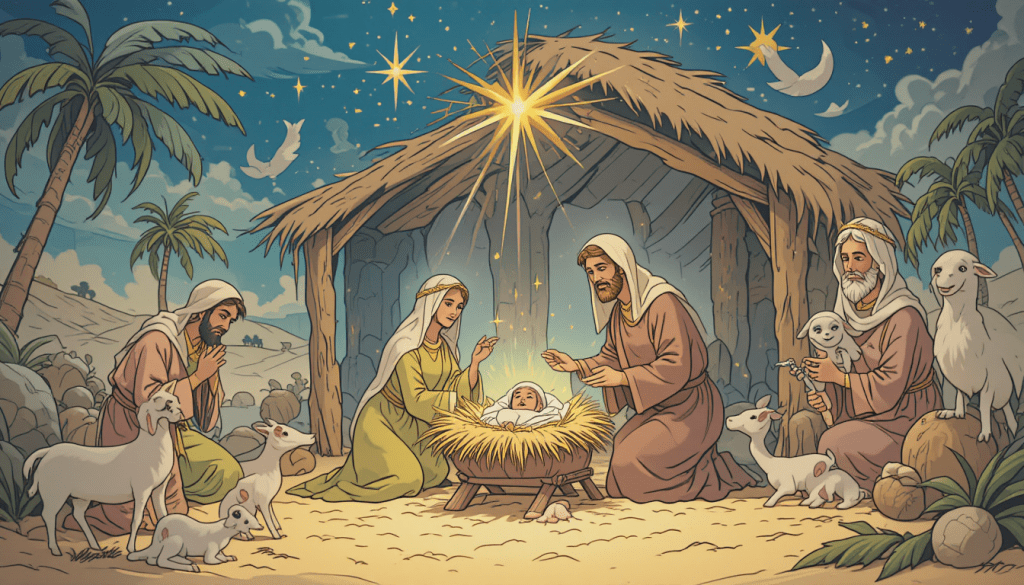
The Nativity refers specifically to the birth of Jesus Christ, as recounted in Christian tradition and scripture. The term is also used to describe representations of this event in art, theater, or Christmas decorations, such as Nativity scenes featuring the Holy Family, shepherds, wise men, and angels.
Examples in Use:
- “The children performed a Nativity play at school, complete with shepherds and angels.”
- “The church displayed a beautifully crafted Nativity scene near the altar.”
- “Artists have depicted the Nativity in countless forms, from paintings to sculptures.”
Etymology:
The word Nativity comes from the Old French nativité, which originates from the Late Latin nativitas, meaning “birth” or “origin.” This, in turn, derives from the Latin verb nasci, meaning “to be born.” In Christian tradition, Nativity specifically denotes the birth of Jesus Christ in Bethlehem, as celebrated during Christmas.
Cultural and Religious Significance:
1. Biblical Context:
- The Nativity is described in the Gospels of Matthew and Luke in the New Testament. It tells of Mary and Joseph traveling to Bethlehem, where Jesus was born in a stable or manger because there was no room at the inn.
- Visitors to the Nativity include the shepherds, who were guided by angels, and the Magi (wise men), who followed a star to bring gifts of gold, frankincense, and myrrh.
2. Artistic Representations:
- The Nativity has been a central theme in Christian art since the early Middle Ages.
- Renaissance painters such as Sandro Botticelli and Giotto created iconic Nativity scenes that are revered to this day.
- Nativity scenes, also called crèches or presepi in some cultures, are a popular Christmas tradition worldwide. They often feature figures of Mary, Joseph, baby Jesus, animals, and visitors.
3. Nativity Plays:
- A longstanding Christmas tradition in Christian communities, Nativity plays reenact the story of Jesus’ birth. These are often performed by children during the holiday season.
- The first recorded Nativity play is attributed to St. Francis of Assisi in 1223, who staged a live Nativity in a cave to teach the story of Christ’s birth.
4. Symbolism:
The Nativity is rich with symbolism, emphasizing humility, hope, and divine love:
- The Manger: Represents simplicity and humility, as Christ was born in modest surroundings.
- The Star of Bethlehem: A symbol of guidance and divine purpose.
- The Visitors: Shepherds represent the humble, while the Magi represent wisdom and the universality of Christ’s message.
Nativity Scenes Worldwide:
- In Italy, elaborate Nativity scenes (presepi) are a cornerstone of Christmas tradition.
- In Latin America, Nativity displays are often vibrant and incorporate local cultural elements, such as indigenous dress and flora.
- In Germany, wooden Nativity pyramids are popular, featuring scenes that rotate when candles are lit.
- In the Philippines, the belen (Nativity scene) is a focal point of Christmas decorations, sometimes accompanied by festive parades.
Synonyms and Related Terms:
- Synonyms: Birth of Christ, Christ’s Nativity, Holy Birth.
- Related Terms: Manger, Crèche, Christmas, Epiphany (associated with the Magi’s visit).
Interesting Facts:
- The tradition of setting up Nativity scenes began in Italy in the 13th century, attributed to St. Francis of Assisi.
- Some Nativity scenes are “living Nativity displays,” where actors and animals recreate the scene of Christ’s birth.
- The Magi’s gifts—gold, frankincense, and myrrh—are deeply symbolic: gold for kingship, frankincense for divinity, and myrrh for suffering and death.
Modern Celebrations:
Nativity scenes continue to hold cultural and spiritual significance during the Christmas season. They are set up in homes, churches, and public spaces worldwide, reminding believers of the story of Christ’s birth. The scenes vary widely in style, from simple wooden carvings to grand, lifelike displays with animatronics.
Takeaway:
The Nativity is more than just the story of Christ’s birth—it is a cornerstone of Christian tradition that embodies themes of hope, humility, and divine love. From biblical accounts to artistic masterpieces and modern Christmas customs, the Nativity continues to inspire and connect people of faith across the world.
Originally published on December 21, 2024, on The-English-Nook.com.
The Nativity: A timeless story of faith, hope, and unity that lights up hearts every Christmas.
Bestow your like, as a star guided the way—bring light to this humble post. ✨🌟
 Word of the Day - The English Nook
Leave a comment