
IPA: /ˈkærəl/
Definition:
A carol is a joyful song or hymn, often with a festive theme. While most commonly associated with Christmas celebrations, carols have historical roots that span religious, seasonal, and secular traditions. Traditionally, carols are performed by groups, often accompanied by musical instruments, and serve to express themes of joy, reverence, celebration, or communal spirit. The term also extends to refer to any song of praise or happiness in a broader context.
Examples in Use:
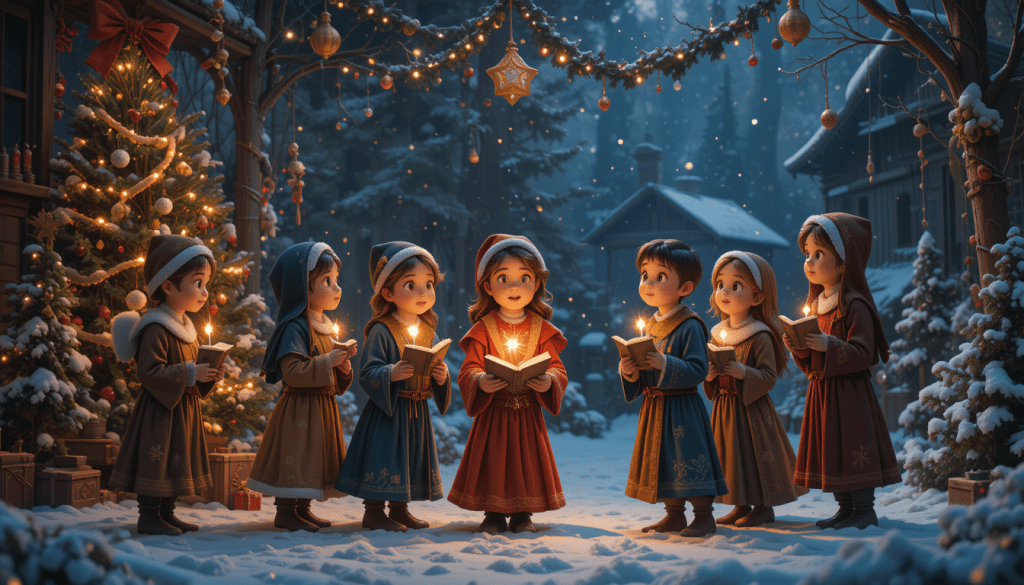
- “The snow-covered streets came alive with the sound of carolers singing traditional Christmas carols.”
- “Medieval carols celebrated not just religion, but the changing of the seasons and the joy of life.”
- “The choir rehearsed a hauntingly beautiful carol that dated back to the 14th century.”
- “In the candlelit cathedral, the carol echoed like a timeless prayer.”
Etymology:
The word carol originates from the Old French carole, meaning “a circle dance accompanied by singing.” This term itself stems from the Latin choraula, which referred to a dance or song performed with musical accompaniment, particularly a flute. By the 14th century, carol had entered Middle English, where it initially referred to joyful songs and dances. Over time, its association with Christian liturgical music, particularly Christmas hymns, became dominant.
Cultural and Historical Significance:
1. Early Origins:
- Carols date back to pagan rituals, where people sang songs to celebrate the cycles of nature, such as the winter solstice or harvest festivals.
- In medieval Europe, carols were a staple of folk traditions, performed in communal gatherings and celebrations. These early carols often blended sacred and secular themes.
2. Christmas Connection:
- The link between carols and Christmas emerged in the 13th century, largely attributed to St. Francis of Assisi, who introduced hymns to celebrate the Nativity.
- Early Christmas carols like The First Noel and God Rest Ye Merry, Gentlemen reflect this union of religious devotion and communal joy.
3. The Victorian Revival:
- The tradition of caroling was revitalized during the Victorian era, a time when Christmas itself was reimagined as a celebration of family, charity, and festivity.
- Notable carols such as O Come All Ye Faithful and Hark! The Herald Angels Sing became staples of the Christmas canon.
- Caroling as a community activity also became formalized, with groups visiting homes, churches, and public spaces to spread cheer.
4. Modern Interpretations:
- Today, carols are performed in diverse styles, from classical choral arrangements to jazz and pop interpretations.
- The tradition of caroling persists in many cultures, such as the Paskong Awit in the Philippines or the joyful songs of Scandinavian Christmas.
Global Variations:
Carols have taken on unique forms in different parts of the world:
- England: Rich in medieval carols that tell stories of the Nativity.
- Germany: Known for classical Christmas carols like O Tannenbaum.
- Latin America: Features villancicos, traditional carols blending European and indigenous influences.
- Africa: Incorporates rhythmic and harmonic elements into carols, often blending local instruments with Christian themes.
Synonyms and Related Terms:
- Synonyms: Hymn, chant, anthem, ballad, noel, song of praise.
- Related Terms: Lullaby, serenade, psalm, ode, ditty.
Famous Carols and Literary References:
Famous Christmas Carols:
- Silent Night: A hymn of peace and tranquility.
- Deck the Halls: A festive song celebrating Yuletide traditions.
- Joy to the World: A triumphant anthem of praise.
Literary References:
- Charles Dickens immortalized the spirit of caroling in A Christmas Carol. The novella highlights the transformative power of joy, generosity, and celebration, often associated with the songs of the season.
Modern Usage:
- Christmas Celebrations: Carols remain an integral part of holiday festivities, performed by choirs, caroling groups, and even solo singers during family gatherings.
- Community Building: Caroling events encourage togetherness, often serving as fundraisers or outreach activities for charity.
- Cultural Adaptations: Artists worldwide adapt traditional carols to reflect contemporary themes or styles, ensuring the tradition remains vibrant.
Interesting Facts:
- The oldest known Christmas carol is Jesus Refulsit Omnium (Jesus, Light of All Nations), written in the 4th century.
- The Victorian-era resurgence of carols coincided with the rise of the Christmas card and other holiday traditions.
- Some carols, like Good King Wenceslas, tell stories of historical or legendary figures, blending folklore with faith.
Takeaway:
A carol is far more than just a song—it’s a bridge between past and present, a vessel for joy, tradition, and communal celebration. Whether sung in candlelit churches, echoed through frosty streets, or performed with modern flair, carols continue to inspire and unite people, transcending cultural and temporal boundaries. Their enduring charm lies in their ability to evoke the warmth, nostalgia, and spirit of shared humanity.
Originally published on December 19, 2024, on The-English-Nook.com.
From ancient dances to modern melodies, carols bring timeless joy to every season!
Fa-la-la-la-la, a like is all it takes to make this post shine bright! 🎶🌟
 Word of the Day - The English Nook
Leave a comment