
IPA: /oʊˈnaɪrɪk/
Definition:
Oneiric refers to anything related to dreams or the qualities associated with dreaming, such as surrealism, fantasy, and ethereality. It often describes experiences, atmospheres, or states of consciousness that evoke the illogical, fragmented, or symbolic nature of dreams. It can also imply a sense of detachment from reality, where the boundaries between the real and the imagined blur.
Examples in Use:
- “The oneiric beauty of the painting transported viewers into a dream world filled with enigmatic figures and floating landscapes.”
- “His oneiric storytelling leaves readers questioning whether the events occurred in reality or within the protagonist’s subconscious.”
- “The hypnotic rhythm and soft melodies of the music created an oneiric ambience, lulling everyone into a trance.”
- “The novel’s oneiric narrative structure mirrors the fleeting, nonlinear flow of dreams.”
Etymology:
The word oneiric originates from the Greek term oneiros (ὄνειρος), meaning “dream.” It was first adopted into English usage in the mid-19th century, particularly in intellectual and artistic circles, to describe dreamlike qualities in various media. The suffix -ic adds a descriptive quality, making it an adjective that embodies the essence of dreams.
Applications in Different Contexts:
- Psychology and Neuroscience:
- Oneiric states refer to dreamlike mental experiences that may occur during sleep or altered states of consciousness.
- Researchers study oneiric hallucinations that occur in conditions like sleep paralysis or narcolepsy, where individuals experience vivid, often surreal images while awake.
- The REM (Rapid Eye Movement) stage of sleep is where most oneiric activity happens, characterized by the brain’s vivid and sometimes illogical imagery.
- Art and Aesthetics:
- Artists like Salvador Dalí and René Magritte use oneiric imagery to evoke surreal, dreamlike emotions, often leaving viewers in awe or contemplation.
- Oneiric art often blends familiar objects with fantastical elements, creating juxtapositions that feel both alien and intimate.
- Literature:
- In literary works, the oneiric mode is used to mirror the logic of dreams, where time may bend, events are nonlinear, and symbols dominate the narrative.
- Writers like Franz Kafka and Gabriel García Márquez are celebrated for their oneiric storytelling that blurs the line between reality and imagination.
- Cinema and Theater:
- The term is commonly used to describe films that employ surreal, dreamlike visuals and narratives. Directors such as David Lynch (Mulholland Drive) and Federico Fellini (8½) masterfully incorporate oneiric sequences to explore the subconscious mind.
- These films often rely on disjointed timelines, symbolic imagery, and atmospheric soundscapes to replicate the experience of dreaming.
- Music:
- Dreamlike compositions, particularly in genres like ambient, post-rock, or experimental, are often described as oneiric. The term encapsulates the way certain melodies and rhythms can induce a meditative or trance-like state, akin to dreaming.
- Philosophy:
- Philosophers like Gaston Bachelard explore oneiric imagination in works such as The Poetics of Reverie, emphasizing the connection between dreams and creativity.
- Dreams are seen as windows into the unconscious mind, a realm where unfiltered thoughts, fears, and desires manifest.
Synonyms and Related Terms:
- Synonyms: Dreamlike, surreal, phantasmagoric, ethereal, fantastical, hallucinatory, hypnagogic.
- Related Terms: Lucid, mystical, subconscious, reverie, somnolent, hypnopompic (the transitional state upon waking).
Antonyms:
- Realistic
- Grounded
- Concrete
- Pragmatic
Cultural and Literary Significance:
- Symbolism in Dreams:
- Dreams have held cultural and spiritual significance across time and societies. The oneiric realm is often associated with divine messages, visions of the future, or the exploration of the human psyche.
- In Carl Jung’s theory, dreams serve as a bridge to the collective unconscious, where archetypes and deep-seated symbols reside.
- Mythology and Folklore:
- Many myths and legends involve characters experiencing oneiric journeys, such as Orpheus descending into the underworld or indigenous shamans traveling through dreamscapes to seek wisdom or guidance.
- In Popular Culture:
- Modern storytelling often incorporates oneiric themes to evoke wonder, confusion, or introspection. Examples include movies like Inception, books like Alice’s Adventures in Wonderland, and games that mimic dreamlike environments.
Takeaway:
The term oneiric encapsulates the enchanting, enigmatic quality of dreams and their influence on human thought, art, and culture. It highlights the profound impact of the subconscious, inviting us to explore the liminal spaces between waking life and imagination. Whether in surreal art, evocative literature, or transcendent music, the oneiric beckons us to embrace the mysterious and illogical, reminding us of the boundless creativity and depth of the human mind. Dreams may be fleeting, but their echoes shape our understanding of reality and beyond.
Originally published on December 18, 2024, on The-English-Nook.com.
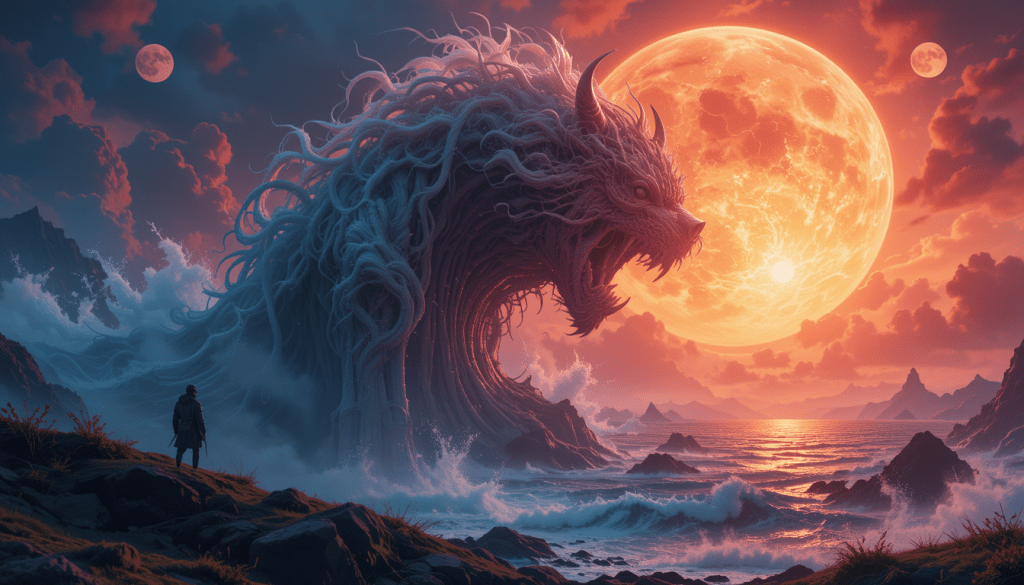
Step into the oneiric realm—where reality fades, and dreams take center stage.
Drift softly into this reverie—your like is the guiding star. 🌟🌠
 Word of the Day - The English Nook
Leave a comment