
IPA: /ˈkrɪsəlɪs/
Definition:
A chrysalis is the stage in the life cycle of certain insects, notably butterflies, during which the organism is encased in a hardened protective shell and undergoes a complete transformation from larva to adult. In a broader sense, it is also used metaphorically to represent a period of transition, growth, or preparation before significant change or emergence.
Examples in Use:
- “The caterpillar spun its chrysalis, where it began the wondrous process of becoming a butterfly.”
- “After years of working on her craft in obscurity, she emerged from her chrysalis as an accomplished artist.”
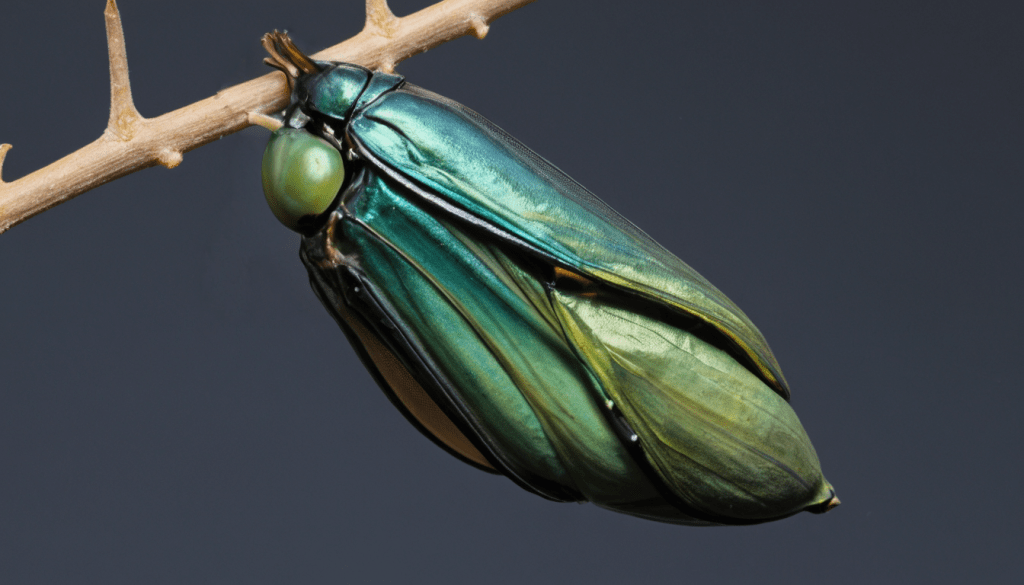
- “The golden chrysalis glimmered under the morning sunlight, a symbol of the life soon to emerge.”
Etymology:
The word chrysalis originates from the Latin chrysallis, referring to the gold-colored pupa of certain butterflies, which in turn derives from the Ancient Greek khrusos (χρυσός), meaning “gold.” This etymology reflects the metallic, golden appearance seen in the pupae of some species, such as the monarch butterfly.
Biological Context:
- The Role of the Chrysalis:
- The chrysalis is a vital stage in the complete metamorphosis (holometabolism) of insects like butterflies and moths. It provides protection and serves as the site of remarkable biological transformation, where the caterpillar’s body is restructured into that of an adult.
- Lifecycle Stages:
- The chrysalis is one of four main stages in the insect’s lifecycle:
- Egg → Larva (Caterpillar) → Pupa (Chrysalis) → Adult (Butterfly/Moth)
- Inside the chrysalis, the insect’s body undergoes a process called histolysis, breaking down caterpillar tissues and reforming them into adult structures such as wings, legs, and antennae.
- The chrysalis is one of four main stages in the insect’s lifecycle:
- Duration:
- The pupal stage varies depending on the species and environmental factors. For instance, some insects remain in their chrysalis for just a few days, while others, particularly those overwintering, may stay encased for months.
- Physical Features:
- A chrysalis can come in various shapes, sizes, and colors, often camouflaged to blend with its surroundings, such as leaves, branches, or bark, as a defense against predators.
Symbolism and Metaphorical Significance:
The chrysalis is a powerful symbol of transformation, renewal, and potential. It encapsulates the idea of inner growth and the emergence of new possibilities after a period of stillness or introspection.
- Personal Growth:
- The chrysalis metaphor is often used to describe periods in human life where significant changes occur—such as adolescence, career shifts, or self-discovery—before emerging into a new phase of identity or purpose.
- Cultural Representation:
- Across cultures, the chrysalis is associated with hope, resilience, and the natural cycle of life. For example:
- In Eastern philosophies, it may symbolize the soul’s journey toward enlightenment.
- In Western literature, it often represents rebirth and transformation.
- Across cultures, the chrysalis is associated with hope, resilience, and the natural cycle of life. For example:
- Inspiration for Change:
- The chrysalis serves as a reminder that even periods of stillness and struggle can lead to profound transformation and beauty.
Scientific Trivia:
- What Happens Inside?
- During the pupal stage, the caterpillar’s body undergoes complete metamorphosis:
- Internal enzymes dissolve the larval tissues into a nutrient-rich soup.
- Stem-like cells called imaginal discs guide the reformation of adult structures, such as wings, legs, and antennae.
- During the pupal stage, the caterpillar’s body undergoes complete metamorphosis:
- Breathing Mechanism:
- Even encased, the chrysalis is not inert. It breathes through small external openings called spiracles.
- Protective Strategies:
- The chrysalis’ appearance often mimics environmental elements, like leaves or bark, to avoid predation. Some species even adopt metallic hues to confuse predators by reflecting light.
Synonyms and Related Terms:
- Synonyms: Pupa, cocoon (though technically different), transitional phase (metaphorically)
- Related Terms: Metamorphosis, transformation, evolution
Antonyms:
- Stasis
- Dormancy (if implying inactivity without transformation)
Examples in Literature and Art:
- Poetry:
- “The chrysalis hung, fragile yet resilient, a silken promise of flight to come.”
- This captures the delicate strength of the chrysalis and its transformative promise.
- “The chrysalis hung, fragile yet resilient, a silken promise of flight to come.”
- In Fiction:
- In literary works, the chrysalis often symbolizes a character’s evolution, where they emerge stronger or transformed after a phase of introspection or struggle.
- Artistic Representations:
- In visual arts, the chrysalis is frequently depicted as a symbol of nature’s beauty and life’s continuous cycles of change and growth.
Takeaway:
The chrysalis is much more than a biological stage—it is a symbol of resilience, growth, and transformation. Its silent, unseen process of change mirrors the personal journeys we all undertake. Whether in the natural world or as a metaphor for human experience, the chrysalis reminds us that profound beauty and potential often emerge from periods of stillness and preparation. Like the butterfly, we too can transform and take flight.
Originally published on December 17, 2024, on The-English-Nook.com.
From stillness to flight—the chrysalis teaches us that true transformation starts within.
A gentle touch, a single like, and this post will take flight. 🌟🪶
 Word of the Day - The English Nook
Leave a comment