
IPA: /ˌpɔːrt kəʊˈʃɛər/ (British)
IPA: /ˌpɔːrt koʊˈʃɛr/ (American)
Definition:
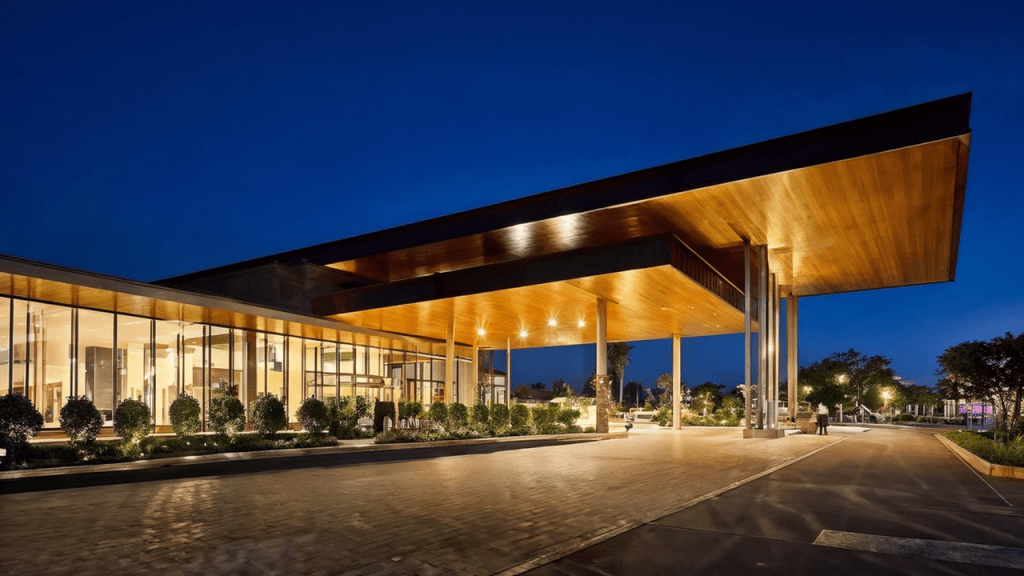
A porte-cochère is a covered entrance or gateway that allows vehicles to pass through or stop beneath, often leading to the main entrance of a building. Traditionally associated with grand homes, hotels, or estates, it shelters passengers from the weather while they enter or exit vehicles. In modern architecture, it sometimes serves as a practical or ornamental feature in buildings like hotels or mansions.
Etymology:
From French porte-cochère, meaning “coach gate.” The term combines porte (door or gate) and cochère (pertaining to coaches or carriages). It originated in the 17th century, when such structures became common in European architecture to accommodate horse-drawn carriages.
Synonyms:
- Carriage porch
- Drive-through canopy
- Covered entrance
Related Terms:
- Portico: A covered area supported by columns, usually at the entrance to a building.
- Vestibule: An enclosed space or lobby just inside the entrance of a building.
Examples in Context:
- “The stately mansion featured a porte-cochère, allowing guests to arrive elegantly by carriage.”
- “Many luxury hotels include a porte-cochère where cars can drop off and pick up passengers safely.”
- “During the rainstorm, the porte-cochère was a convenient spot to unload luggage without getting soaked.”
Historical Context:
The porte-cochère became a prominent feature in European and American architecture during the 18th and 19th centuries. It was particularly popular in neoclassical and Beaux-Arts designs, emphasizing grandeur and convenience. Initially built for horse-drawn carriages, it adapted in the 20th century for automobiles.
Modern Usage:
In contemporary architecture, porte-cochères remain common in:
- Hotels and Resorts: Welcoming guests in style while providing practical shelter.
- Hospitals: Ensuring safe, covered access for ambulances and patient drop-offs.
- Residential Buildings: Enhancing both functionality and curb appeal for luxury homes.
Symbolism:
- Historically, a porte-cochère was a symbol of wealth and prestige, indicating that a property could accommodate carriages and other symbols of high status.
- Today, it often signifies hospitality, comfort, and elegance in design.
Trivia:
- The term porte-cochère is often confused with porte-fenêtre (French for “French door”), though the two are entirely unrelated.
- Some porte-cochères include intricate architectural details, such as carved pillars or domed ceilings, to add visual appeal.
Cultural References:
- Literature: In novels depicting aristocratic or historical settings, the presence of a porte-cochère is often used to evoke opulence or grandeur.
- Film: Many period dramas and romantic comedies feature scenes involving porte-cochères as symbolic of luxury or dramatic arrivals and departures.
Significance in Architecture:
The porte-cochère serves both practical and aesthetic purposes, blending function with an architectural statement. Its enduring appeal lies in its ability to combine the utility of shelter with a design that enhances the building’s entrance, often leaving a lasting impression on visitors.
Originally published on November 16, 2024, on The-English-Nook.com.
Pause beneath this post, like a carriage seeking shelter, and leave your mark of approval. 🛞🏛️
 Word of the Day - The English Nook
Leave a comment