
Pronunciation: /frɒst muːn/
Detailed Explanation
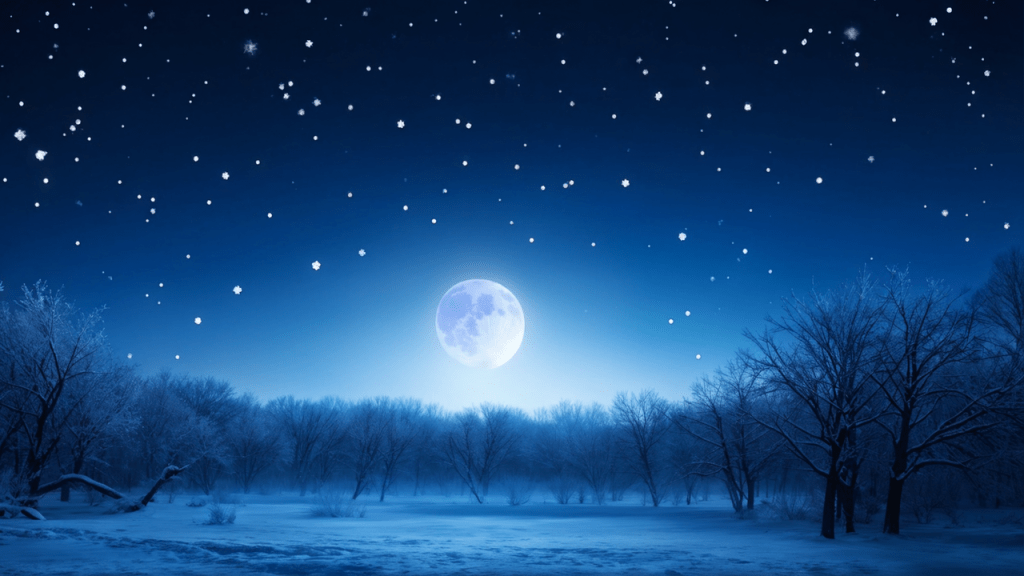
The Frost Moon is the name for November’s full moon in the Northern Hemisphere, symbolizing the onset of frost-covered landscapes and the final phase of autumn before winter’s arrival. Known for its crisp, silvery light that illuminates frosty nights, the Frost Moon carries themes of preparation, introspection, and resilience, as it historically marked the period when communities finalized preparations for the winter season.
Etymology
The term Frost Moon comes from traditional moon-naming practices in Native American, Celtic, and early European cultures, each drawing on the seasonal shifts of the natural world. The word frost is derived from Old English frost, forst, related to the Old Norse frost and German Frost, all rooted in the Proto-Germanic frustaz, meaning “to freeze.” Moon originates from Old English mōna, and is related to the Proto-Germanic mēnô, meaning “month” or “moon,” highlighting the lunar cycles that guided early agricultural societies.
Synonyms and Related Terms
- Beaver Moon: Named for the time to set beaver traps before winter.
- Mourning Moon: In some Wiccan traditions, referring to introspection and letting go.
- Snow Moon: Occasionally used to describe November’s moon for the imminent onset of snow.
Astronomical Context
The Frost Moon is the full moon of November and can vary slightly based on the lunar calendar. Typically, this moon falls in close proximity to perigee, or the moon’s nearest point to Earth, potentially creating a brighter, larger appearance known as a “supermoon.”
Cultural Significance
The Frost Moon has long symbolized resilience and preparation:
- Native American Tradition: Many tribes called this the Frost Moon, reflecting the start of winter preparations.
- European Folklore: European settlers adopted this name for the moon as temperatures began to drop, marking the need for final winter preparations.
- Modern Spiritual Observance: In Wiccan and pagan practices, the Frost Moon, also called the Mourning Moon, is a time of reflection, release, and introspection.
Associated Rituals and Practices
- Gratitude and Reflection: Individuals might engage in gratitude practices to honor the year’s harvest and blessings.
- Preparation Rituals: Some use the Frost Moon to plan and prepare, aligning with the symbol of winter’s approach.
- Introspective Practices: Often a time to assess emotional and mental states, aligning with winter’s quiet and contemplative nature.
Related Concepts
- Harvest Moon: The full moon closest to the autumnal equinox, traditionally associated with the end of the harvest season.
- Winter Solstice: The turning point marking the start of winter, following the Frost Moon.
- Full Moon Rituals: Practices associated with full moons, often for clarity, reflection, and setting intentions.
Understanding the Frost Moon
The Frost Moon invites a period of pause and introspection as temperatures drop and nature shifts toward dormancy. Its light over frost-laden earth symbolizes both preservation and readiness, encouraging individuals to take stock, cherish memories, and prepare emotionally and spiritually for the quieter months of winter.
Originally published on November 2, 2024, on The-English-Nook.com.
Glimmer with me in the cold—your like would cast a gentle warmth upon this winter night. ❄️🌕
 Word of the Day - The English Nook
Leave a comment