
/ˈsaʊ.ɪn/ or /ˈsɑː.wɪn/
Detailed Explanation
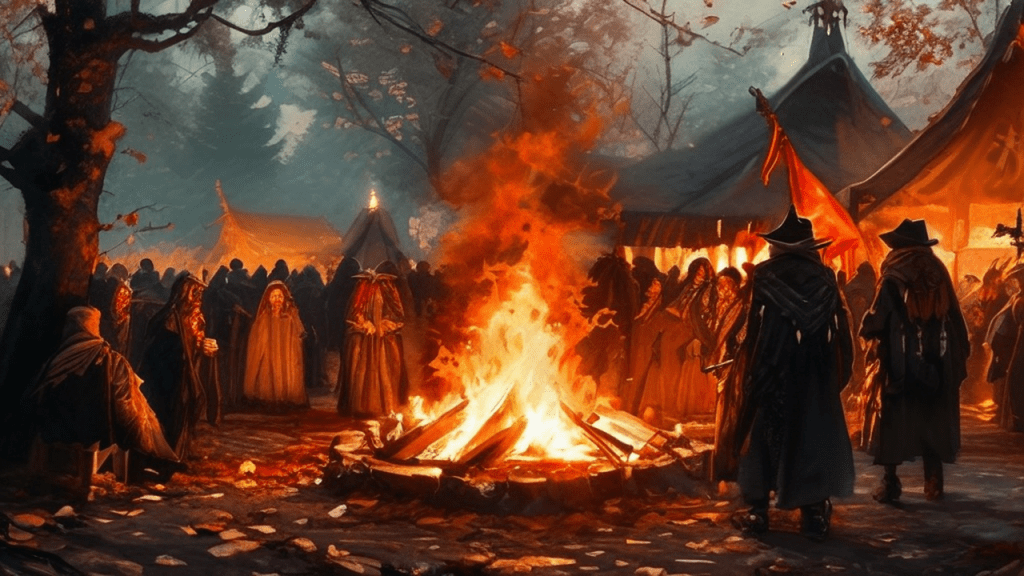
Samhain is an ancient Celtic festival marking the end of the harvest season and the beginning of winter. Traditionally celebrated on October 31st, Samhain is considered a liminal time when the boundary between the living and the spirit world thins, allowing spirits and ancestors to interact with the living. Observed primarily by the ancient Celts and still celebrated in modern-day Celtic communities, Samhain has influenced contemporary Halloween customs, such as lighting bonfires, wearing costumes, and sharing stories about spirits and the supernatural.
Etymology
The word Samhain comes from the Old Irish samain, meaning “summer’s end.” It is derived from Proto-Celtic roots, where “sam-” signifies “summer,” and “-fuin” means “end.” This festival marked an important seasonal transition for the Celts, as winter months signaled a time to prepare for the coming cold and to honor deceased ancestors.
Traditions
- Bonfires: The Celts would light large communal bonfires for protection and to honor the spirits.
- Costumes and Masks: People often dressed as spirits or animals to confuse wandering souls and avoid mischief.
- Divination: Practices such as reading omens, bones, and fire patterns were performed to seek guidance or predict the future.
- Feasts and Offerings: The Celts would set out food as offerings for wandering spirits and for visiting ancestors.
Influence on Halloween
Samhain’s themes of the supernatural, community bonding, and honoring the deceased contributed to the development of Halloween customs. The Roman festival of Pomona and Christian traditions, like All Saints’ Day, blended with Samhain, further shaping Halloween.
Cultural and Symbolic Meaning
Samhain remains a sacred time for modern pagans and neopagans, who observe it as a spiritual holiday to connect with ancestors, reflect on the cycles of life and death, and practice rituals symbolizing rebirth. In many Celtic countries, the festival has retained a significant place in cultural heritage as a symbol of transformation, resilience, and reverence for the natural cycles of life.
Related Concepts
- Halloween: The modern holiday influenced by Samhain, combining various cultural traditions into a celebration of costumes, community, and the supernatural.
- All Saints’ Day: A Christian holiday observed on November 1st, honoring all saints and martyrs, often seen as a Christian adaptation of Samhain.
- Mabon: Another pagan festival marking the autumnal equinox, which also celebrates the harvest and gives thanks for abundance.
Understanding Samhain
More than just an ancient festival, Samhain signifies a time of transition, where communities pause to honor their past and prepare for the unknown. This period of remembrance, respect, and ritual symbolizes both endings and new beginnings, as people come together to mark the seasons’ change, embracing the cyclical nature of life and the mysteries beyond.
Originally published on October 30, 2024, on The-English-Nook.com.
In the twilight of Samhain, let your like join the lanterns lighting the path. 🕯️🌌
 Word of the Day - The English Nook
Leave a comment