
/ˌæŋɡloʊ ˈnɔːrmən/
Detailed Explanation
Anglo-Norman refers to the period, culture, and people that emerged in England following the Norman Conquest of 1066, when the Normans (descendants of Vikings who had settled in northern France) took control of Anglo-Saxon England. It is also the name given to the dialect of Old French spoken by the ruling Norman aristocracy in England after the conquest. The Anglo-Normans played a crucial role in shaping the legal, social, and linguistic landscape of medieval England.
Etymology
The term Anglo-Norman is a combination of “Anglo-“, relating to the English or Anglo-Saxon people, and “Norman,” referring to the Normans from Normandy, a region in northern France. After the Normans invaded England, they introduced their language and customs, which gradually mixed with the existing Anglo-Saxon culture.
Synonyms
- Norman-English
- Norman
- Norman-French (in reference to language)
Usage in Sentences
- Historical Context: “The Anglo-Norman period was a time of significant transformation in England’s political and social structures.”
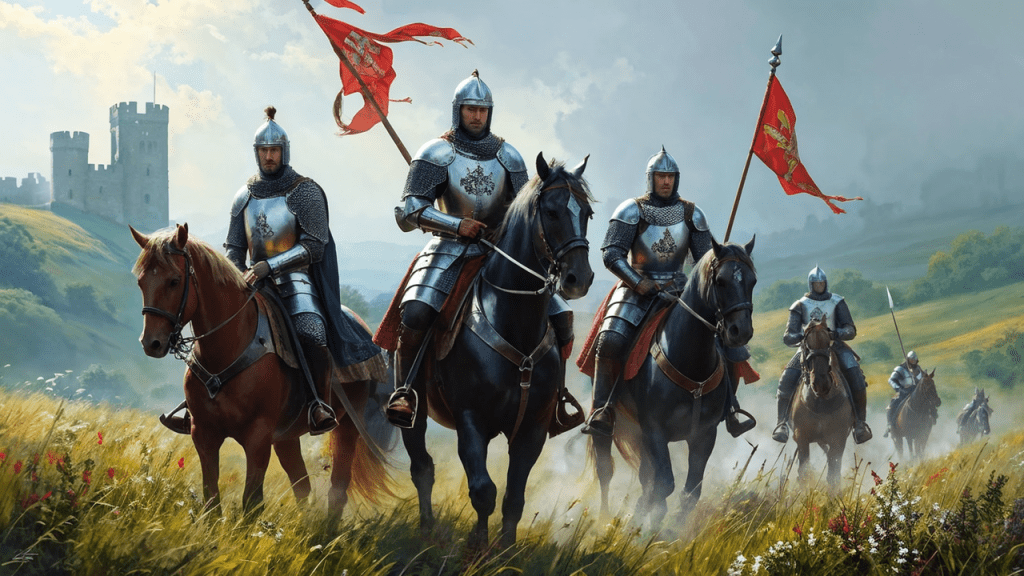
- Cultural Reference: “Anglo-Norman knights established feudalism as the dominant social system in medieval England.”
- Linguistic Context: “The Anglo-Norman language greatly influenced the development of Middle English, especially in terms of vocabulary.”
Impact on Language
- Legal and Administrative Terms: Many legal and governmental terms in English, such as court, judge, and jury, have roots in Anglo-Norman.
- Vocabulary Influence: Anglo-Norman French left a significant imprint on the English language. For example, words like government, castle, justice, and royal have Norman origins.
Examples in History
- Domesday Book: Commissioned by William the Conqueror in 1085, the Domesday Book is a record of landholdings in England. It was created in the Anglo-Norman context to assert control over the land and people.
- Feudalism: The Anglo-Normans introduced feudalism to England, establishing a hierarchy in which land was granted in exchange for military service.
Related Concepts
- Norman Conquest: The invasion and conquest of England by William, Duke of Normandy, in 1066, marking the beginning of the Anglo-Norman era.
- Feudalism: A social and economic system introduced by the Normans, where the king granted land to nobles in exchange for military service.
- Middle English: The stage of the English language that developed after the Anglo-Norman period, heavily influenced by Anglo-Norman vocabulary.
Examples in Literature
- Chaucer’s English: Geoffrey Chaucer, the author of The Canterbury Tales, wrote in Middle English, a language significantly influenced by Anglo-Norman. Words related to law, government, and the aristocracy in Chaucer’s work often have French origins.
- Arthurian Legend: Many medieval stories of King Arthur and his knights, such as those written by Marie de France, were shaped by Anglo-Norman literary traditions.
Real-World Impact
- British Legal System: Many foundational aspects of the British legal system, such as the use of Norman French in legal proceedings, stem from the Anglo-Norman period.
- English Nobility: Anglo-Norman families became the ruling elite in England, and many modern British aristocratic titles and families trace their origins back to this period.
Understanding the Significance of Anglo-Norman Culture
The Anglo-Norman period reshaped England’s language, culture, and political landscape. It represents a fusion of Anglo-Saxon and Norman traditions that profoundly influenced English history, especially through the introduction of feudalism, changes in governance, and the long-lasting impact on the English language. The legacy of Anglo-Norman culture remains evident in modern English vocabulary, law, and aristocratic traditions.
Originally published on October 18, 2024, on The-English-Nook.com.
Fair knight, grant me thy like, and let it be known across the land as a noble favor!
🏰⚔️
 Word of the Day - The English Nook
Leave a comment