
/wɪrd/
Detailed Explanation
Wyrd is an Old English noun that refers to fate or personal destiny, particularly as understood by the Anglo-Saxons and other Germanic cultures. However, wyrd conveys a sense of fate that is not fixed but is shaped by both external forces and personal actions. It reflects the belief that one’s fate is not preordained but is constantly being influenced by the choices individuals make and the events around them.
Etymology
The word wyrd comes from Old English and is derived from the Proto-Germanic wurđiz, which means “turning” or “becoming.” This suggests a dynamic understanding of fate as a process rather than a fixed outcome. In Old Norse, a related concept is found in urd (or Urd, one of the three Norns), who is responsible for the past in Norse mythology.
Synonyms
- Fate
- Destiny
- Kismet
- Providence
- Karma
Usage in Sentences
- Philosophy: “The concept of wyrd in Anglo-Saxon culture highlights a belief that personal destiny can be influenced by one’s actions.”
- Literature: “In Beowulf, the protagonist acknowledges the role of wyrd in battle, understanding that fate and personal courage are intertwined.”
- Contemplative Thought: “Embracing wyrd means recognizing the fluid nature of our destinies, shaped by forces both within and beyond our control.”
Cultural Significance
In Anglo-Saxon culture, wyrd was a central concept, guiding how people viewed their lives, actions, and the unfolding of events. It was not a passive, fatalistic view of fate but rather an active interplay between human agency and cosmic forces. This belief influenced literature, law, and social behavior during that period, often emphasizing courage in the face of an unpredictable future.
- Anglo-Saxon Belief System: Unlike the more deterministic view of fate found in some other ancient cultures, wyrd encompassed a belief in the importance of individual actions and decisions. While one could not escape wyrd, there was a sense that how a person faced their destiny was crucial.
- Warrior Culture: For Anglo-Saxon warriors, wyrd was particularly significant. It acknowledged that while death might be inevitable, how one lived and faced challenges defined their legacy.
Examples in Literature
- Beowulf: In the Anglo-Saxon epic Beowulf, the hero often references wyrd as something that may befall him in battle, showing both his courage and understanding that fate is beyond complete control.
- The Wanderer: In this Old English poem, the speaker reflects on the harshness of life and the unpredictability of wyrd, which governs the loss of loved ones and the changing fortunes of life.
Real-World Examples
- Modern Paganism: In contemporary neopaganism and heathenry, wyrd is often revisited as a concept of fate and destiny, representing the interconnectedness of all actions and their effects on the cosmos.
- Philosophical Discussions: Discussions of wyrd can still be found in modern philosophy and ethics, particularly around the tension between free will and determinism.
Related Concepts
- Norns: In Norse mythology, the Norns were goddesses who wove the fate of gods and men. The Norn Urd corresponds to the past, and her name shares the same root as wyrd, reflecting the interconnectedness of past actions with future outcomes.
- Moira: In Greek mythology, the Moirai, or Fates, controlled the destiny of individuals, but in contrast to wyrd, their decisions were more fixed and unavoidable.
Understanding the Concept of Wyrd
Wyrd challenges a simplistic understanding of fate by offering a more nuanced view of how destiny works. It emphasizes that while certain aspects of life may be inevitable, the manner in which individuals respond to these events and navigate their choices plays a significant role in shaping the outcome. This concept is essential to understanding early Germanic cultures and their emphasis on honor, bravery, and personal responsibility, traits that are still admired today. The legacy of wyrd is evident in literature, philosophy, and even modern discussions about the balance between fate and free will.
Originally published on October 12, 2024, on The-English-Nook.com.
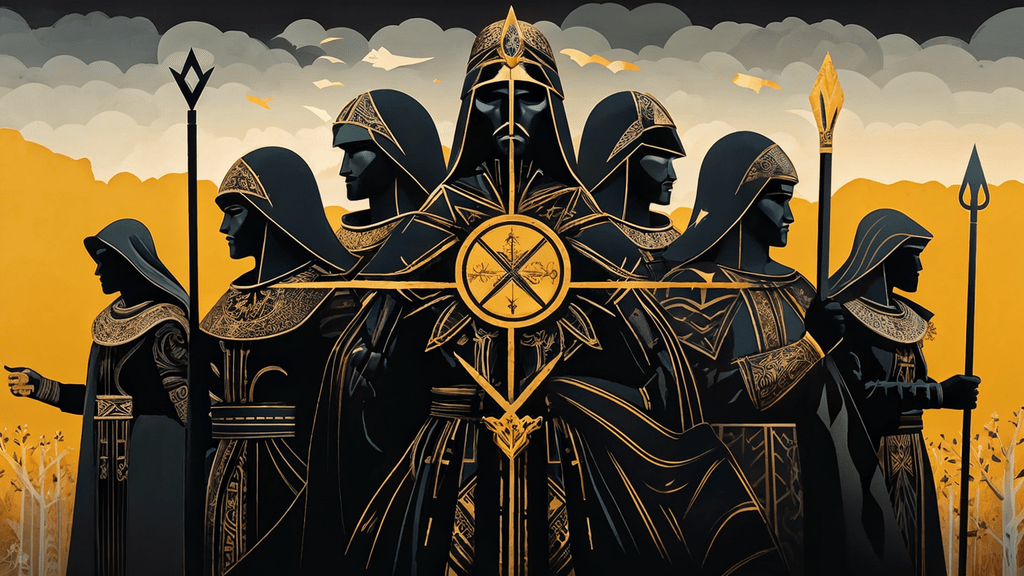
The threads of fate have brought us here—your like is woven into the fabric of this moment.
🧶✨
 Word of the Day - The English Nook
Leave a comment