
/ˈdɒpəlˌɡæŋər/
Detailed Explanation
Doppelgänger refers to a non-biologically related look-alike or double of a living person. The word is commonly used to describe the uncanny appearance of someone who is visually identical to another person. In folklore and literature, doppelgängers are often considered harbingers of bad luck or evil twins, symbolizing a shadow self or alternate identity that may have malevolent intentions. The concept carries a supernatural or eerie connotation, suggesting that a doppelgänger might represent a mysterious or hidden aspect of the self.
Etymology
“Doppelgänger” is a German word, literally meaning “double-goer” or “double-walker” (doppel = “double,” gänger = “walker”). The term originated in 18th-century German folklore, where doppelgängers were thought to be ghostly or paranormal duplicates of individuals.
Synonyms
- Double
- Look-alike
- Twin
- Clone (informal)
- Mirror image
- Spitting image (colloquial)
Usage in Sentences
- General: “When I saw her across the room, I had to do a double-take because she looked exactly like my sister — a true doppelgänger!”
- Literature: “The protagonist’s doppelgänger haunted him throughout the story, reflecting his inner fears and moral dilemmas.”
- Superstition: “According to legend, seeing your own doppelgänger is a bad omen, foretelling illness or danger.”
Examples in Literature and Popular Culture
- Edgar Allan Poe’s ‘William Wilson’: In this short story, Poe explores the idea of a doppelgänger as a malevolent force, with the protagonist being constantly followed by a look-alike who sabotages his plans.
- Dr. Jekyll and Mr. Hyde (Robert Louis Stevenson): While not a literal doppelgänger, this classic novel features a character with dual identities, one representing good and the other representing evil — a metaphorical doppelgänger.
- TV and Film: In modern culture, doppelgängers are frequently featured in movies and shows like The Vampire Diaries and Orphan Black, where characters encounter their doubles.
Real-World Examples
- Social Media: The concept of doppelgängers has gained popularity on social media, where people share images of celebrities or strangers who look uncannily like them.
- History: Some historical figures were rumored to have doppelgängers, including Abraham Lincoln, whose wife allegedly saw his double in a vision shortly before his assassination, leading her to fear it was a bad omen.
Related Concepts
- Alter Ego: A secondary or alternative identity, often used in literature and psychology to describe a hidden side of a person.
- Twins: Though biologically related, identical twins can sometimes be mistaken for doppelgängers, though the term strictly refers to non-related look-alikes.
- Shadow Self: In psychology, especially in Carl Jung’s theories, the shadow represents the unconscious parts of the personality, often linked metaphorically to the idea of a doppelgänger.
Understanding the Significance of Doppelgängers
In modern usage, doppelgängers are often seen as curious coincidences, but historically, the concept has darker, more ominous undertones. The idea that someone could have a double who lives a separate life or represents their hidden traits has fascinated people for centuries. Whether in folklore, literature, or everyday life, doppelgängers continue to intrigue us, serving as a symbol of identity, duality, and the mysterious connection between appearance and reality.
Originally published on October 4, 2024, on The-English-Nook.com.
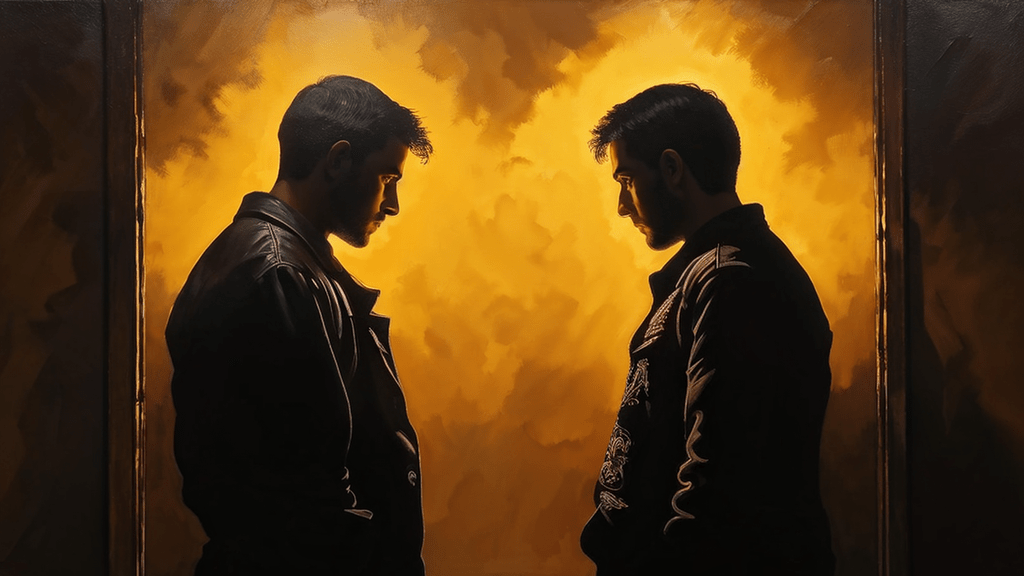
You and I, we’re practically the same—why not give yourself, I mean me, a like?
😏✨👥
 Word of the Day - The English Nook
Leave a comment